The United States has threatened to restrict military assistance to Nigeria following its inclusion on the 2026 Child Soldiers Prevention Act (CSPA) blacklist over the continued recruitment and use of children by Boko Haram and the Islamic State West Africa Province (ISWAP).
The restrictions could affect military training, weapons sales, foreign military financing and other defence cooperation from October 1, 2026, unless US President Donald Trump grants a waiver or an applicable exception is secured.
According to a report by The PUNCH, the designation was disclosed in the US State Department’s 2026 Trafficking in Persons Report, published on October 11. The report covers the period between April 1, 2025, and March 31, 2026.
Nigeria was listed among 14 countries accused of recruiting or using child soldiers. Other countries named include Russia, Iran, South Sudan and Somalia.
The report also stated that Nigeria had failed to meet the minimum standards for eliminating human trafficking for the 15th consecutive year.
US blacklist threatens defence cooperation
Under the Child Soldiers Prevention Act, countries on the blacklist may face restrictions on International Military Education and Training, Foreign Military Financing, Excess Defence Articles, certain peacekeeping assistance and licences for direct commercial sales of military equipment.
The US State Department said the restrictions would apply during the relevant fiscal year, subject to a presidential waiver, an applicable exception or reinstatement of assistance under the law.
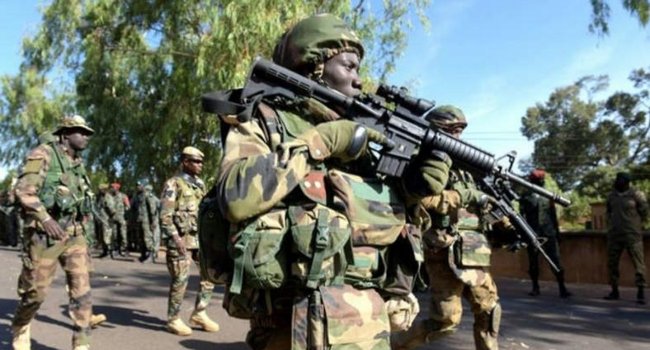
The development comes amid ongoing security cooperation between Washington and Abuja, including joint counterterrorism operations against insurgents in Nigeria’s north-east and the bilateral 2026 Defence Cooperation Roadmap.
Boko Haram, ISWAP accused of recruiting children
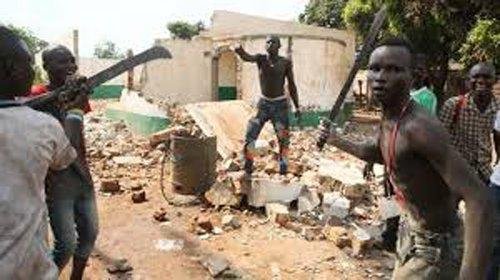
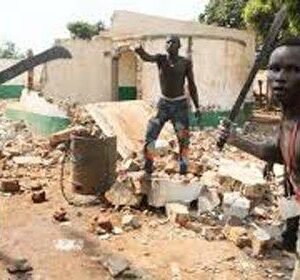
The report identified Boko Haram and ISWAP as the armed groups responsible for recruiting, abducting and using children in conflict-related activities.
According to the State Department, children as young as 12 are reportedly used as cooks, domestic workers, spies, porters, messengers, bodyguards, checkpoint guards and combatants. Some are also forced to carry out suicide attacks.
The report further alleged that the groups abduct women and girls in northern Nigeria and subject many of them to forced labour, sexual slavery and forced marriage.
It also raised concerns about criminal gangs in southern and north-western Nigeria exploiting children in forced criminal activities, including kidnapping, robbery, sex trafficking, agriculture and mining.
Trafficking prosecutions and victim support decline
The report criticised Nigeria’s handling of trafficking cases, particularly the lack of reported investigations, prosecutions or convictions involving government officials allegedly complicit in trafficking crimes.
It said observers had reported cases in which law enforcement, military and other government officials allegedly committed trafficking offences, accepted bribes or interfered with investigations.
During the reporting period, Nigerian authorities investigated 1,341 trafficking cases involving 1,367 suspects. The cases comprised 589 sex trafficking cases, 301 forced labour cases and 451 cases classified under other or unspecified categories.
Of the cases investigated, 94 were prosecuted, while 97 traffickers were convicted.
The report acknowledged that most convicted traffickers received prison sentences of at least one year. It also recognised increased cooperation between Nigerian authorities and foreign governments on international trafficking investigations.
However, government-supported assistance to trafficking victims fell sharply.
Although 2,004 people were identified as trafficking victims during the period, only 675 received government-supported assistance, compared with 2,058 in the previous reporting period.
The report also criticised conditions in shelters operated by the National Agency for the Prohibition of Trafficking in Persons (NAPTIP), particularly restrictions on residents’ freedom of movement and children’s access to school.
It added that some protection services were tied to victims’ willingness to cooperate with law enforcement proceedings.
US raises concerns over labour trafficking
Beyond child soldier recruitment, the report identified several weaknesses in Nigeria’s efforts to combat human trafficking.
It said the government had not prohibited worker-paid recruitment fees, reported holding labour recruiters accountable for fraudulent recruitment or provided specialised training on child labour and human trafficking to labour inspectors.
The report also raised concerns about foreign criminal networks allegedly recruiting people to Nigeria under false promises of employment before confining them and forcing them to participate in online scams.
It further alleged that Nigerians had been fraudulently recruited by Russian authorities to fight in the Russia-Ukraine war. The report also questioned Nigeria’s Ministry of Education’s promotion of Russia’s Alabuga Start programme despite reported warning signs.
Other concerns included possible forced labour involving North Korean nationals working in Nigeria and the continued operation of so-called baby factories, where women are allegedly detained and forced to give birth to children who are subsequently sold.
Nigeria records some progress
Despite the criticism, the US report acknowledged improvements in some areas of Nigeria’s anti-trafficking response.
Funding for victim services increased from ₦128m to ₦233m, while spending on prevention rose from ₦58.8m to ₦245m.
The government also coordinated the repatriation of 428 Nigerians exploited abroad, secured restitution for 14 victims through criminal sentences and maintained anti-trafficking task forces in 23 states.
Nigeria was described as a source, transit and destination country for human trafficking. The country last attained Tier 1 status in the US State Department’s annual trafficking assessment in 2011.
When contacted by The PUNCH, NAPTIP’s Head of Press and Public Relations, Vincent Adekoye, said the agency would make its response to the report public.
The newspaper reported that the Special Adviser to the President on Information and Strategy, Bayo Onanuga, did not respond to calls and a text message seeking the Presidency’s comments.