/ Oct 25, 2026
/ Oct 25, 2026

65 years of freedom? Nigerians still shackled by poverty, hunger and violence – Dan Bello

Published on

By

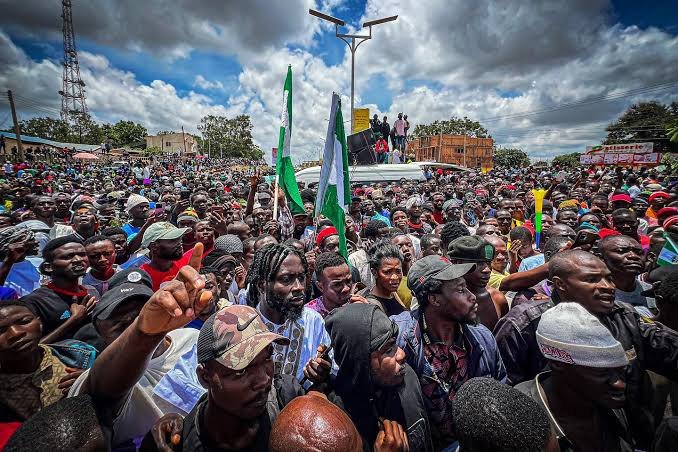
Today, Nigeria celebrates 65 years of independence. Flags will wave, speeches will be read, and anthems sung. Leaders will declare that the nation is “free.”

But free from what?

Yes, Nigeria broke the chains of white colonialism in 1960. Yet, six decades later, citizens remain enslaved — not by foreigners, but by poverty, hunger, violence and corruption.

A Nation at War with Itself

Take Kano, the so-called “Centre of Commerce.” In neighbourhoods like Kurna, gangs known as Daba rule the night. Armed with machetes and guns, they terrorise communities, forcing mothers to hide their sons and fathers to guard their doors. What should be a city of trade has become a city under siege.

This is the fruit of “freedom.”

Independence should have meant schools, not street gangs.

Independence should have meant jobs, not overcrowded jailhouses.

Independence should have meant safety, not fear.

Leaders Who Colonise Their Own People

The tragedy is not just the absence of progress, but the betrayal of promise. The very leaders who inherited Nigeria from colonial rule now colonise their own people — through corruption, neglect, and failed governance.

Unlike the white man who robbed the nation while speaking a foreign tongue, today’s rulers plunder while calling us “my people” in our own language.

The Real Independence Nigerians Want

After 65 years, Nigerians do not crave parades and speeches. They want:

Security in their streets.

Opportunities for their children.

Food on their tables.

Justice in their courts.

Until then, the annual celebration of independence will remain hollow — a festival of flags covering the wounds of a bleeding nation.
65 years of freedom? Nigerians still shackled by poverty, hunger and violence
Nigeria @65 emblem

You May Like

3 thoughts on “65 years of freedom? Nigerians still shackled by poverty, hunger and violence – Dan Bello”

Leave a Reply

Your email address will not be published. Required fields are marked *

Most Popular

Must Read

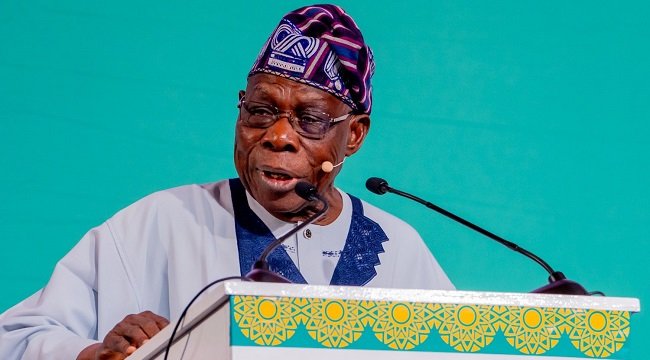
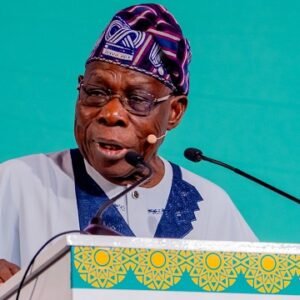
Olusegun Obasanjo speaking at the 2026 Goodluck Jonathan Foundation Democracy Dialogue in Bauchi.

Obasanjo blast Tinubu for making Nigerians 300% poorer

Former President Olusegun Obasanjo has criticised President Bola Tinubu’s economic reforms, accusing his administration of worsening poverty in Nigeria through the devaluation of the naira.   Obasanjo made the remarks on Wednesday at the Financial Times Africa Summit 2026 in London, United Kingdom, where he argued that the sharp decline in the naira’s value had significantly weakened Nigerians’ purchasing power. According to a report by The PUNCH, the former president said the naira’s depreciation had effectively made Nigerians 300 per cent poorer. “We do not live in isolation as a country. We interact with the rest of the world. And overnight, you devalue the currency by 300 per cent. The naira went from N500 to a dollar to N1,500 to a dollar. What that meant was that every Nigerian is made poor by 300 per cent,” Obasanjo said. He described Nigeria as the “poverty capital of the world”, arguing that the country had the largest number of people living in poverty. “You cannot say to me that that is good for Nigeria. You cannot say to me that that is good for us in any sense,” he added. Obasanjo Questions Economic Recovery The former president also rejected arguments that Tinubu should be given more time to deliver the benefits of his economic reforms. Obasanjo said he had yet to see sufficient improvement in the economy to justify the hardship experienced by Nigerians. “For the economy, I don’t see anything getting better. What policies are you seeing through? You impoverish your people, and you want to see impoverishment through?” he asked. He further argued that the policies introduced by the Tinubu administration were not in the best interests of Nigerians. “Nobody can deny that,” he said. Former President Questions Fuel Subsidy Removal Obasanjo also criticised the handling of petrol subsidy reform, noting that fuel costs affected virtually every aspect of economic activity. While acknowledging the importance of addressing the subsidy issue, he argued that corruption associated with the system should have been tackled first. He maintained that a country facing severe economic difficulties should focus on reducing corruption, waste and unnecessary luxury while increasing production. Naira Depreciation and Inflation The Central Bank of Nigeria unified the country’s foreign exchange market windows on June 14, 2023, during the early days of Tinubu’s administration. Before the policy, the official exchange rate stood at approximately ₦460.80 to the dollar. By October 19, the official rate had weakened to about ₦1,333.54 per dollar, according to figures cited by The PUNCH. The naira also fell to approximately ₦1,607.05 per dollar in early May 2025. Despite the currency’s depreciation, official figures indicated that some economic indicators had improved. The National Bureau of Statistics reported that headline inflation fell to 14.63 per cent in September 2026, compared with 20.98 per cent a year earlier. However, food inflation remained high at 19.59 per cent, while Nigeria’s real gross domestic product grew by 4.43 per cent in the second quarter of 2026. The figures highlight the continuing economic pressures facing households, particularly the cost of food and other essential goods. FG Defends Savings From Subsidy Removal Meanwhile, the Minister of Finance and Coordinating Minister of the Economy, Taiwo Oyedele, said on August 19 that the removal of petrol subsidies had saved the Federal Government ₦15.8 trillion between June 2023 and December 2025. The savings form part of the government’s justification for ending the subsidy regime, a policy that has significantly altered petrol pricing and public finances. Efforts by The PUNCH to obtain a response from the Presidency to Obasanjo’s remarks were unsuccessful. The newspaper reported that the President’s Special Adviser on Information and Strategy, Bayo Onanuga, could not be reached.
Read more

Editor's Pick

Trending News

Newsletter

Enter your email address and receive notifications of news by email.

You have been successfully Subscribed! Ops! Something went wrong, please try again.

© 2026 GongNews. All Rights Reserved.