
/ Oct 01, 2026
/ Oct 01, 2026

Roadside Food Drying in Nigeria Raises Alarming Health Risks

Published on

By

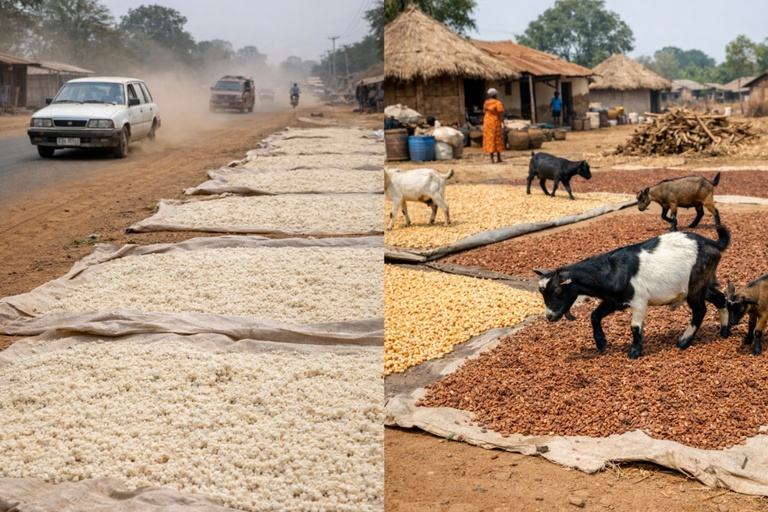
Along Nigeria’s highways and rural roads, cassava, maize, rice, beans, pepper and melon seeds are routinely spread under the sun. While farmers see it as a cheap preservation method, health experts warn it poses serious public health risks.

From the South-West to the North-East, roadside drying has become normalised, turning busy transport corridors into open-air processing floors. Vehicles raise dust that settles directly on food, while animals roam freely across produce meant for markets and homes.

Environmental health experts say roadside dust is not harmless. It often contains oil residues, exhaust fumes and heavy metals, including lead, which contaminate food during drying. Washing later, they warn, cannot remove all pollutants.

Nutritionists also highlight the danger of animals walking on drying food, introducing bacteria, worms and faecal matter. Slow drying on bare ground encourages fungal growth, some of which produce aflatoxins — toxins linked to liver cancer, poor immunity and stunted growth in children.

Rice and beans are particularly vulnerable. Traders confirm that stones and gravel commonly enter grains during roadside drying, leading to consumer complaints, injuries and reduced market value.

Beyond health risks, roadside drying threatens road safety. Drivers report swerving to avoid food spilling onto highways, increasing accident risks and economic losses for farmers.

Medical professionals say hospitals are already feeling the impact, treating rising cases of diarrhoea, typhoid, intestinal worms and chronic stomach infections linked to unsafe food processing.

Experts stress that farmers are not careless but lack alternatives. Agricultural officers call for government-supported drying platforms, solar dryers and community processing centres.

In Niger State, authorities have begun acting. Through sensitisation programmes supported by IFAD and the Value Chain Development Programme, farmers are being trained and provided with tarps and cement floors.

Health experts say this model must go nationwide. Without support and enforcement, roadside drying will continue turning Nigeria’s staple foods into hidden carriers of disease.

You May Like

3 thoughts on “Roadside Food Drying in Nigeria Raises Alarming Health Risks”

Leave a Reply

Your email address will not be published. Required fields are marked *

Most Popular

Must Read

Tinubu directs delegation to Ethiopia to repatriate Nigerian prisoners held at Kaliti prison in Addis Ababa.

Tinubu rules out return to fuel subsidy, defends reforms

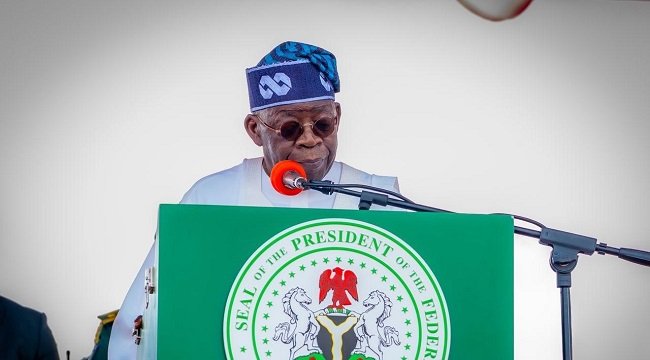
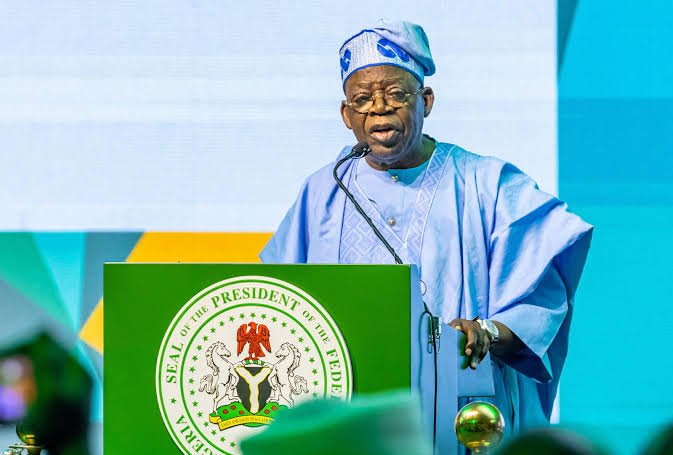
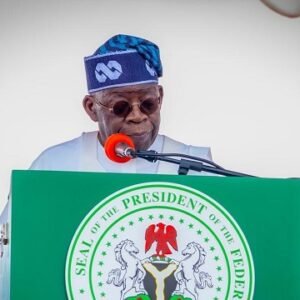
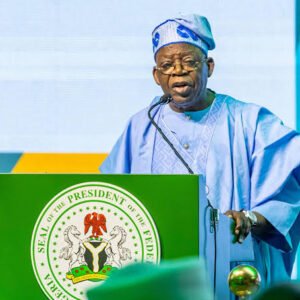
President Bola Tinubu has ruled out a return to Nigeria’s petrol subsidy regime, urging Nigerians to resist calls to reverse his administration’s economic reforms.   Tinubu made the declaration in his Independence Day address on Thursday, October 1, 2026, as Nigeria marked its 66th anniversary. The President defended the reforms introduced since he assumed office in 2023, saying they were designed to tackle longstanding weaknesses in the economy rather than merely ease their effects. “Our reforms did not create the weaknesses in our economy. They confronted them,” Tinubu said. ‘We must resist their siren song’ Tinubu acknowledged that the reforms had been difficult and that their “side effects were real”, but argued that abandoning them would amount to returning to policies that had failed to address the country’s underlying economic problems. He warned against calls from what he described as “certain influential but regressive voices” to abandon the reforms and return to subsidy arrangements. “Now, as certain influential but regressive voices would have us abandon the treatment and return ourselves to the abuse of addictive subsidies, we must resist their siren song,” he said. “We must remember why we began this journey and how far we have already come.” Using the analogy of a cancer patient undergoing painful but necessary treatment, Tinubu said previous governments had focused on easing economic symptoms while allowing underlying problems to worsen. “Nigeria was like a sick patient who receives the terrible news that he has cancer,” he said. “His doctor explains that the treatment will be difficult and painful, but that it offers a strong prospect of recovery. The patient has a choice. He can begin treatment, endure its discomfort and fight the disease. Or he can ask only for morphine, dull the pain and leave the cancer to spread.” “For too long, Nigeria’s leaders chose morphine while praying for a miracle that never came,” the President added. Tinubu cites economic gains Defending his administration’s record, Tinubu said Nigeria’s economic outlook had improved, citing economic growth of more than four per cent in 2026 and contributions from both the oil and non-oil sectors. He also said oil theft had declined, inflation had fallen substantially from its peak, foreign reserves had been rebuilt and the foreign exchange market had stabilised. According to the President, Nigeria recorded more than $6bn in non-oil export revenue in 2025, which he described as the highest in the country’s history. “These are not idle claims. International observers, journalists, NGOs and multilateral institutions can see the change,” Tinubu said. He added that the government was moving from economic correction towards greater emphasis on jobs, production and widespread prosperity.
Read more

Editor's Pick

Trending News

Newsletter

Enter your email address and receive notifications of news by email.

You have been successfully Subscribed! Ops! Something went wrong, please try again.

© 2026 GongNews. All Rights Reserved.