
/ Aug 17, 2026
/ Aug 17, 2026

Makinde sacks commissioner in Oyo cabinet reshuffle

Published on

By

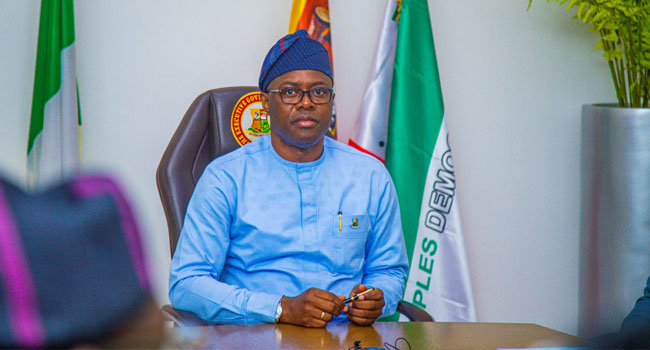
Oyo State Governor Seyi Makinde has relieved the Commissioner for Women Affairs and Social Inclusion, Toyin Balogun, of her appointment as part of a minor cabinet reshuffle.


According to The Guardian Nigeria, Makinde redeployed Alhaja Faosat Joke Sanni to head the Ministry of Women Affairs and Social Inclusion with immediate effect. Sanni replaces Balogun, whom the governor thanked for her service and wished success in her future endeavours.

Sanni previously served as Commissioner for Women Affairs and Social Inclusion between 2019 and 2023 before being moved to the Ministry of Special Duties. She was later redeployed to the Ministry of Trade, Industry, Investment and Cooperative prior to her latest appointment.

The reshuffle follows other recent appointments by the governor. On Tuesday, Makinde forwarded the name of Dr. Olabode Taiwo Ladipo, the Permanent Secretary for General Administration, to the Oyo State House of Assembly for confirmation as a commissioner.

The governor also appointed Arc. Ifeoluwa Akande as Chairman of the Samuel Ladoke Akintola Airport Upgrade Committee, Honourable Isola Abiodun Adekunle as Executive Adviser on Intra-Party Affairs, and Hon. Oladejo Emmanuel Oladokun as a Part-Time Member of the Local Government Service Commission.

A statement signed by the Chief of Staff to the Governor, Otunba Segun Ogunwuyi, said the appointments and redeployment took effect from July 1, 2026.

Makinde congratulated the newly appointed officials and urged them to carry out their responsibilities with dedication, loyalty and commitment.


You May Like

Leave a Reply

Your email address will not be published. Required fields are marked *

Most Popular

Must Read

a patient during a cholera response as the European Union provides emergency funding to Nigeria and three African countries.

Nigeria gets €1.5m as EU releases €2.3m to tackle cholera outbreaks in Africa

The European Commission has allocated €2.3 million in emergency humanitarian funding to Nigeria, Cameroon, the Central African Republic and Chad to support efforts to contain ongoing cholera outbreaks.   The funding, announced on Monday, is aimed at strengthening outbreak response, improving access to safe water and sanitation, and supporting affected communities. According to the World Health Organization (WHO), more than 61,000 cholera cases were reported across the African Region in the first five months of 2026. Nigeria gets €1.5m Nigeria will receive the largest share of the funding, with €1.5 million earmarked for the country’s cholera response. The money will be used to increase the number of intervention teams, provide essential supplies including cholera kits, and strengthen water, sanitation and hygiene measures. The EU said the support will also cover the treatment of public water points and household water, while helping intensify epidemiological surveillance in hard-to-reach areas. It will further support case management, risk communication and community sensitisation. The development comes as several Nigerian states continue to respond to rising cholera cases. In Plateau State, authorities recently intensified containment measures after reporting 537 cases and 17 deaths. Other countries receive funding Cameroon will receive €100,000 to support outbreak containment and case management, including additional healthcare personnel, medicines, cholera treatment units and oral rehydration points in affected communities. The Central African Republic will receive €500,000 to scale up case management and vaccination, alongside water, sanitation and hygiene interventions. The funding will also strengthen surveillance, community engagement and safe burials. Chad will receive €200,000 to help break the chain of cholera transmission through improved access to water, sanitation and hygiene, as well as community support for surveillance and case management. The EU Commissioner for Preparedness and Crisis Management, Hadja Lahbib, said cholera remains a preventable and treatable disease but continues to threaten communities without access to safe water and healthcare. The funding, she said, would enable humanitarian partners to respond quickly, contain outbreaks and protect vulnerable communities. Cholera is caused by Vibrio cholerae bacteria and is commonly transmitted through contaminated food or water. Severe infections can cause rapid dehydration and shock.
Read more

Editor's Pick

Trending News

Newsletter

Enter your email address and receive notifications of news by email.

You have been successfully Subscribed! Ops! Something went wrong, please try again.

© 2026 GongNews. All Rights Reserved.