
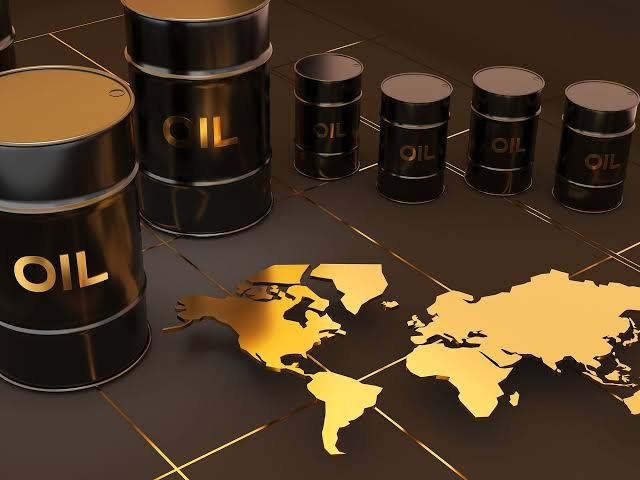
Crude oil prices rose sharply on Wednesday as Iran retaliated against renewed US attacks, escalating tensions around the Strait of Hormuz and raising concerns over global energy supplies.
Brent North Sea crude climbed 1.9 per cent to $96.45 a barrel, while West Texas Intermediate rose 1.5 per cent to $91.60 around 0230 GMT. Oil prices have gained about 10 per cent this week.
The latest escalation followed US strikes on Iranian targets around the Strait of Hormuz. Iran subsequently launched missile and drone attacks against US interests in several Middle Eastern countries.
Iranian state media reported that Tehran fired ballistic missiles at two US bases in Jordan. Jordan’s army said it intercepted 10 missiles, while three others landed in remote areas. Missile and drone attacks were also reported in Kuwait, while air raid alerts were heard in Bahrain.
Iran’s Revolutionary Guards also said they attacked US forces at an air base in Bahrain, while Iranian forces reported strikes on US bases in Iraq’s Kurdistan region.
Hormuz closure fuels oil concerns
The renewed fighting has intensified fears over the Strait of Hormuz, a critical global energy route through which about one-fifth of the world’s oil and gas supplies pass.
The waterway has remained closed amid the six-month conflict, while the United States maintains a counter-blockade of Iranian ports.
The latest military escalation came after US forces struck Iranian targets on Sunday, including rocket launchers on Larak Island. Washington said the operation was intended to prevent Iran from placing mines in the strait’s shipping lanes.
Two crude oil tankers were subsequently hit by unknown projectiles, according to Greek maritime risk management firm Marisks. The United Kingdom Maritime Trade Operations agency confirmed one of the incidents and said there were no reported casualties or environmental effects.
Iranian President Masoud Pezeshkian said Tehran would respond to US actions while warning that continued pressure and threats could undermine diplomatic efforts.
Markets react to rising inflation fears
The escalation has also unsettled global financial markets, with Asian stocks falling and government bond yields rising as investors increased bets on further interest-rate hikes.
The 30-year UK government bond yield reached its highest level since 1998, while Japan’s 10-year yield climbed to a 30-year high. US long-term Treasury yields also remained elevated.
Investors are now awaiting jobs and inflation data that could influence the US Federal Reserve’s next interest-rate decision.
According to Bloomberg pricing cited in the report, traders were putting the probability of a rate hike at 70 per cent.
Fed Governor Michael Barr said policymakers should be prepared to raise rates if inflation remains stubbornly above the central bank’s 2 per cent target.
The conflict began in late February with US and Israeli attacks on Iran that killed its Supreme Leader, Ayatollah Ali Khamenei. A subsequent ceasefire later collapsed amid renewed fighting and disputes over the Strait of Hormuz.