
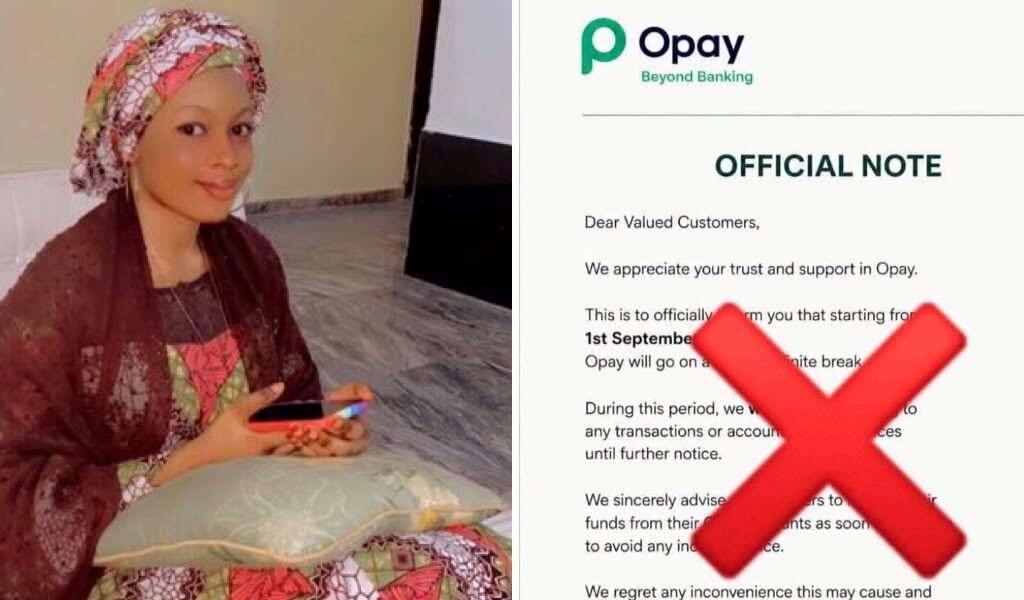
The Nigeria Police Force National Cybercrime Centre has arrested a 27-year-old woman, Hafsat Abubakar, over the alleged creation and circulation of a forged document claiming that OPay Nigeria Limited was shutting down its operations.
The Force Public Relations Officer, Anietie Iniedu, disclosed this on Wednesday during a press briefing at the NPF-NCCC in Abuja.
According to Iniedu, the investigation began after OPay Digital Services Limited petitioned the police on August 31, 2026, seeking the identification and arrest of those behind the fraudulent document.
The petition was submitted through the office of the Deputy Inspector-General of Police in charge of the Force Criminal Investigation Department, Abuja.
Iniedu said the document was falsely presented as an official communication from OPay and claimed that the fintech company would stop processing transactions and account services indefinitely from September 1.
The NCCC subsequently deployed digital forensic tools to examine the document and trace its source.
The police said the investigation traced the document to a post on the X handle @haifah_er_abba, which it said was registered and operated by Abubakar.
Police operatives arrested Abubakar on September 4. The suspect is a graduate of Library and Information Science from Ahmadu Bello University, Zaria.
The police spokesman said the incident highlighted the risks associated with digitally fabricated information, particularly when false claims could cause public panic, financial disruption and reputational damage.
He urged members of the public to verify sensitive information through official channels before sharing it.
The investigation is ongoing, with the police saying anyone found culpable will face prosecution after the conclusion of the probe.
The arrest follows OPay’s earlier denial of the viral shutdown claim. The company described the circulating notice as completely false and advised customers to rely on its official communication channels.
OPay also identified several inconsistencies in the fabricated document, including an outdated logo, a misspelt brand name and a layout that differed from its official communications.
The company’s Chief Legal Counsel, Akinfolabi Rokosu, had said OPay was working with the Department of State Services and the Nigeria Police Force to investigate the source of the false information.