
/ Oct 09, 2026
/ Oct 09, 2026

FG offers 30-day NNPC petrol discount to ease fuel costs

Published on

By

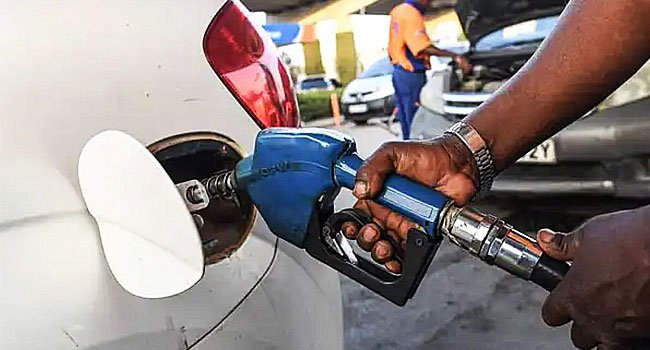
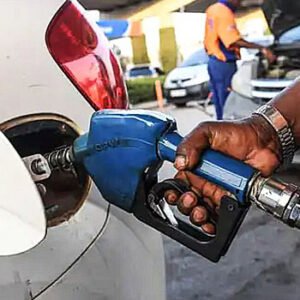
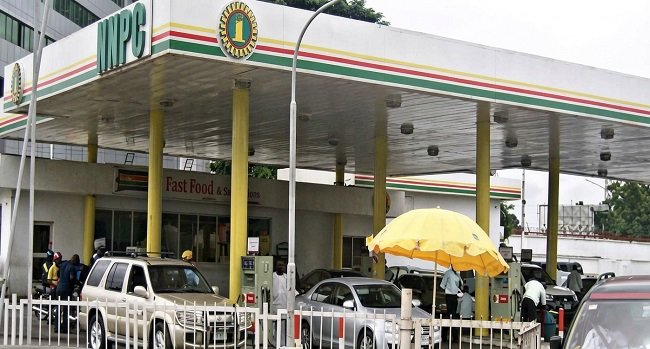
The Federal Government has announced a 30-day discount on petrol sold by the Nigerian National Petroleum Company Limited (NNPCL) as part of measures to ease the impact of rising fuel prices on Nigerians.


Minister of Finance and Coordinating Minister of the Economy, Taiwo Oyedele, announced the initiative on Thursday during a press briefing on fuel prices and subsidy-related issues in Abuja.

Oyedele said the discount would initially run for 30 days, with priority given to public transport operators nationwide.

According to him, the arrangement is not a return to fuel subsidy but a move by the government to sell petrol at cost.

“We are offering a discount on petrol dispensed by NNPC Limited for the next 30 days in the first instance with priority for public transporters nationwide. So, it’s not a subsidy, government is just saying we sell to you at cost,” the minister said.

FG Targets ₦1,350 Per Litre Petrol Cost Ceiling

Oyedele also disclosed that the government was negotiating a ceiling of ₦1,350 per litre on the ex-gantry or landing cost of petrol to help stabilise pump prices.

He explained that the proposed ceiling was designed to shield consumers from sudden increases triggered by fluctuations in global crude oil prices and foreign exchange rates.

However, the ₦1,350 ceiling does not mean petrol will sell at that price at filling stations. Instead, it is intended to moderate changes in the underlying cost of the commodity and reduce the immediate impact of market volatility on consumers.

Under the proposed price modulation mechanism, the ceiling would be reviewed monthly.

Oyedele said refiners and importers would initially bear any shortfall when costs rise above the agreed ceiling, with the possibility of recovering the difference when market conditions improve.

Government Rules Out Return to Fuel Subsidy

The minister maintained that the proposed mechanism was neither a fuel subsidy nor price control, describing it as an approach to smoothing price changes over time.

He argued that more predictable fuel prices would help households and businesses plan their expenses, particularly following increases in transportation and operating costs.

According to Oyedele, limiting sudden price changes could reduce uncertainty, noting that sharp increases in petrol prices are not always followed by equally rapid reductions.

He added that the government would publish the ceiling figures to promote transparency, with monthly reviews reflecting changing market conditions.

The announcement comes amid continued concerns over the cost of petrol and its impact on transport fares, household spending and business operations.

The 30-day discount is expected to provide temporary relief, particularly for public transport operators, although the government has not specified the exact discount per litre in the announcement.


You May Like

Leave a Reply

Your email address will not be published. Required fields are marked *

Most Popular

Must Read

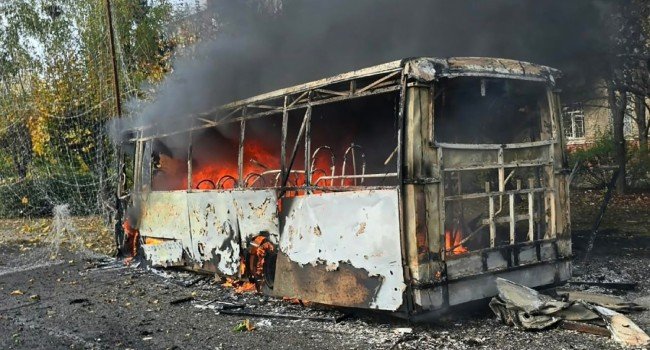
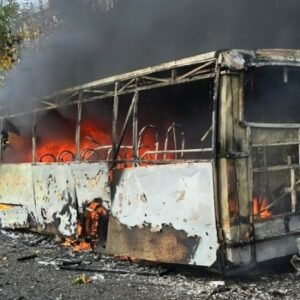
Burnt-out passenger bus after a Russian strike in Kramatorsk, eastern Ukraine, on October 8, 2026.

30 civilians killed as Russian strike hits buses in Ukraine

At least 30 people have been killed after two passenger buses were struck by a Russian glide bomb in Kramatorsk, a frontline city in eastern Ukraine, prompting President Volodymyr Zelensky to vow that the attack would not go unanswered.   Ukrainian authorities accused Russia of deliberately targeting civilians in Thursday’s attack, October 8, describing it as one of the deadliest single strikes in recent weeks. Photographs released by local authorities showed the burnt-out remains of the buses, with debris and bodies scattered across the road. Zelensky warned that the death toll could rise and called on the international community to respond to the attack. “Russia is trying to destroy all life in (the) Donbas (region) and the world must respond to this,” he wrote on Telegram. Police said the buses were hit by a glide bomb, while emergency services reported that three additional people were killed in shelling in a nearby village. The attack came a day after a Russian missile strike destroyed a five-storey apartment building in Pryluky, in northern Ukraine’s Chernihiv region. The earlier strike reportedly killed 22 people, including five children. Ukraine Accuses Russia of Targeting Civilians Donetsk Governor Vadym Filashkin accused Russian forces of deliberately targeting civilians and disregarding international humanitarian law. Kramatorsk City Council also condemned the attack, describing it as another crime against the civilian population. The council said the location had no military targets, although the city has served as an important logistics and supply hub for Ukraine’s military throughout the conflict. Kramatorsk, which had a pre-war population of approximately 150,000, remains one of the key cities in the eastern Donetsk region that Russian forces have yet to capture. The city forms part of Ukraine’s so-called fortress belt, a network of strategically important locations that Ukrainian troops are fighting to retain. Civilian Deaths Mount as Attacks Intensify The latest casualties have renewed concerns about the growing toll on civilians as Russia and Ukraine intensify long-range attacks during the conflict, which began with Russia’s full-scale invasion in February 2022. The United Nations has verified more than 17,000 civilian deaths since the invasion, while warning that the actual figure is considerably higher. British Foreign Secretary Ed Miliband, who visited the site of the Pryluky attack on Thursday, accused Russian President Vladimir Putin of pursuing a strategy of terrorising civilians. His remarks came as the United Kingdom announced additional sanctions against Moscow. Zelensky also urged the United States to increase pressure on Russia, including by supplying Ukraine with improved air defence systems, to push Putin towards negotiations. Kyiv Faces Worsening Security Situation Ukraine’s capital, Kyiv, has also experienced increasingly intense attacks, including a barrage of Russian ballistic and cruise missiles and fast-moving, jet-powered drones on Wednesday. Kyiv Mayor Vitali Klitschko said three people were killed and 14 injured in the capital on Thursday. Key transport bridges, railway infrastructure and parts of the energy network have also come under attack. Klitschko warned that Kyiv, which had been relatively spared from the destruction experienced in frontline areas during the early years of the war, needed to prepare for worsening security conditions. Meanwhile, Russian forces have advanced towards the eastern outskirts of Kramatorsk, prompting calls for civilians remaining in the area to relocate to safer parts of Ukraine. Following Thursday’s attack, Filashkin ordered the suspension of public transport in Kramatorsk and neighbouring Sloviansk, citing a sharp deterioration in security. Ukraine launched a counter-offensive against Russian forces around Lyman, north of Kramatorsk and Sloviansk, last month. Ukrainian authorities reported some success in regaining pockets of territory.
Read more

Editor's Pick

Trending News

Newsletter

Enter your email address and receive notifications of news by email.

You have been successfully Subscribed! Ops! Something went wrong, please try again.

© 2026 GongNews. All Rights Reserved.