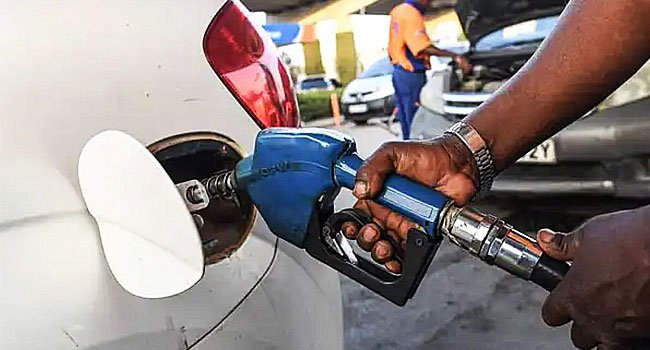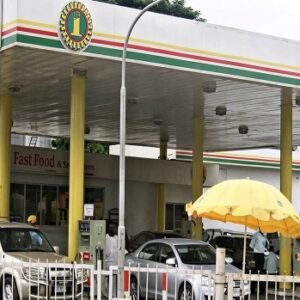

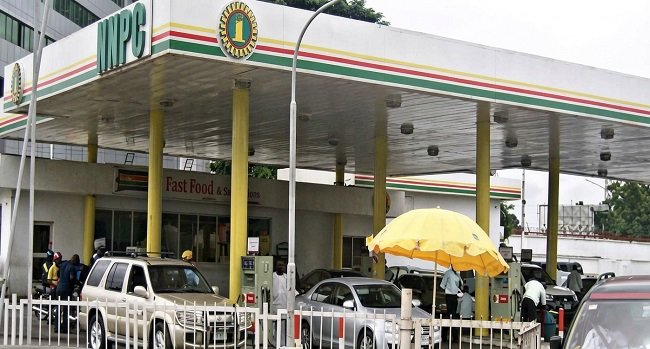
The Federal Government has announced a 30-day discount on petrol sold by the Nigerian National Petroleum Company Limited (NNPCL) as part of measures to ease the impact of rising fuel prices on Nigerians.
Minister of Finance and Coordinating Minister of the Economy, Taiwo Oyedele, announced the initiative on Thursday during a press briefing on fuel prices and subsidy-related issues in Abuja.
Oyedele said the discount would initially run for 30 days, with priority given to public transport operators nationwide.
According to him, the arrangement is not a return to fuel subsidy but a move by the government to sell petrol at cost.
“We are offering a discount on petrol dispensed by NNPC Limited for the next 30 days in the first instance with priority for public transporters nationwide. So, it’s not a subsidy, government is just saying we sell to you at cost,” the minister said.
FG Targets ₦1,350 Per Litre Petrol Cost Ceiling
Oyedele also disclosed that the government was negotiating a ceiling of ₦1,350 per litre on the ex-gantry or landing cost of petrol to help stabilise pump prices.
He explained that the proposed ceiling was designed to shield consumers from sudden increases triggered by fluctuations in global crude oil prices and foreign exchange rates.
However, the ₦1,350 ceiling does not mean petrol will sell at that price at filling stations. Instead, it is intended to moderate changes in the underlying cost of the commodity and reduce the immediate impact of market volatility on consumers.
Under the proposed price modulation mechanism, the ceiling would be reviewed monthly.
Oyedele said refiners and importers would initially bear any shortfall when costs rise above the agreed ceiling, with the possibility of recovering the difference when market conditions improve.
Government Rules Out Return to Fuel Subsidy
The minister maintained that the proposed mechanism was neither a fuel subsidy nor price control, describing it as an approach to smoothing price changes over time.
He argued that more predictable fuel prices would help households and businesses plan their expenses, particularly following increases in transportation and operating costs.
According to Oyedele, limiting sudden price changes could reduce uncertainty, noting that sharp increases in petrol prices are not always followed by equally rapid reductions.
He added that the government would publish the ceiling figures to promote transparency, with monthly reviews reflecting changing market conditions.
The announcement comes amid continued concerns over the cost of petrol and its impact on transport fares, household spending and business operations.
The 30-day discount is expected to provide temporary relief, particularly for public transport operators, although the government has not specified the exact discount per litre in the announcement.