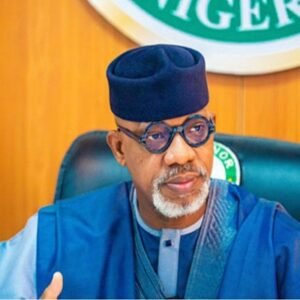

Nigeria needs an additional 554,353 personnel to adequately staff the proposed state police system, Ogun State Governor Dapo Abiodun has said, calling for a sustainable funding arrangement to ensure all states can participate in the reform.
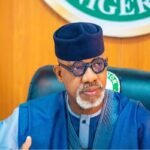
Abiodun, who chairs the Southern Governors’ Forum, made the disclosure on Thursday while delivering the keynote address at a colloquium marking the posthumous 70th birthday of former Ondo State Governor Rotimi Akeredolu at the International Conference Centre, University of Ibadan, Oyo State.
According to a report by PUNCH, the governor described state policing as a national security priority, arguing that Nigeria could no longer rely on a system in which policing responsibilities were largely centralised at the federal level.
He said data from the Nigeria Governors’ Forum, based on the United Nations benchmark of one police officer to every 414 citizens, indicated that the country would require 554,353 additional personnel.
The proposed recruitment would translate to approximately 184,784 officers annually over three years.
“The debate is no longer whether Nigeria needs state police, but how swiftly and sustainably we establish it,” Abiodun said.
Abiodun Warns Against Funding Inequality
The Ogun governor warned that differences in states’ revenue-generating capacities could undermine the proposed state police system without an effective funding mechanism.
He noted that Lagos, Rivers, the Federal Capital Territory, Ogun and Enugu accounted for 61.6 per cent of internally generated revenue, while 76 per cent of states generated below the national average of ₦13,600 per capita. He added that half of the states earned less than ₦6,334 per capita.
Abiodun argued that states with limited financial resources should not be left without adequate security capacity, warning that insecurity in one state could have consequences for the entire country.
He therefore proposed a constitutional state police take-off fund featuring equal-access grants, needs-based financial support and disbursements tied to established standards.
The governor also disclosed that a Presidential Working Group was developing operational plans, financial models, accountability mechanisms and legislative oversight arrangements for the proposed system.
These frameworks would cover recruitment, training, governance and procedures for addressing abuses.
Recruitment, Training and Accountability
Abiodun stressed that recruitment into state police forces must be transparent, properly vetted and representative of the communities they serve.
He said officers should receive training in investigations, evidence handling, lawful arrest, conflict management, proportionate use of force and the protection of vulnerable people.
The governor also warned against political interference, insisting that police protection must be available to everyone regardless of political affiliation.
He specifically mentioned political opponents, journalists, peaceful protesters and minority communities as groups entitled to equal protection under the law.
Abiodun called for improved personnel welfare, including regular salaries, adequate equipment, medical care, insurance and reliable support for officers’ families.
He maintained that welfare, discipline and accountability must develop together, while funding arrangements should cover salaries, training, maintenance, communications, investigations and equipment replacement.
He further cautioned against allowing private interests to influence police operations, saying contributions from private individuals and organisations must operate under clear rules and public accountability.
State Police Linked to Economic Growth
Abiodun argued that effective policing was essential not only for public safety but also for economic development.
He said insecurity threatened foreign investment, agricultural production and infrastructure development, making improved security a priority for Nigeria’s economic ambitions.
“We cannot build a $1 trillion economy on fragile security,” he said, adding that investors would be reluctant to commit funds where security risks remained high.
The governor also credited Akeredolu with helping to advance the state policing debate through regional security cooperation.
He recalled the late governor’s role in establishing the Western Nigeria Security Network, popularly known as Amotekun, on 9 January 2020.
Aiyedatiwa, Fayemi Pay Tribute to Akeredolu
Ondo State Governor Lucky Aiyedatiwa said Akeredolu’s advocacy for state police had progressed from a regional campaign to a central issue in Nigeria’s national policy and constitutional discussions.
Aiyedatiwa, who served as Akeredolu’s deputy before succeeding him as governor, said the late leader viewed public office as an opportunity to serve rather than a symbol of status.
He described Amotekun as an example of how communities closest to security challenges could play a meaningful role in protecting themselves.
Aiyedatiwa said Nigeria must establish a state policing system that was responsive, professional and accountable while protecting citizens from potential abuses.
Former Ekiti State Governor Kayode Fayemi also paid tribute to Akeredolu, praising his commitment to justice, courage and a decentralised security structure.
Fayemi said Akeredolu’s contribution to the South-West extended beyond establishing a security outfit, noting that his advocacy demonstrated how regional cooperation could help states address shared challenges.
Meanwhile, Director-General of the DAWN Commission, Seye Oyeleye, called for the state policing debate to move from commemoration to implementation.
He said the central questions now concerned how the system would be funded, staffed, equipped and regulated, as well as how authorities would prevent political interference and ensure accountability.
Oyeleye maintained that state policing was a national issue rooted in Nigeria’s federal structure and security challenges, rather than an agenda belonging to a particular region or ethnic group.