
/ Oct 09, 2026
/ Oct 09, 2026

South African Judge wins 2026 Nobel Peace Prize, draws Trump criticism

Published on

By

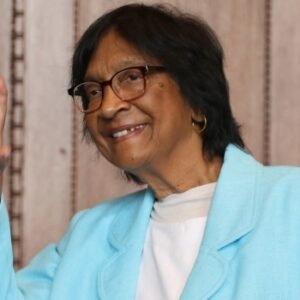
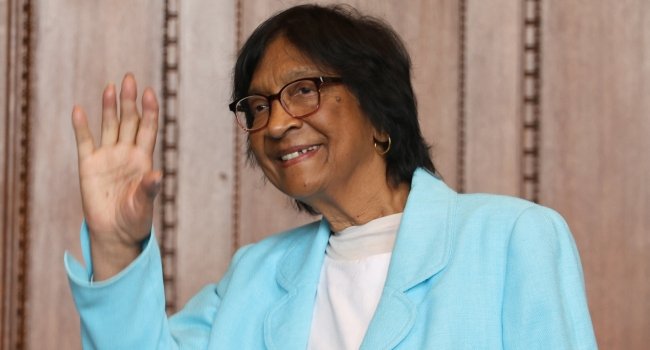
South African jurist Navi Pillay has won the 2026 Nobel Peace Prize in recognition of her decades-long work promoting international law and ensuring accountability for war crimes, crimes against humanity and genocide.


The 85-year-old lawyer, who headed the International Criminal Tribunal for Rwanda and served as a judge at the International Criminal Court (ICC), received the award on Friday, October 9, 2026.

Pillay dedicated the honour to survivors of international crimes while speaking in Nuremberg, Germany, where she was attending a conference at the historic Palace of Justice, the venue of the trials of Nazi leaders after World War II.

According to the Norwegian Nobel Committee, Pillay has been instrumental in ensuring that perpetrators of serious international crimes are prosecuted.

The committee praised her independence, expertise and steadfastness, describing her as one of the most respected international jurists of her time.

Pillay’s Work on Gaza Genocide Allegations

Pillay previously headed the United Nations Independent International Commission of Inquiry, which concluded in a report published last year that genocide was occurring in Gaza.

The commission does not speak on behalf of the United Nations as a whole.

Israel has rejected the report’s findings, describing them as distorted and false. Its foreign ministry also condemned Pillay’s Nobel Peace Prize, arguing that the award legitimised what it called anti-Israel hatred.

However, the Nobel Committee clarified that the award recognised Pillay’s career-long efforts to combat genocide and did not constitute a position on whether Israel’s actions in Gaza amounted to genocide.

Pillay, who currently serves as a judge at the International Court of Justice (ICJ), is also involved in a case concerning allegations of genocide against Myanmar.

She previously told AFP that her team had shared thousands of pieces of information with prosecutors at the International Criminal Court.

Pillay Criticises Attacks on International Justice

Speaking in Nuremberg, Pillay warned that international law and human rights were facing significant political pressure.

She said world leaders had a legal obligation to protect human rights and refrain from war, while expressing concern about attacks on the International Criminal Court.

Her comments come amid repeated criticism of international justice institutions by US President Donald Trump and his administration.

In September, Trump called on member states to withdraw from the ICC, describing it as a rogue institution.

The Nobel Committee’s decision is likely to intensify tensions with the Trump administration, which has repeatedly challenged international institutions and their authority.

Jorgen Watne Frydnes, chair of the Norwegian Nobel Committee, said the award sent a clear message to those pressuring international justice institutions, sanctioning judges and attacking their work.

He told AFP that such actions needed to stop.

Pillay also made a light-hearted reference to Trump’s widely reported desire to win the Nobel Peace Prize herself during celebrations following the announcement.

“If you clap a little bit more I may share this prize with Trump,” she said, drawing laughter during a standing ovation.

From Apartheid-Era South Africa to International Justice

Born into a family of Tamil descent, Pillay is the daughter of a bus driver. Her legal career began in South Africa, where she defended anti-apartheid activists.

She later became a prominent figure in international criminal justice, leading the International Criminal Tribunal for Rwanda and serving in senior judicial roles within the international legal system.

Her work has focused on accountability for atrocities and the protection of human rights.

Reflecting on the response to her work, Pillay questioned why speaking the truth should require courage.

The United Nations described her award as a testament to the importance of human rights, while the International Criminal Court said the recognition was particularly significant amid growing attacks on international law.

Nobel Peace Prize Award Ceremony

The 2026 Nobel Peace Prize comes with a gold medal, a diploma and prize money of $1.2 million.

The formal award ceremony is scheduled for December 10 in Oslo, Norway, marking the anniversary of the death of Alfred Nobel, the Swedish inventor and philanthropist who established the prizes.
You May Like

Leave a Reply

Your email address will not be published. Required fields are marked *

Most Popular

Must Read

Nigeria’s growth hits 4.2% as state revenues surge 93% – World Bank

Nigeria’s economy grew by 4.2 per cent in the first half of 2026, while state government revenues surged by 93 per cent in real terms, creating opportunities for increased infrastructure investment, according to the World Bank.   The figures were contained in the bank’s latest Nigeria Development Update, titled Beyond the Federal Purse: How Higher Revenues Reshaped State Priorities, which examined the impact of rising public revenues on government spending and economic growth. The report, published on October 9, 2026, said economic growth improved from 3.9 per cent in the corresponding period of 2025 and 3.5 per cent in 2024. Services accounted for much of the expansion, supported by a stronger contribution from agriculture. The improvement also helped stabilise Nigeria’s poverty rate for the first time since 2019, although persistent inflation continued to weaken household purchasing power. State Revenues and Capital Spending Rise The World Bank reported that aggregate state revenues increased by approximately 93 per cent in real terms, while expenditure rose by about 92 per cent over the period under review. Between 2023 and 2025, gross federation revenues also increased by 69 per cent in real terms, largely reflecting exchange-rate reforms, the removal of the petrol subsidy and improvements in revenue administration. States recorded the largest increase in federation revenue flows, benefiting from higher statutory allocations, refunds, the settlement of outstanding federal obligations, dedicated intervention funds and stronger Value Added Tax collections. The additional funds supported increased capital spending, with capital expenditure rising from 46 per cent to 61 per cent of total state spending. Transport infrastructure recorded the largest increase, while housing, agriculture and other investments intended to support economic expansion also received higher allocations. However, the report noted that spending on education, healthcare and social protection grew more slowly than expenditure on economic infrastructure. Education Spending Falls Despite Higher Revenues Despite the increase in available public funds, education’s share of total expenditure declined from 14.9 per cent in 2021 to 12.1 per cent in 2025. Health spending remained broadly stable at around seven per cent of total expenditure, while social protection’s share increased from 1.4 per cent to 4.4 per cent over the same period. World Bank Country Director for Nigeria, Mathew Verghis, said the increase in state revenues presented an opportunity to improve essential public services and create jobs. “The bold macroeconomic reforms have substantially increased fiscal revenues at the state level, providing a unique opportunity to improve infrastructure, education, healthcare, and water services, which are critical to creating more and better jobs,” Verghis said. He added that stronger spending efficiency, accountability and service delivery would be necessary to ensure public resources translated into improved living conditions for Nigerians. Oil Prices Boost External Reserves The report also examined the mixed effects of the Middle East conflict on Nigeria’s economy. Higher oil prices strengthened export earnings, helping Nigeria’s current account surplus rise to $12 billion, equivalent to 7.1 per cent of gross domestic product, in the first half of 2026. This represented an increase from $8.6 billion, or 6.7 per cent of GDP, recorded in the corresponding period of the previous year. Although higher oil prices also boosted government revenues, existing commitments under forward oil sales and oil-backed financing arrangements limited the potential gains. Nigeria’s gross external reserves exceeded $54 billion in September 2026, supported largely by foreign portfolio inflows. The report also noted improvements in the functioning of the foreign exchange market following economic reforms. However, higher fuel prices following the outbreak of the conflict, combined with food price pressures during the lean season, slowed progress in reducing inflation. World Bank Projects 4.4% Growth Nigeria’s headline inflation declined from 27.6 per cent in January 2025 to 15.2 per cent in December 2025, supported by tight monetary policy and reduced exchange-rate volatility. The World Bank projected average economic growth of 4.4 per cent between 2026 and 2028, while inflation is expected to ease gradually to approximately 12 per cent by 2028. The bank also projected that poverty would begin to decline, although achieving sustained improvements in living standards would depend on the effective implementation of economic reforms. It stressed that improved internally generated revenue, stronger public spending efficiency and greater accountability at the state level would be essential to ensuring that increased government revenues translated into better public services and improved living conditions.
Read more

Editor's Pick

Trending News

Newsletter

Enter your email address and receive notifications of news by email.

You have been successfully Subscribed! Ops! Something went wrong, please try again.

© 2026 GongNews. All Rights Reserved.