

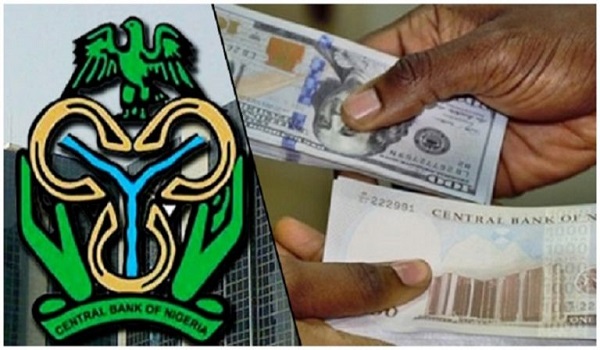
The Central Bank of Nigeria (CBN) hit the nail on the head yesterday.
It accused commercial banks of hoarding over $5 billion in foreign currencies against the threshold approved by the apex bank.
CBN blamed the prevailing forex scarcity and naira’s free-fall against the dollar on the actions of the Deposit Money Banks (DMBs).
The accusation came a day after the apex bank expressed concern about banks’ excessive forex exposure.
At the close of the market yesterday, the naira exchanged N1,450/$ at the parallel market.
It was a substantial gain (N70) against the dollar, having closed on Wednesday at N1, 520/$.
“Consequently, the CBN has mandated these banks to release any excess foreign currency they hold to individuals and businesses in need of foreign exchange by today’s deadline.
“Failure to comply with this directive will result in sanctions in accordance with existing rules and regulations.”
To show how serious the CBN is about this directive, the official said that “teams of examiners have been deployed to all commercial banks heavily engaged in FX transactions to monitor compliance with the directive.”
The CBN has moved to address the biting scarcity of foreign currency.
By releasing the surplus foreign currency, it is expected that the market will experience increased liquidity, and subsequently alleviate the strain on naira’s value, it was learnt.
Initial market response to the CBN directive, the official said, can be described as mixed.
Some banks have swiftly adhered to the directive, ensuring they meet the deadline for releasing the excess dollars.
The approach is seen as a positive step towards easing the pressure on the naira and promoting a more favourable exchange rate.
On the other hand, some financial institutions, the source said, “are cautious about revealing their exact dollar reserves and are treading carefully before fully complying”.
Their hesitation might stem from concerns about potential disruption to their operations and the potential impact on their customers.
“Just as some Nigerians prefer to keep their money in dollars because the naira is not a good store of value, banks also hold excess dollar liquidity to make gains. They do their own at the institutional level.
Read Also:
Customs To Use CBN Exchange Rate For Duty Payment – Adeniyi
“What the CBN is saying with this new circular is that you cannot hold excess dollar liquidity again.
“Any foreign exchange you are holding must be committed to something, a transaction or obligation you can prove.
“Banks have made a lot of revaluation gains. Some banks, I believe, got approval under the last administration to hold more dollars than the requirement.
“The idea is that if banks sell all these excess dollars, there will be liquidity and the exchange rate will stabilise. Foreign investors will come in,” the top banker explained.
The source added: “The CBN remains resolute in its stance and all banks must cooperate to stabilise the naira and address the foreign currency shortage.
“The apex bank aims to ensure adequate foreign exchange supply for critical sectors such as manufacturing, agriculture, and essential imports.”
What the expert says:
Dr. Wahab Balogun of Ambosit Capital Managers sees potential benefits and drawbacks in the CBN directive.
He said: “While increased FX liquidity and a stabilised Naira are desirable, managing potential disruptions to banks, inflation, and other sectors is crucial.
“Careful monitoring, adjustments, and communication from the CBN and banks will be vital for navigating the complexities of this intervention and achieving its intended positive outcomes.”
Balogun highlighted the positive implications of the development to include: increased FX liquidity as releasing excess foreign currency into the market can alleviate the current shortage, leading to smoother transactions and potentially stabilizing the naira’s exchange rate.
He argued that “businesses reliant on foreign exchange, especially critical sectors like manufacturing and agriculture, could benefit from easier access to funds for imports and operations”.
The directive to the banks by the CBN, he noted, will encourage “banks to adhere to regulations and avoid excessive foreign currency holdings, potentially promoting a more efficient and transparent FX market in the long run.”
“Addressing the FX shortage and stabilizing the Naira can contribute to overall financial stability, boosting investor confidence and economic activity.”
On the negative side, Balogun stated that releasing large amounts of foreign currency might cause temporary operational challenges for banks, which in turn would impact their liquidity and financial ratios.
He said: “Banks earn income through foreign exchange transactions, and a sudden decrease in their holdings could affect their profitability. Most importantly, increased liquidity could fuel inflation if not managed carefully, especially if demand for goods and services rises faster than supply.
Balogun noted that “the sector’s heavy reliant on a weaker naira (e.g., exports) could face challenges if the exchange rate strengthens significantly and the reaction of foreign investors and speculators to the increased FX liquidity could influence the exchange rate and market stability”.





















https://t.me/s/bEEFCASiNo_oFfICIaLs