/ Nov 18, 2026
/ Nov 18, 2026

Stories of how over 1,400 protesters are languishing in Police custody

Published on

By

There are over 1,400 protesters, Nigerian youths who participated in the 10-day #Endbadgovernance protests, languishing in Police custody across the country.

“Many of the protesters in Abuja are (being held) in the Intelligence Response Team, IRT; Bombai in Kano, and Kaduna Police commands, and other parts of the country.”

One of the lawyers to the #Endbadgovernance protesters, Mr. Deji Adeyanju, revealed this.

He also said they were fed once a day.

“For now, the majority of the protesters feed once a day from what we have heard. This is just a local arrangement with the Police.”

Also, he said the Police have refused to arraign the protesters before a Federal High Court in Abuja, which was postponed from Monday to yesterday.

Adeyanju said: “We told them (the Police) to avail us the charge on Monday, which they said they would but they didn’t.

“We told them to avail us of the charge today (yesterday, Tuesday), but they have refused. Can protesting be an offence?”

Over 1,400 held nationwide

On the number of protesters held in Police custody, he said: “We do not have a specific number. But we have no fewer than 1,400 protesters, who were arrested nationwide in detention.

“In Abuja, we are aware that no fewer than 50 people were arrested. We were able to secure the release of 27 people and it is assumed that 30 or more people are in custody.

“Many of the protesters in Abuja are in the Intelligence Response Team, IRT. (Others are in) Bombai in Kano, and Kaduna Police commands, and other parts of the country.

READ ALSO:

Hardship protest: Army detains soldier over killing of 16-year-old protester in Kaduna

“Some family members have seen their relations in police custody. Three days ago, some of the family members were allowed to see the protesters.

“And even today (yesterday, Tuesday), when we were at IRT in Abuja, we saw some of the family members of the protesters at the facility.

“Before people are allowed to see the protesters, they have to get several clearances. They did not allow lawyers to have access to the protesters.

Adaramoye Lenin, Mosiu Sodiq and Eleojo Opaluwa
Meanwhile, among the protesters the Nigerian government has failed to arraign are three activists involved in the protest. They are Adaramoye Lenin, Mosiu Sodiq and Eleojo Opaluwa.

This is despite holding them in detention for two weeks.

Civil society organisations, CSOs, have accused the Federal Government of playing a game of suppression on the protesters and a violation of their rights

The activists were detained under orders from National Security Adviser, Nuhu Ribadu.

No charges have been filed against the trio, prompting the government to postpone their arraignment to August 23.

‘Let’s hope they’re still alive and well’
Dr. Zikirullahi Ibrahim, Executive Director of Resource Centre for Human Rights and Civic Education CHRICED, expressed concern over the detainees’ well-being.

Speaking to Vanguard, he said: “We hope that a good number of the detained protesters are still alive.

“If they are, we wonder why the government is delaying their day in court. These are citizens of Nigeria.

“The situation the government has created enabled their protest. People said they are hungry and took to the streets to protest. What is difficult about that?

“Of course, we know that in this country, if you’re not a politician, the child of a top security chief, or a wealthy individual, you are treated as a nobody, and that’s why our laws seem lopsided in dealing with consequences.”

For Deji Adeyanju, “The reason they do not want to arraign the protesters is because they know that protesting is not a crime.

“They just want to perpetually keep the protesters in custody unjustly, and this action stands condemned.”
You May Like

One thought on “Stories of how over 1,400 protesters are languishing in Police custody”

Leave a Reply

Your email address will not be published. Required fields are marked *

Most Popular

Must Read

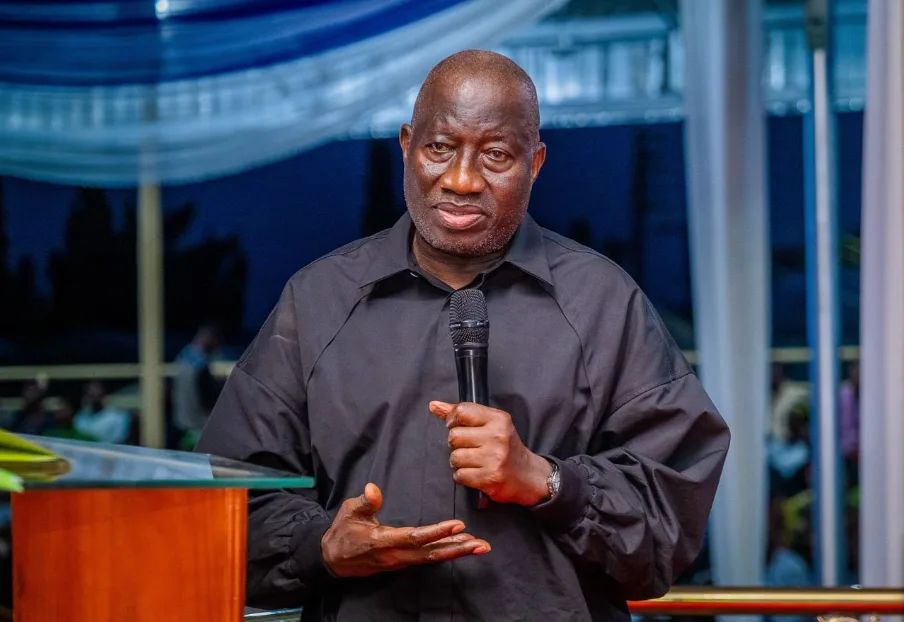
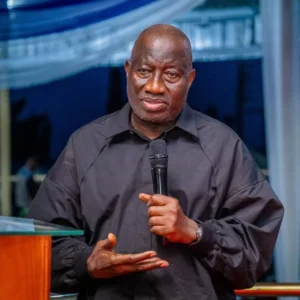
Former President Goodluck Jonathan speaking at the 2027 Peace and Security Conference in Abuja, where he warned against political violence ahead of Nigeria's general elections.

2027 elections: Jonathan warns of possible post-election violence

Former President Goodluck Jonathan has warned that growing political intolerance, campaign-related violence and inflammatory rhetoric could trigger a post-election crisis in Nigeria ahead of the 2027 general elections.   Jonathan raised the concern on Tuesday at the 2027 Peace and Security Conference in Abuja, organised by the Goodluck Jonathan Foundation. The conference, themed ‘Safeguarding Peace and Strengthening Social Cohesion in a Competitive Political Environment’, brought together political leaders, security officials and other stakeholders to discuss threats to national stability. The former President said he had received growing concerns from Nigerians and international observers about the country’s political direction, warning that the possibility of violence after the 2027 elections should not be ignored. He identified political intolerance, thuggery, the exploitation of young people for violence and attacks on political opponents as developments requiring urgent attention. According to Jonathan, political actors are increasingly unwilling to accommodate opposing views or recognise the right of others to contest for political power. His warning comes amid a series of reported attacks involving political candidates, supporters and campaign convoys across the country. On November 13, 2026, the convoy of President Bola Tinubu reportedly came under attack shortly after he observed Jumu’ah prayers in Garki, Abuja. Two days later, suspected thugs attacked the campaign convoy of Nigeria Democratic Congress vice-presidential candidate, Rabiu Kwankwaso, and Kano governorship candidate Aminu Gwarzo in Bichi Local Government Area, Kano State. Earlier in November, the convoy of NDC presidential candidate Peter Obi was attacked in Calabar, Cross River State. Some of his supporters were also reportedly assaulted during a town hall meeting in Lagos. Supporters of African Democratic Congress presidential hopeful Atiku Abubakar have equally reported attacks in Edo, Kaduna and Cross River states. Similarly, African Action Congress presidential candidate Omoyele Sowore and his entourage were attacked at a restaurant in Ado-Ekiti, Ekiti State, on October 30. Jonathan Raises Concerns Over Judiciary The former President also expressed concern over conflicting judicial pronouncements, particularly decisions by courts of coordinate jurisdiction. He warned that contradictory rulings on similar matters could undermine public confidence in the judiciary and encourage citizens to take the law into their own hands. Jonathan stressed the importance of protecting the independence and integrity of the judiciary, noting that declining trust in democratic institutions could create unnecessary tension. He also cautioned against the use of ethnic and religious sentiments during the 2027 elections. Calling for reforms in Nigeria’s political recruitment process, Jonathan urged voters to prioritise competence, credibility and national interest over prejudice and personal ambition. He said Nigeria needed leaders capable of uniting the country and advancing national development. Sambo, Defence Minister Urge Political Restraint Former Vice-President Namadi Sambo, who chaired the conference, urged political leaders to treat political differences as opportunities for constructive engagement rather than sources of division. Sambo advocated inclusive governance, responsible leadership and respect for the rule of law, stressing the need to build bridges across ethnic, religious and political differences. He expressed optimism that discussions at the conference would strengthen public trust, democratic institutions and national unity. Minister of Defence, General Christopher Musa (retd.), also warned against allowing political competition to fuel insecurity and national disunity. Represented by his Special Adviser on Strategic Communications, Mercy Bala, the minister urged political parties and candidates to prioritise peace, restraint and responsible political engagement. He also warned against inflammatory language, hate speech, misinformation and divisive narratives capable of deepening existing divisions. INEC Threatens Prosecution Over Electoral Violence The Chairman of the Independent National Electoral Commission, Professor Joash Amupitan, condemned reported attacks on campaign convoys and political supporters. Represented by INEC National Commissioner May Agbamuche-Mbu, Amupitan warned political actors, sponsors and supporters against violence and intimidation, declaring that perpetrators would face prosecution. He referenced Sections 96 and 97 of the Electoral Act 2026, which prohibit abusive and inflammatory campaign language, the deployment of thugs at political rallies and the use of force to intimidate voters or opponents. The INEC chairman also disclosed that the law increased penalties for electoral offences, prescribing fines of up to ₦5m or 12 months’ imprisonment for individuals and up to ₦10m for political parties. He urged political parties to discipline their supporters and use established platforms for dialogue to resolve disagreements. Foundation Raises Concerns Over Voter Confidence Meanwhile, former President of the ECOWAS Commission, Omar Touray, identified public trust in democratic institutions and electoral processes as essential to maintaining political stability. He urged political parties to pursue electoral grievances through constitutional and legal channels rather than intimidation or violence. Executive Director of the Goodluck Jonathan Foundation, Ann Iyonu, also warned that insecurity, economic pressures and declining public confidence could heighten political tensions ahead of the 2027 elections. Citing an Afrobarometer survey, she said fewer than four in 10 Nigerians believed the 2027 elections would be free and fair. Iyonu identified vote buying, electoral violence, violations of electoral laws and manipulation of results as some of the concerns troubling voters. She warned that a disputed or violence-marred election in Nigeria could have consequences beyond the country’s borders, potentially affecting democratic stability, regional security and economic activities across West Africa. The stakeholders called for credible elections, responsible political conduct and stronger democratic institutions to safeguard peace and national unity.
Read more

Editor's Pick

Trending News

Newsletter

Enter your email address and receive notifications of news by email.

You have been successfully Subscribed! Ops! Something went wrong, please try again.

© 2026 GongNews. All Rights Reserved.