
/ May 15, 2026
/ May 15, 2026

Speaker Abass withdraws mandatory voting bill amid controversy in Nigeria

Published on

By

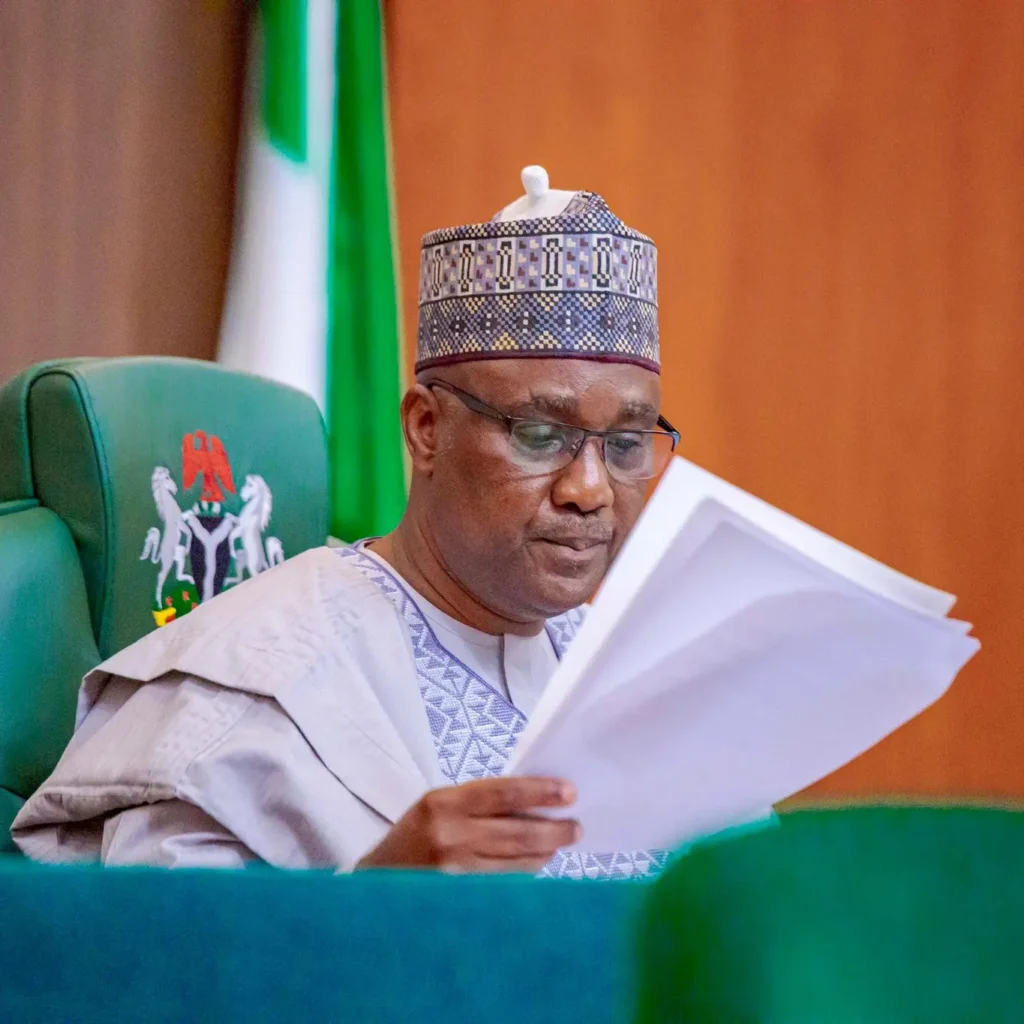
Speaker of the Nigerian House of Representatives, Abbas Tajudeen, has withdrawn the controversial Compulsory Voting Bill to amend Electoral Act 2022.

The bill withdrawal was disclosed in a statement on Monday by the speaker’s special adviser on media and publicity, Musa Abdullahi Krishi.

According to him, the decision was to give room for further dialogue on the bill, which generated controversies.

“Following extensive consultations with a broad spectrum of stakeholders, he has decided to withdraw the Bill to Amend the Electoral Act 2022 to make voting mandatory for all eligible Nigerians, which he co-sponsored with Hon. Daniel Adama Ago.”

This withdrawal will allow time for further dialogue on how best to cultivate a culture of voluntary participation that honours both our democratic ideals and the rights of our citizens.”

In May, a bill that sought to amend the Electoral Act 2022 to make voting mandatory for all eligible Nigerians passed second reading in the House of Representatives.

However, senior lawyers such as human rights activist, Femi Falana kicked against the bill.

You May Like

3 thoughts on “Speaker Abass withdraws mandatory voting bill amid controversy in Nigeria

Leave a Reply

Your email address will not be published. Required fields are marked *

Most Popular

Must Read

Defence Minister Christopher Musa meeting officials in Monaco discussing Nigeria’s AI-driven military upgrade and anti-drone defence systems under the Hybrid Intelligence Shield project.

Nigeria moves to deploy AI, anti-drone systems for military operations

Nigeria has announced plans to deploy artificial intelligence (AI) and advanced anti-drone systems as part of a major overhaul of its military operations, according to TheCable.   The Minister of Defence, Christopher Musa, disclosed the development while leading a high-level delegation to Monaco to finalise discussions on the Hybrid Intelligence Shield (HIS) project.   The initiative is designed to strengthen border security, protect urban centres and improve Nigeria’s response to evolving security threats, including insurgency, banditry, piracy and oil theft.   Under the proposed system, AI-powered surveillance technology will be deployed to rapidly detect and analyse threats using smart algorithms, while anti-drone technology will be used to intercept and neutralise unmanned aerial systems that may pose security risks.   The plan also includes the establishment of national and regional command-and-control centres to enhance real-time coordination and operational response across security agencies.   Musa said the project will prioritise technology transfer and local capacity development through the creation of a military “Centre of Excellence” in Nigeria.   The Defence Ministry is also expected to work with international partners, including Marss UK Ltd, while building indigenous capacity to address internal security challenges.   Nigeria continues to face multiple security threats across different regions, prompting growing calls from security experts for the adoption of advanced technologies such as AI surveillance systems, drones and integrated intelligence platforms to support military operations, TheCable reports.
Read more

Editor's Pick

Trending News

Newsletter

Enter your email address and receive notifications of news by email.

You have been successfully Subscribed! Ops! Something went wrong, please try again.

© 2026 GongNews. All Rights Reserved.