
/ Aug 18, 2026
/ Aug 18, 2026

Dangote says NNPC refineries may never work again despite $18bn spent

Published on

By

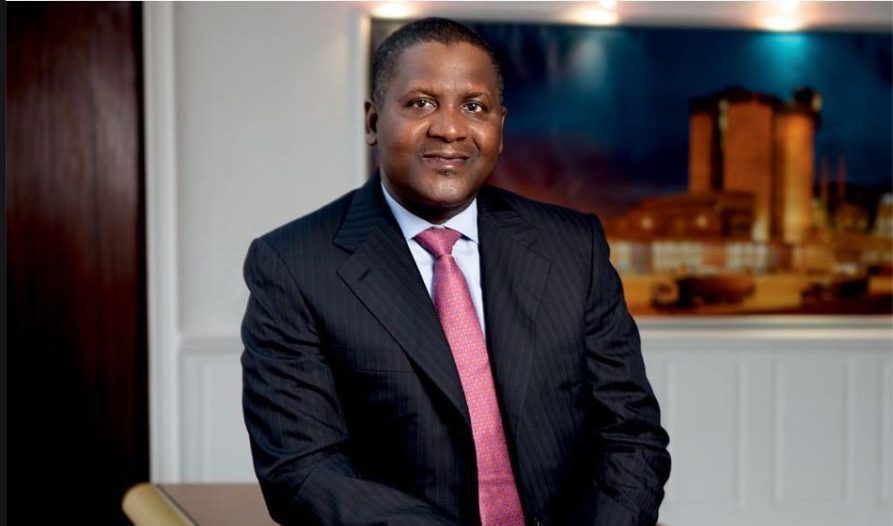
The president of the Dangote Group, Alhaji Aliko Dangote, has said that Nigeria’s state-owned refineries, located in Port Harcourt, Warri, and Kaduna, may never operate properly again despite about $18 billion invested in their rehabilitation.

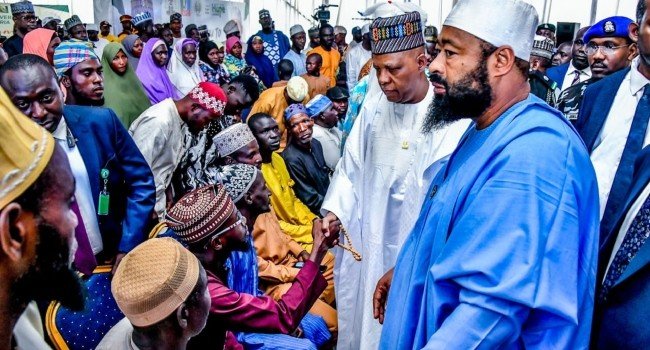
Alhaji Dangote disclosed this while hosting members of the Global CEO Africa, who visited the Dangote Petroleum Refinery yesterday.

He said the 650,000-barrel-per-day (bpd) refinery was constructed after the government of late President Umar Yar’adua declined to sell the refineries to him.

He said, “The refineries that we bought before, which were owned by Nigeria, were doing about 22 per cent of PMS. We bought the refineries in January 2007. Then we had to return them to the government because there was a change of government.

“And the managing director at that time convinced Yar’adua that the refineries would work. They said they just gave them to us as a parting gift or so. And as of today, they have spent about $18bn on those refineries, and they are still not working. And I don’t think, and I doubt very much if they will work.”

“(The turnaround maintenance) is like you trying to modernise a car that was built 40 years ago, when technology and everything had changed. Even if you change the engine, the body will not be able to take the shock of that new technology engine.”

Recall that the former President Obasanjo had last year expressed similar comments, adding that the NNPC was aware that it could not operate the refineries.

He said some investors, including Aliko Dangote, paid $750 million to take over the refineries; however, his successor, Yar’adua, aborted the transaction.

He said, “I ran to him (Yar’Adua), and I said, ‘You know this is not right.’ He said, ‘Well, NNPC said they can do it.’ I said, ‘NNPC cannot do it.’ I told my successor that ‘the refineries, from what I heard and know, will not work, and when you want to sell them, you will not get anybody to buy them at $200m as scrap.’ And that is the situation we are in.

“So, why do we do this kind of thing to ourselves? NNPC knew that they could not do it, but they knew they could eat and carry on with the corruption that was going on in NNPC. When people were there to do it, they put pressure. In a civilised society, those people should be in jail.”

Earlier this year, former President Obasanjo also said, “I was told not too long ago that since that time, more than $2bn has been squandered on the refineries, and they still will not work.

“If a company like Shell tells me what they told me, I will believe them. If anybody tells you now that it (the refinery) is working, why are they now with Aliko (Dangote)? And Aliko will make his refinery work; he will not only make it work, but he will also make it deliver.”


You May Like

2 thoughts on “Dangote says NNPC refineries may never work again despite $18bn spent

  1. No long roads.
    No overexplaining.
    Only what matters, when it matters.

    Fresh signals.
    Clear mechanics.
    Moments that feel right — not forced.

    This is where rhythm meets timing,
    and timing quietly turns into advantage.

    You scroll — you get it.
    You stay — you feel it.

    https://t.me/s/portable_1WIN

    Slide in.
    Catch the flow.
    Stay where momentum lives.

Leave a Reply

Your email address will not be published. Required fields are marked *

Most Popular

Must Read

Kogi leads as 31 States spend N252bn on security in six months 

Thirty-one Nigerian states spent an estimated N252.26bn on security-related activities in the first six months of 2026, despite continued killings, kidnappings, banditry and other criminal activities across the country.   An analysis of state budget performance reports for the first and second quarters of 2026, obtained from Open Nigerian States, a BudgIT-backed budget data platform, showed that Kogi recorded the highest security expenditure at N34.67bn. Plateau followed with N23.69bn, while Bauchi spent N22.35bn. The three states accounted for about N80.70bn, or 32 per cent, of the total expenditure captured in the data. Other major spenders included Bayelsa with N17.49bn, Ekiti with N14.83bn, Anambra with N13.40bn, Sokoto with N11.27bn, Ondo with N10.54bn and Kaduna with N10.37bn. The expenditure covered security equipment, homeland security personnel, security votes and operations, ministries responsible for security and special advisers, as well as security trust funds. Overall spending rose substantially from the N75.84bn recorded in 2025 to N252.26bn in 2026. However, the comparison is not based on identical state coverage, as the latest dataset contains figures for more states. For the 22 states with comparable 2025 figures, expenditure increased from about N75.84bn to N144.44bn, representing a rise of approximately 90.5 per cent. Security equipment accounted for N37.08bn, while homeland security personnel expenditure reached N26.89bn. Security votes and related homeland security expenditure rose from N47.67bn to N135.61bn. Expenditure under ministries of security and special advisers also increased from N14.95bn to N42.15bn, while security trust fund spending climbed from N6.82bn to N10.53bn. The spending came amid persistent insecurity nationwide. The National Human Rights Commission’s first-quarter Human Rights Observatory documented 651 kidnapping incidents and 492 killings between January and March 2026. A separate SARI Global report obtained by The PUNCH recorded 792 deaths in 882 security incidents across the 36 states and the Federal Capital Territory in June alone. Official mid-year operational figures also showed that military and other security agencies conducted about 14,000 operations during the first half of 2026, killing 1,597 terrorists and insurgents and rescuing 1,516 kidnapped victims. Despite the increased spending, security experts and civil society groups have called for greater accountability and measurable outcomes. Former Assistant Inspector-General of Police, Wilson Inalegwu, advocated result-based security budgeting, saying governors should require Commissioners of Police to prepare annual policing plans tied to specific security challenges and measurable targets. He said spending should be linked to identified needs such as patrol vehicles, surveillance cameras, drones and other equipment, with security officials periodically assessed against agreed crime-reduction targets. The Executive Chairman of the Centre for Anti-Corruption and Open Leadership, Debo Adeniran, also called for accountability, questioning whether security funds were reaching personnel and agencies that needed them. Similarly, the Executive Director of the Civil Society Legislative Advocacy Centre, Auwal Musa Rafsanjani, called for detailed disclosure of security procurements and expenditure. The figures show a sharp expansion in state-level security financing, but the continued incidence of killings, kidnappings and other crimes has kept attention focused on whether increased spending is producing measurable improvements in public safety.
Read more

Editor's Pick

Trending News

Newsletter

Enter your email address and receive notifications of news by email.

You have been successfully Subscribed! Ops! Something went wrong, please try again.

© 2026 GongNews. All Rights Reserved.