
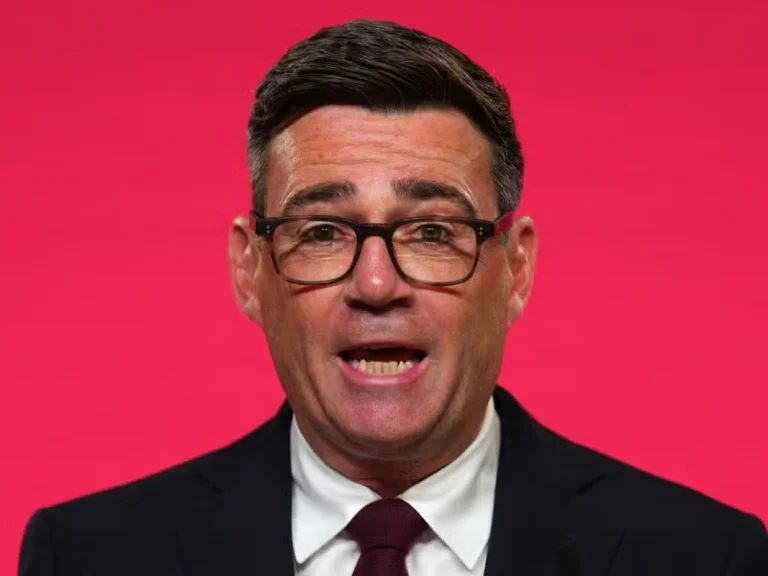
Andy Burnham is set to become the United Kingdom’s new Prime Minister on Monday following the resignation of Keir Starmer, marking Britain’s seventh change of prime minister in just a decade.
According to AFP, as published by Punch, Burnham will be invited by King Charles III to form a new government before delivering his first address outside 10 Downing Street, where he is expected to outline his plans to restore public confidence and ease the country’s cost of living pressures.
The former Greater Manchester mayor succeeds Starmer just two years after Labour returned to power in a landslide victory that ended 14 years of Conservative government.
Burnham is expected to unveil his new Cabinet on Monday, with attention focused on who will replace Rachel Reeves as Chancellor.
Nicknamed the “King of the North”, Burnham was drafted back into Parliament after Starmer resigned last month. Labour MPs backed him as the party’s strongest candidate to counter the growing popularity of Nigel Farage’s Reform UK ahead of the next general election.
Deputy Labour leader Lucy Powell said Burnham’s experience leading Greater Manchester gives him a better understanding of the reforms needed to fulfil Labour’s election promises. She said his administration would focus on decentralising power, strengthening regional communities and improving economic security for ordinary Britons.
Burnham inherits significant challenges, including weak economic growth, rising government borrowing costs, increasing welfare spending, continued small boat migrant crossings and volatile global energy prices linked to the US-Iran conflict. Relations with the United States under President Donald Trump are also expected to influence his government.
Starmer announced his resignation in late June after a series of political setbacks, policy reversals and scandals weakened his leadership.
Burnham, who returned to Parliament only four weeks ago, has acknowledged the scale of the task ahead, telling supporters that Labour’s leadership change represents the party’s “last chance” to regain public trust before the next general election expected in 2029.
His first major policy decision came over the weekend when he scrapped the government’s proposed nationwide digital identity scheme, estimated to cost £1.8 billion over three years. His team said the funds would instead be redirected towards measures aimed at helping households cope with the cost of living.