/ Aug 19, 2026
/ Aug 19, 2026

Blog

  • All
  • Africa
  • Agriculture
  • Aviation
  • Banking
  • Business
  • Crime
  • Economy
  • Education
  • Entertainment
  • fashion
  • Health
  • Home
  • International
  • Judiciary
  • lifestyle
  • Metro
  • News
  • Nigeria
  • Politics
  • Religion
  • Security
  • Sport
  • sports
  • Tech
  • Technology
  • World News

Trending

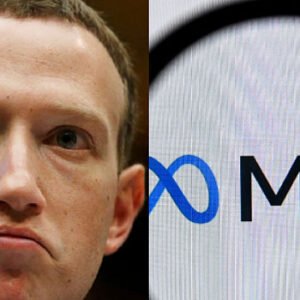
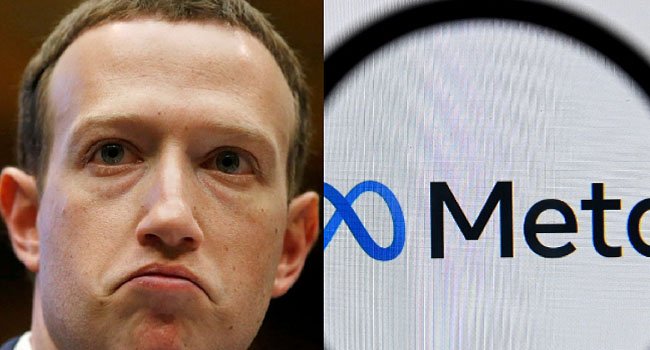
Meta CEO Mark Zuckerberg and Meta logo as the company faces a US federal trial over alleged harm to children on Facebook and Instagram.

Meta faces $200bn trial over alleged child addiction

US prosecutors have accused Meta of deliberately designing Facebook and Instagram to keep children hooked, while misleading the public about the risks associated with its platforms. The allegations were made as a landmark federal case opened in Oakland, California.   Twenty-nine US states are behind the lawsuit, with California, Colorado, Kentucky and New Jersey leading the case. The states allege that Meta knew its platforms could harm young users but continued to prioritise engagement and revenue. California prosecutor Megan O’Neill told the court that Meta had built its business model around keeping users online, collecting their data and concealing information about the risks. The states accuse Meta of three main violations: misleading the public about the dangers its platforms pose to minors, deliberately designing features to encourage prolonged use, and collecting data from children under 13 without parental consent. Meta denies deliberately harming children Meta’s lawyer, Paul Schmidt, acknowledged that some users had been harmed but rejected the claim that the company deliberately designed its platforms to be dangerous. The company has maintained that it has worked with parents, experts and law enforcement to introduce safeguards for young users. Reuters reported that Meta is also disputing claims that there is a clear link between adolescent social media use and poor wellbeing. The case could have major financial and operational consequences for the technology giant. The states are seeking damages that have been reported at around $200 billion, while Meta has separately argued in court filings that the potential penalties could reach as much as $1.4 trillion, depending on how damages are calculated. The states are also seeking changes to Meta’s platforms, including measures aimed at limiting children’s screen time and restricting features they say encourage excessive engagement. Zuckerberg expected to testify Meta CEO Mark Zuckerberg and Instagram chief Adam Mosseri are among the executives expected to appear as witnesses during the trial. The proceedings are expected to last several weeks, with a verdict potentially coming later in the year. Parents and activists also gathered outside the courthouse, with some families accusing social media companies of contributing to serious harm suffered by their children. The case is being closely watched because it could influence a growing number of lawsuits against other major platforms, including TikTok, Snapchat and YouTube. The allegations against Meta remain contested and have not been established as fact by the court.
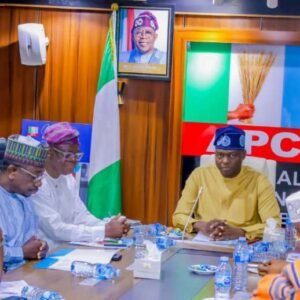
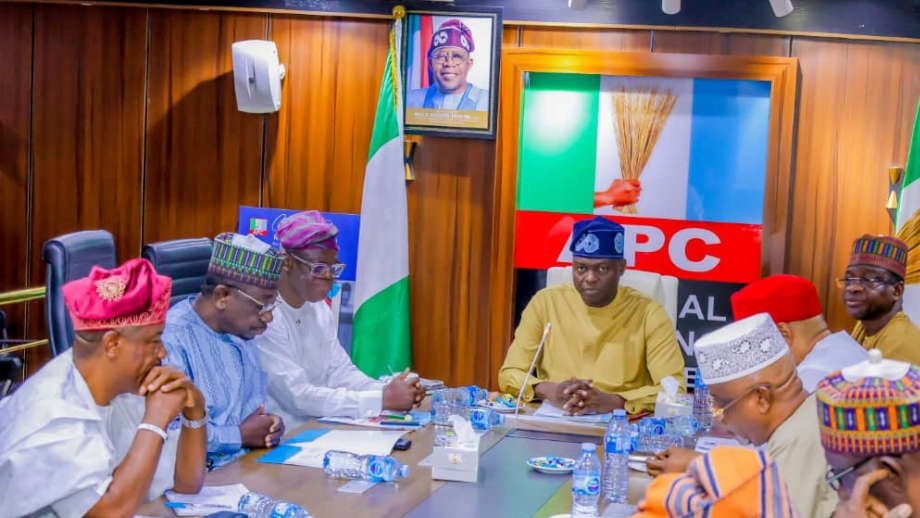
APC primary election timetable for restored constituencies in Delta, Kogi and other Nigerian states.

APC releases primary election timetable for Delta, Kogi, others

The All Progressives Congress (APC) has released its timetable for primary elections in newly restored constituencies across Delta, Kogi, Gombe, Bauchi and Kano states.   The development follows the decision by the Independent National Electoral Commission (INEC) to restore four State House of Assembly constituencies in Delta and Kogi after court judgments directed their restoration. INEC has scheduled the party primaries for the restored constituencies between August 21 and 25, 2026, while elections into the affected constituencies are fixed for September 19. The APC listed Abraka, Isoko North II and Ughelli South II in Delta State, as well as Yagba West II in Kogi State, among the constituencies where its primaries will be conducted. The other constituencies are Gombe/Kwami/Funakaye Federal Constituency in Gombe, Disina and Sakwa State Constituencies in Bauchi, Udu State Constituency in Delta, and Dawakin Kudu State Constituency in Kano. According to the APC timetable, the process began on August 18 and is expected to continue until August 24. Candidates seeking the APC ticket for State House of Assembly seats are required to pay N1 million for the expression of interest form and N5 million for the nomination form. For House of Representatives positions, aspirants will pay N1 million for the expression of interest form and N9 million for the nomination form. Female aspirants, youths and persons living with disabilities are entitled to a 50 per cent discount on nomination forms, while the N1 million expression of interest fee remains unchanged. The timetable comes as political parties begin preparations for the September 19 bye-elections and ahead of the wider 2027 electoral cycle.
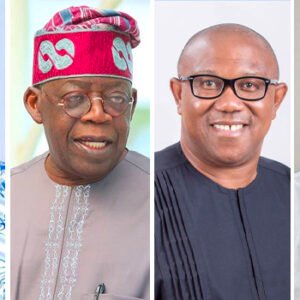
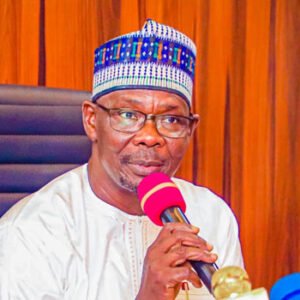
Nasarawa State Governor Abdullahi Sule speaks during an interview on Channels Television's Politics Today, defending the Tinubu-Shettima ticket ahead of the 2027 presidential election.

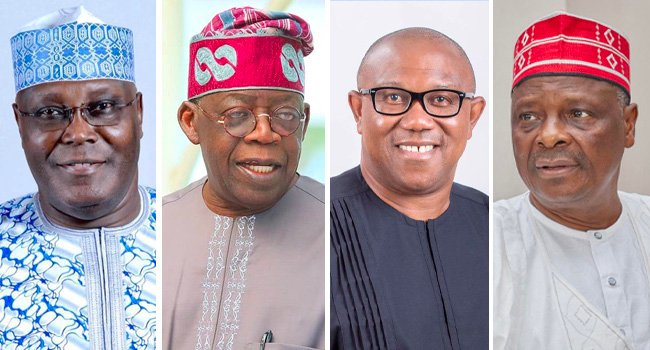
Election campaigns for 2027 presidential race kick off today

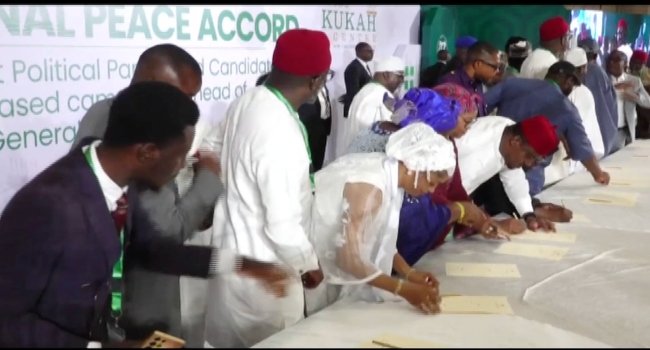
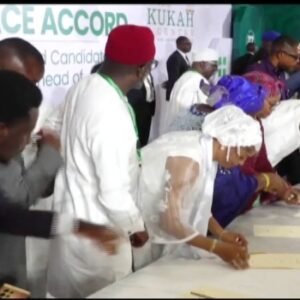
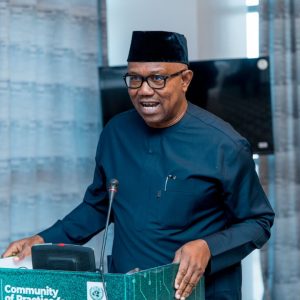
Nigeria’s political parties have officially begun campaigning for the 2027 presidential election, with President Bola Tinubu seeking a second term amid economic pressures, security concerns and a divided opposition.   The campaign season opened on Wednesday, August 19, five months before Nigerians are scheduled to vote on January 16, 2027. The contest is expected to feature a partial rematch of the 2023 presidential election, with Tinubu facing former Anambra State governor Peter Obi, former Vice President Atiku Abubakar and other contenders. Tinubu won the 2023 election with 36.6 per cent of the vote, ahead of Abubakar with 29 per cent and Obi with 25 per cent. Economy, Security Dominate Campaign The economy is expected to be one of the defining issues of the 2027 presidential race. Tinubu’s administration has implemented major economic reforms, including the removal of the petrol subsidy. While the reforms have received praise from economists and investors, they have also contributed to significant cost-of-living pressures. Inflation reached 34 per cent before cooling to 15.4 per cent in July, according to figures cited in the report. Nigeria also continues to face security challenges involving jihadist groups, bandit gangs, farmer-herder conflicts and separatist violence. Afolabi Adekaiyaoja, author of The Bellwether political newsletter, said the economy remained the issue cutting across different parts of the country, with implications for security and development. Opposition Faces Tinubu The opposition enters the campaign period amid internal and legal challenges. Obi, who finished third in the 2023 presidential election, is again seeking the presidency, while Atiku is also returning to the contest. Rabiu Kwankwaso, who secured about six per cent of the vote in 2023, has teamed up with Obi as his running mate. The ruling All Progressives Congress controls the National Assembly and 31 of Nigeria’s 36 governorships, giving Tinubu’s campaign a strong political base. Peace Accord Signed Ahead Of Campaigns The commencement of campaigns follows Tuesday’s signing of the National Peace Accord by several presidential candidates and political actors. Tinubu, Obi, African Action Congress candidate Omoyele Sowore and Peoples Redemption Party candidate Donald Duke were among those represented at the ceremony in Abuja. The accord was organised by the National Peace Committee and is intended to promote peaceful political engagement ahead of the 2027 elections. Obi called for an election in which voters’ choices would count and urged Nigerians not to support candidates or parties that violate the principles of the agreement. Tinubu, represented at the event by Secretary to the Government of the Federation George Akume, praised the peace committee and pointed to the use of technology, including the Bimodal Voter Accreditation System, as evidence of improvements in Nigeria’s electoral process. The 2027 presidential election will take place against the backdrop of widespread economic concerns, security challenges and memories of the low voter turnout recorded in 2023, when only 27 per cent of registered voters participated.
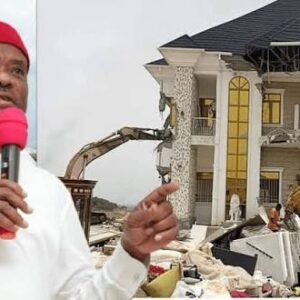
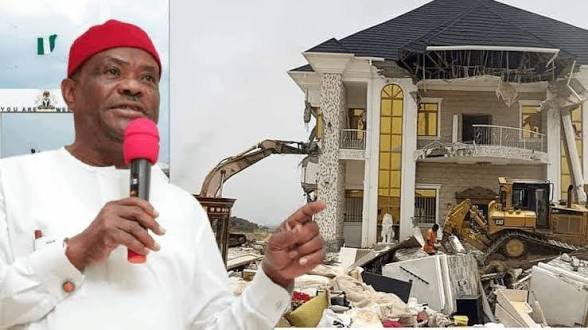
FCT officials demolishing a building obstructing a designated waterway in Maitama, Abuja, on August 18, 2026.

Flood: Election or not, Abuja will demolish houses on drainage ways – Wike

The Minister of the Federal Capital Territory, Nyesom Wike, has ordered the demolition of houses built on drainage channels in Abuja, warning that no property owner will be spared in the enforcement.   Wike announced the decision during a press briefing on Tuesday, August 18, 2026, following recent flooding in parts of the Federal Capital Territory. According to Channels Television, the minister said the flooding had exposed the consequences of developments obstructing designated waterways and drainage channels. He said the affected properties include those belonging to wealthy Nigerians and prominent individuals, dismissing suggestions that the enforcement would target ordinary residents. The FCT Administration has identified buildings obstructing waterways and plans to commence demolitions between Tuesday and Saturday. Wike also rejected claims that the exercise was politically motivated because of the approaching elections. “Election or not,” the minister said, the government would demolish houses obstructing waterways because “the right thing has to be done.” He maintained that political considerations would not prevent the government from enforcing Abuja’s master plan and addressing structures contributing to flooding.

Must Read

Meta CEO Mark Zuckerberg and Meta logo as the company faces a US federal trial over alleged harm to children on Facebook and Instagram.

Meta faces $200bn trial over alleged child addiction

US prosecutors have accused Meta of deliberately designing Facebook and Instagram to keep children hooked, while misleading the public about the risks associated with its platforms. The allegations were made as a landmark federal case opened in Oakland, California.   Twenty-nine US states are behind the lawsuit, with California, Colorado, Kentucky and New Jersey leading the case. The states allege that Meta knew its platforms could harm young users but continued to prioritise engagement and revenue. California prosecutor Megan O’Neill told the court that Meta had built its business model around keeping users online, collecting their data and concealing information about the risks. The states accuse Meta of three main violations: misleading the public about the dangers its platforms pose to minors, deliberately designing features to encourage prolonged use, and collecting data from children under 13 without parental consent. Meta denies deliberately harming children Meta’s lawyer, Paul Schmidt, acknowledged that some users had been harmed but rejected the claim that the company deliberately designed its platforms to be dangerous. The company has maintained that it has worked with parents, experts and law enforcement to introduce safeguards for young users. Reuters reported that Meta is also disputing claims that there is a clear link between adolescent social media use and poor wellbeing. The case could have major financial and operational consequences for the technology giant. The states are seeking damages that have been reported at around $200 billion, while Meta has separately argued in court filings that the potential penalties could reach as much as $1.4 trillion, depending on how damages are calculated. The states are also seeking changes to Meta’s platforms, including measures aimed at limiting children’s screen time and restricting features they say encourage excessive engagement. Zuckerberg expected to testify Meta CEO Mark Zuckerberg and Instagram chief Adam Mosseri are among the executives expected to appear as witnesses during the trial. The proceedings are expected to last several weeks, with a verdict potentially coming later in the year. Parents and activists also gathered outside the courthouse, with some families accusing social media companies of contributing to serious harm suffered by their children. The case is being closely watched because it could influence a growing number of lawsuits against other major platforms, including TikTok, Snapchat and YouTube. The allegations against Meta remain contested and have not been established as fact by the court.
Read more
Meta CEO Mark Zuckerberg and Meta logo as the company faces a US federal trial over alleged harm to children on Facebook and Instagram.

Meta faces $200bn trial over alleged child addiction

US prosecutors have accused Meta of deliberately designing Facebook and Instagram to keep children hooked, while misleading the public about the risks associated with its platforms. The allegations were made as a landmark federal case opened in Oakland, California.   Twenty-nine US states are behind the lawsuit, with California, Colorado, Kentucky and New Jersey leading the case. The states allege that Meta knew its platforms could harm young users but continued to prioritise engagement and revenue. California prosecutor Megan O’Neill told the court that Meta had built its business model around keeping users online, collecting their data and concealing information about the risks. The states accuse Meta of three main violations: misleading the public about the dangers its platforms pose to minors, deliberately designing features to encourage prolonged use, and collecting data from children under 13 without parental consent. Meta denies deliberately harming children Meta’s lawyer, Paul Schmidt, acknowledged that some users had been harmed but rejected the claim that the company deliberately designed its platforms to be dangerous. The company has maintained that it has worked with parents, experts and law enforcement to introduce safeguards for young users. Reuters reported that Meta is also disputing claims that there is a clear link between adolescent social media use and poor wellbeing. The case could have major financial and operational consequences for the technology giant. The states are seeking damages that have been reported at around $200 billion, while Meta has separately argued in court filings that the potential penalties could reach as much as $1.4 trillion, depending on how damages are calculated. The states are also seeking changes to Meta’s platforms, including measures aimed at limiting children’s screen time and restricting features they say encourage excessive engagement. Zuckerberg expected to testify Meta CEO Mark Zuckerberg and Instagram chief Adam Mosseri are among the executives expected to appear as witnesses during the trial. The proceedings are expected to last several weeks, with a verdict potentially coming later in the year. Parents and activists also gathered outside the courthouse, with some families accusing social media companies of contributing to serious harm suffered by their children. The case is being closely watched because it could influence a growing number of lawsuits against other major platforms, including TikTok, Snapchat and YouTube. The allegations against Meta remain contested and have not been established as fact by the court.
APC primary election timetable for restored constituencies in Delta, Kogi and other Nigerian states.

APC releases primary election timetable for Delta, Kogi, others

The All Progressives Congress (APC) has released its timetable for primary elections in newly restored constituencies across Delta, Kogi, Gombe, Bauchi and Kano states.   The development follows the decision by the Independent National Electoral Commission (INEC) to restore four State House of Assembly constituencies in Delta and Kogi after court judgments directed their restoration. INEC has scheduled the party primaries for the restored constituencies between August 21 and 25, 2026, while elections into the affected constituencies are fixed for September 19. The APC listed Abraka, Isoko North II and Ughelli South II in Delta State, as well as Yagba West II in Kogi State, among the constituencies where its primaries will be conducted. The other constituencies are Gombe/Kwami/Funakaye Federal Constituency in Gombe, Disina and Sakwa State Constituencies in Bauchi, Udu State Constituency in Delta, and Dawakin Kudu State Constituency in Kano. According to the APC timetable, the process began on August 18 and is expected to continue until August 24. Candidates seeking the APC ticket for State House of Assembly seats are required to pay N1 million for the expression of interest form and N5 million for the nomination form. For House of Representatives positions, aspirants will pay N1 million for the expression of interest form and N9 million for the nomination form. Female aspirants, youths and persons living with disabilities are entitled to a 50 per cent discount on nomination forms, while the N1 million expression of interest fee remains unchanged. The timetable comes as political parties begin preparations for the September 19 bye-elections and ahead of the wider 2027 electoral cycle.

Editor's Pick

Trending News

Newsletter

Enter your email address and receive notifications of news by email.

You have been successfully Subscribed! Ops! Something went wrong, please try again.

© 2026 GongNews. All Rights Reserved.