/ Aug 22, 2026
/ Aug 22, 2026

Blog

  • All
  • Africa
  • Agriculture
  • Aviation
  • Banking
  • Business
  • Crime
  • Economy
  • Education
  • Entertainment
  • fashion
  • Health
  • Home
  • International
  • Judiciary
  • lifestyle
  • Metro
  • News
  • Nigeria
  • Politics
  • Religion
  • Security
  • Sport
  • sports
  • Tech
  • Technology
  • World News

Trending

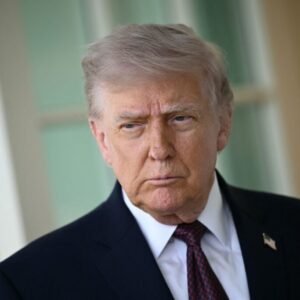
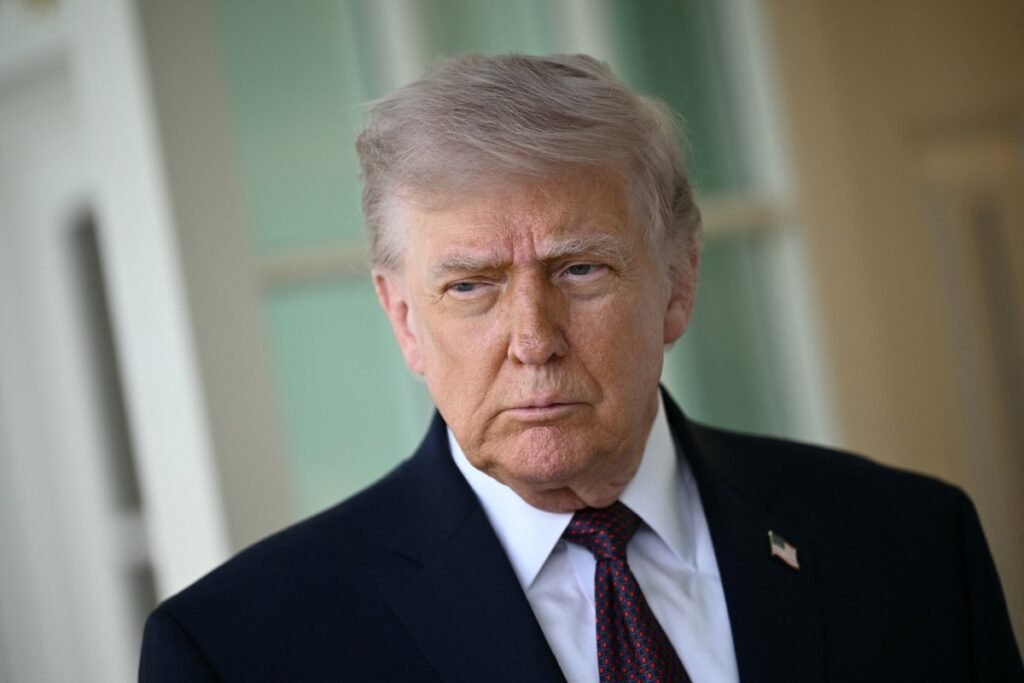
US President Donald Trump pictured as US-Canada tariff talks collapse over proposed new tariffs.

US-Canada tariff talks collapse, trade war fears rise

Trade negotiations between the United States and Canada have collapsed, raising fears of a renewed trade war between the two North American neighbours.   The talks broke down late Friday after Canada rejected what Washington described as the final terms of an agreement aimed at preventing sweeping new tariffs on Canadian imports. The development, first reported by The New York Times, came as the administration of US President Donald Trump prepared to introduce new levies on Canadian goods from early Saturday. US Trade Representative Jamieson Greer accused Ottawa of abandoning the negotiating process after the two sides had made significant progress towards an agreement that would have provided Canadian exports with preferential access to the US market. Greer said Canada had introduced new demands and reversed some commitments reached during negotiations. Canadian Prime Minister Mark Carney, however, rejected Washington’s account. He said the final conditions came from the US side and were unacceptable to Canada, describing the demands as “unfair” and “uneconomic”. Carney acknowledged that the negotiations had achieved considerable progress but said the outcome did not provide enough protection for Canadian interests. Tariffs threaten key industries The immediate disagreement centres on the scale and scope of the proposed US tariffs, with automobiles, steel, aluminium and lumber among the Canadian sectors facing major uncertainty. Washington had offered what Greer described as the most favourable treatment available to any major exporter to the US, but the two governments failed to resolve their remaining differences. The collapse could deepen an already damaging economic confrontation between the two countries, whose economies are closely connected through extensive cross-border supply chains. The automotive industry is particularly exposed, with manufacturing networks spanning both sides of the US-Canada border. Canada has threatened to retaliate if the new US tariffs are imposed. A US official also warned that Washington could respond to any Canadian counter-tariffs, raising the possibility of another cycle of escalating measures. The threat of renewed tariffs had already affected preparations at the US border. Shortly before Greer announced the collapse of the negotiations, US Customs and Border Protection issued guidance to importers on tariffs covering Canadian products identified by the administration. The breakdown leaves both governments facing an immediate economic and diplomatic challenge, removing what had appeared to be a possible route towards easing tensions. For Carney’s government, the next steps are expected to focus on protecting Canadian industries from the new levies while managing potential effects on businesses and consumers. For Trump, the collapse reinforces his administration’s broader push for trading partners to make greater concessions to the United States.
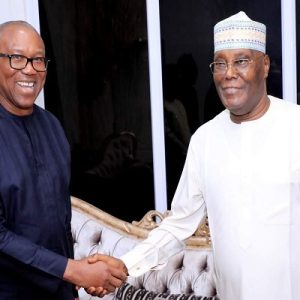
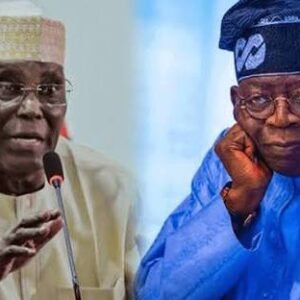
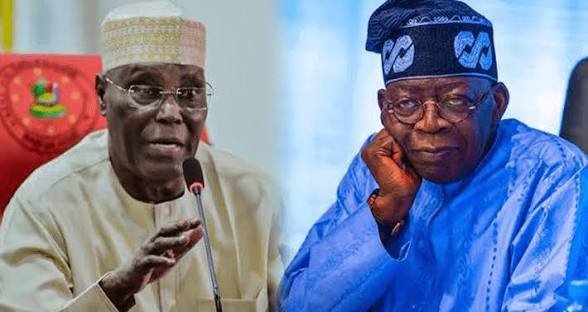
Atiku Abubakar and President Bola Tinubu during a political event

Subsidy: Atiku accuses Tinubu of worsening hardship with reforms

Former Vice President Atiku Abubakar has criticised President Bola Tinubu’s economic reforms, accusing the administration of worsening the cost-of-living crisis despite increased government revenues.   Atiku, the African Democratic Congress presidential candidate, spoke through his Senior Special Assistant on Public Communication, Phrank Shaibu, in a statement issued on Friday. His comments followed Tinubu’s description of Atiku’s proposal to reintroduce a form of petrol subsidy as evidence of “serious ignorance” of governance and economic management. Atiku said his proposal was not a return to the previous open-ended petrol subsidy regime. Instead, he described it as a targeted, capped, budgeted and time-bound production-support mechanism aimed at increasing domestic refining and protecting consumers from sharp price shocks. He argued that Nigeria’s economic circumstances had changed significantly since Tinubu announced the removal of petrol subsidy in May 2023. According to Atiku, the subsidy removal, combined with foreign exchange liberalisation, contributed to increases in petrol prices, transport costs and food prices, while the naira also depreciated significantly. “Economic prescriptions respond to prevailing conditions,” Atiku said, arguing that current economic realities required policymakers to reassess existing measures. Atiku questions NNPC costs The former vice president also questioned petroleum-related costs recorded in the accounts of the Nigerian National Petroleum Company Limited. He cited figures of approximately ₦17.5tn in energy-security costs and petroleum under-recoveries, including about ₦7.13tn classified as energy-security costs and ₦8.67tn in under-recoveries. The figures were presented by Atiku as part of his argument that questions remain over the financial arrangements surrounding the petroleum sector. “If subsidy is dead, why are under-recoveries alive?” Atiku asked, while also calling for greater transparency over petroleum-sector finances. He further questioned approximately ₦30tn in Federation Account revenues, deductions, savings and transfers that he said required reconciliation, as well as the ₦12.8tn Service-Wide Vote contained in the 2026 budget. FG defends subsidy removal The Federal Government has maintained that petrol subsidy had become financially unsustainable and that its removal was necessary to free resources for development, strengthen public revenues and reduce distortions in the petroleum market. The administration has also pointed to increased Federation Account allocations to states as one of the benefits of the reforms. Atiku rejected that argument, saying higher government allocations should not be treated as evidence of economic success if ordinary Nigerians were simultaneously experiencing reduced purchasing power and rising living costs. He argued that economic reforms should ultimately be judged by their effect on citizens rather than the size of government revenues. The renewed dispute over petrol subsidy comes as Nigeria moves towards the 2027 presidential election, with the economic impact of Tinubu’s reforms emerging as a major political issue.
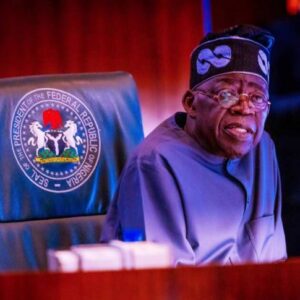
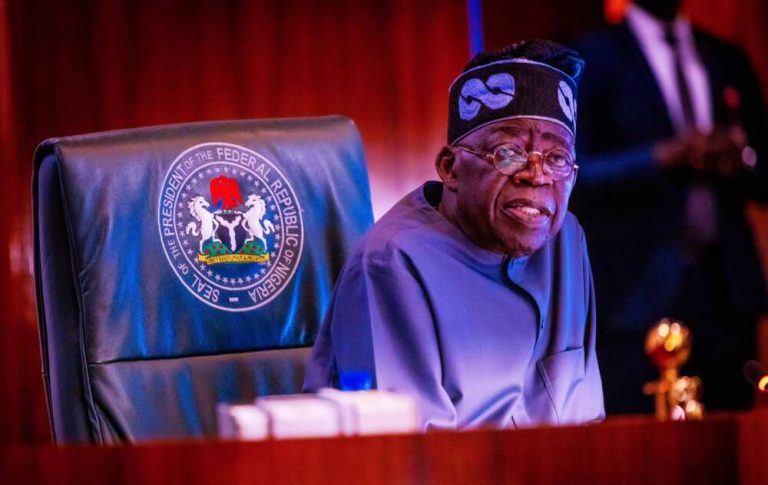
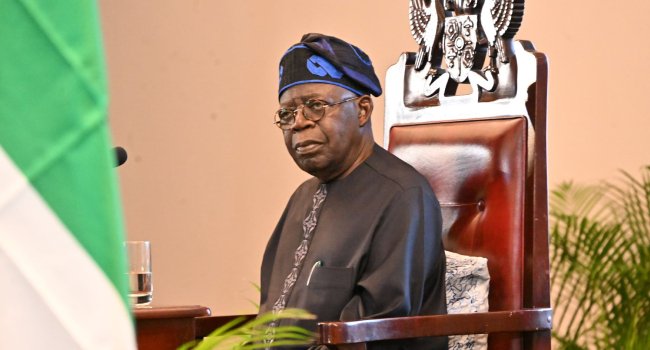
Tinubu to parents of abducted pupils, your children will return home

Another fake agency scandal: Tinubu orders arrest, suspends three perm secs

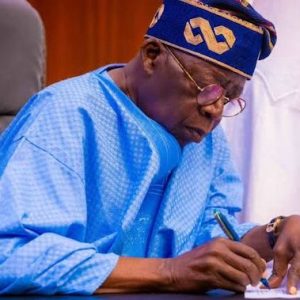
President Bola Tinubu has ordered the immediate suspension of three permanent secretaries and the arrest of a man accused of promoting another fictitious government agency within the Office of the Secretary to the Government of the Federation.   The affected permanent secretaries are M.S. Danjuma, Nadungu Gagare and Richard P. Pheelangwah. The Chairman of the Independent Corrupt Practices and Other Related Offences Commission, Musa Aliyu, disclosed the development on Friday after briefing Tinubu for the second time in two days. According to Aliyu, the newly uncovered body operated as the National Brands Development and Made-in-Nigeria Special Project Office and had been allocated office space within the OSGF without presidential authorisation and contrary to existing laws. The ICPC chairman identified George Buchi Nwabueze as the promoter of the office and said he allegedly operated under several variations of his name. “The promoter was discovered to also operate under four other variations of his name,” Aliyu said. Tinubu subsequently directed the immediate arrest of Nwabueze and the suspension of the three permanent secretaries. Aliyu said the ICPC had engaged the OSGF to obtain information relevant to its investigation and would continue probing the circumstances surrounding the fictitious office. The latest discovery follows an earlier investigation into the Presidential Foreign Intervention Promotion Council, whose alleged promoter, Adeniyi Adeyemi, is facing prosecution over alleged forgery and impersonation. An ICPC interim report submitted to the President on August 6 had also identified two other alleged fictitious bodies: the FCT Investment Promotion Agency and the Foreign Investment Promotion Agency and Public-Private Partnership. The National Brands Development and Made-in-Nigeria Special Project Office is therefore the fourth alleged fake agency uncovered since the investigation into the PFIFC scandal began.
Ezri Konsa signs his Arsenal contract after completing a £51 million transfer from Aston Villa.

Arsenal sign Ezri Konsa from Aston Villa for £51m

Premier League champions Arsenal have completed the signing of England defender Ezri Konsa from Aston Villa for a reported £51 million ($69 million), strengthening their defence ahead of the new season.   The 28-year-old has signed a long-term contract with Arsenal and is expected to play a key role in manager Mikel Arteta’s plans as the Gunners begin their title defence. Konsa is set to partner Gabriel Magalhaes in central defence following William Saliba’s lengthy absence with a back injury. Jurrien Timber’s fitness is also a concern after his long-term groin problem. The England international could make his Arsenal debut against his former club when the Gunners travel to Aston Villa on August 31. “It’s a privilege to be here and I can’t wait to get started,” Konsa said. “I want to keep winning, I’m hungry to win and that’s what I’m here for.” Arsenal sporting director Andrea Berta praised Konsa’s quality, athleticism and tactical intelligence, while highlighting his ability to operate both at centre-back and right-back. The defender completed his medical at Arsenal’s London Colney training ground on Thursday before finalising the move. Konsa said conversations with Arsenal’s England players, including Noni Madueke, Eberechi Eze, Declan Rice and Bukayo Saka, helped convince him to join the Premier League champions. The defender joined Villa from Brentford in 2019 and made nearly 300 appearances for the club. He helped Villa win the Europa League last season and finish in the Premier League’s top four twice in the last three seasons. His departure comes during a significant period of change at Villa, with Youri Tielemans, Morgan Rogers and Lucas Digne also leaving the club during the close season. The signing is Arsenal’s latest major addition after the club won their first English league title in 22 years. The Gunners have also recruited Bruno Guimaraes and Christos Tzolis, while Piero Hincapie’s loan move from Bayer Leverkusen was made permanent.

Must Read

US President Donald Trump pictured as US-Canada tariff talks collapse over proposed new tariffs.

US-Canada tariff talks collapse, trade war fears rise

Trade negotiations between the United States and Canada have collapsed, raising fears of a renewed trade war between the two North American neighbours.   The talks broke down late Friday after Canada rejected what Washington described as the final terms of an agreement aimed at preventing sweeping new tariffs on Canadian imports. The development, first reported by The New York Times, came as the administration of US President Donald Trump prepared to introduce new levies on Canadian goods from early Saturday. US Trade Representative Jamieson Greer accused Ottawa of abandoning the negotiating process after the two sides had made significant progress towards an agreement that would have provided Canadian exports with preferential access to the US market. Greer said Canada had introduced new demands and reversed some commitments reached during negotiations. Canadian Prime Minister Mark Carney, however, rejected Washington’s account. He said the final conditions came from the US side and were unacceptable to Canada, describing the demands as “unfair” and “uneconomic”. Carney acknowledged that the negotiations had achieved considerable progress but said the outcome did not provide enough protection for Canadian interests. Tariffs threaten key industries The immediate disagreement centres on the scale and scope of the proposed US tariffs, with automobiles, steel, aluminium and lumber among the Canadian sectors facing major uncertainty. Washington had offered what Greer described as the most favourable treatment available to any major exporter to the US, but the two governments failed to resolve their remaining differences. The collapse could deepen an already damaging economic confrontation between the two countries, whose economies are closely connected through extensive cross-border supply chains. The automotive industry is particularly exposed, with manufacturing networks spanning both sides of the US-Canada border. Canada has threatened to retaliate if the new US tariffs are imposed. A US official also warned that Washington could respond to any Canadian counter-tariffs, raising the possibility of another cycle of escalating measures. The threat of renewed tariffs had already affected preparations at the US border. Shortly before Greer announced the collapse of the negotiations, US Customs and Border Protection issued guidance to importers on tariffs covering Canadian products identified by the administration. The breakdown leaves both governments facing an immediate economic and diplomatic challenge, removing what had appeared to be a possible route towards easing tensions. For Carney’s government, the next steps are expected to focus on protecting Canadian industries from the new levies while managing potential effects on businesses and consumers. For Trump, the collapse reinforces his administration’s broader push for trading partners to make greater concessions to the United States.
Read more
US President Donald Trump pictured as US-Canada tariff talks collapse over proposed new tariffs.

US-Canada tariff talks collapse, trade war fears rise

Trade negotiations between the United States and Canada have collapsed, raising fears of a renewed trade war between the two North American neighbours.   The talks broke down late Friday after Canada rejected what Washington described as the final terms of an agreement aimed at preventing sweeping new tariffs on Canadian imports. The development, first reported by The New York Times, came as the administration of US President Donald Trump prepared to introduce new levies on Canadian goods from early Saturday. US Trade Representative Jamieson Greer accused Ottawa of abandoning the negotiating process after the two sides had made significant progress towards an agreement that would have provided Canadian exports with preferential access to the US market. Greer said Canada had introduced new demands and reversed some commitments reached during negotiations. Canadian Prime Minister Mark Carney, however, rejected Washington’s account. He said the final conditions came from the US side and were unacceptable to Canada, describing the demands as “unfair” and “uneconomic”. Carney acknowledged that the negotiations had achieved considerable progress but said the outcome did not provide enough protection for Canadian interests. Tariffs threaten key industries The immediate disagreement centres on the scale and scope of the proposed US tariffs, with automobiles, steel, aluminium and lumber among the Canadian sectors facing major uncertainty. Washington had offered what Greer described as the most favourable treatment available to any major exporter to the US, but the two governments failed to resolve their remaining differences. The collapse could deepen an already damaging economic confrontation between the two countries, whose economies are closely connected through extensive cross-border supply chains. The automotive industry is particularly exposed, with manufacturing networks spanning both sides of the US-Canada border. Canada has threatened to retaliate if the new US tariffs are imposed. A US official also warned that Washington could respond to any Canadian counter-tariffs, raising the possibility of another cycle of escalating measures. The threat of renewed tariffs had already affected preparations at the US border. Shortly before Greer announced the collapse of the negotiations, US Customs and Border Protection issued guidance to importers on tariffs covering Canadian products identified by the administration. The breakdown leaves both governments facing an immediate economic and diplomatic challenge, removing what had appeared to be a possible route towards easing tensions. For Carney’s government, the next steps are expected to focus on protecting Canadian industries from the new levies while managing potential effects on businesses and consumers. For Trump, the collapse reinforces his administration’s broader push for trading partners to make greater concessions to the United States.
Atiku Abubakar and President Bola Tinubu during a political event

Subsidy: Atiku accuses Tinubu of worsening hardship with reforms

Former Vice President Atiku Abubakar has criticised President Bola Tinubu’s economic reforms, accusing the administration of worsening the cost-of-living crisis despite increased government revenues.   Atiku, the African Democratic Congress presidential candidate, spoke through his Senior Special Assistant on Public Communication, Phrank Shaibu, in a statement issued on Friday. His comments followed Tinubu’s description of Atiku’s proposal to reintroduce a form of petrol subsidy as evidence of “serious ignorance” of governance and economic management. Atiku said his proposal was not a return to the previous open-ended petrol subsidy regime. Instead, he described it as a targeted, capped, budgeted and time-bound production-support mechanism aimed at increasing domestic refining and protecting consumers from sharp price shocks. He argued that Nigeria’s economic circumstances had changed significantly since Tinubu announced the removal of petrol subsidy in May 2023. According to Atiku, the subsidy removal, combined with foreign exchange liberalisation, contributed to increases in petrol prices, transport costs and food prices, while the naira also depreciated significantly. “Economic prescriptions respond to prevailing conditions,” Atiku said, arguing that current economic realities required policymakers to reassess existing measures. Atiku questions NNPC costs The former vice president also questioned petroleum-related costs recorded in the accounts of the Nigerian National Petroleum Company Limited. He cited figures of approximately ₦17.5tn in energy-security costs and petroleum under-recoveries, including about ₦7.13tn classified as energy-security costs and ₦8.67tn in under-recoveries. The figures were presented by Atiku as part of his argument that questions remain over the financial arrangements surrounding the petroleum sector. “If subsidy is dead, why are under-recoveries alive?” Atiku asked, while also calling for greater transparency over petroleum-sector finances. He further questioned approximately ₦30tn in Federation Account revenues, deductions, savings and transfers that he said required reconciliation, as well as the ₦12.8tn Service-Wide Vote contained in the 2026 budget. FG defends subsidy removal The Federal Government has maintained that petrol subsidy had become financially unsustainable and that its removal was necessary to free resources for development, strengthen public revenues and reduce distortions in the petroleum market. The administration has also pointed to increased Federation Account allocations to states as one of the benefits of the reforms. Atiku rejected that argument, saying higher government allocations should not be treated as evidence of economic success if ordinary Nigerians were simultaneously experiencing reduced purchasing power and rising living costs. He argued that economic reforms should ultimately be judged by their effect on citizens rather than the size of government revenues. The renewed dispute over petrol subsidy comes as Nigeria moves towards the 2027 presidential election, with the economic impact of Tinubu’s reforms emerging as a major political issue.

Editor's Pick

Trending News

Newsletter

Enter your email address and receive notifications of news by email.

You have been successfully Subscribed! Ops! Something went wrong, please try again.

© 2026 GongNews. All Rights Reserved.