
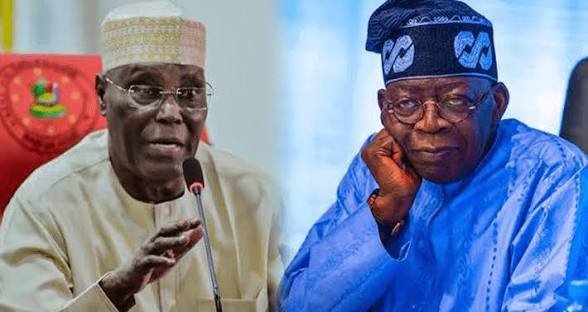
Former Vice President Atiku Abubakar has criticised President Bola Tinubu’s economic reforms, accusing the administration of worsening the cost-of-living crisis despite increased government revenues.
Atiku, the African Democratic Congress presidential candidate, spoke through his Senior Special Assistant on Public Communication, Phrank Shaibu, in a statement issued on Friday. His comments followed Tinubu’s description of Atiku’s proposal to reintroduce a form of petrol subsidy as evidence of “serious ignorance” of governance and economic management.
Atiku said his proposal was not a return to the previous open-ended petrol subsidy regime. Instead, he described it as a targeted, capped, budgeted and time-bound production-support mechanism aimed at increasing domestic refining and protecting consumers from sharp price shocks.
He argued that Nigeria’s economic circumstances had changed significantly since Tinubu announced the removal of petrol subsidy in May 2023.
According to Atiku, the subsidy removal, combined with foreign exchange liberalisation, contributed to increases in petrol prices, transport costs and food prices, while the naira also depreciated significantly.
“Economic prescriptions respond to prevailing conditions,” Atiku said, arguing that current economic realities required policymakers to reassess existing measures.
Atiku questions NNPC costs
The former vice president also questioned petroleum-related costs recorded in the accounts of the Nigerian National Petroleum Company Limited.
He cited figures of approximately ₦17.5tn in energy-security costs and petroleum under-recoveries, including about ₦7.13tn classified as energy-security costs and ₦8.67tn in under-recoveries. The figures were presented by Atiku as part of his argument that questions remain over the financial arrangements surrounding the petroleum sector.
“If subsidy is dead, why are under-recoveries alive?” Atiku asked, while also calling for greater transparency over petroleum-sector finances.
He further questioned approximately ₦30tn in Federation Account revenues, deductions, savings and transfers that he said required reconciliation, as well as the ₦12.8tn Service-Wide Vote contained in the 2026 budget.
FG defends subsidy removal
The Federal Government has maintained that petrol subsidy had become financially unsustainable and that its removal was necessary to free resources for development, strengthen public revenues and reduce distortions in the petroleum market.
The administration has also pointed to increased Federation Account allocations to states as one of the benefits of the reforms.
Atiku rejected that argument, saying higher government allocations should not be treated as evidence of economic success if ordinary Nigerians were simultaneously experiencing reduced purchasing power and rising living costs.
He argued that economic reforms should ultimately be judged by their effect on citizens rather than the size of government revenues.
The renewed dispute over petrol subsidy comes as Nigeria moves towards the 2027 presidential election, with the economic impact of Tinubu’s reforms emerging as a major political issue.