

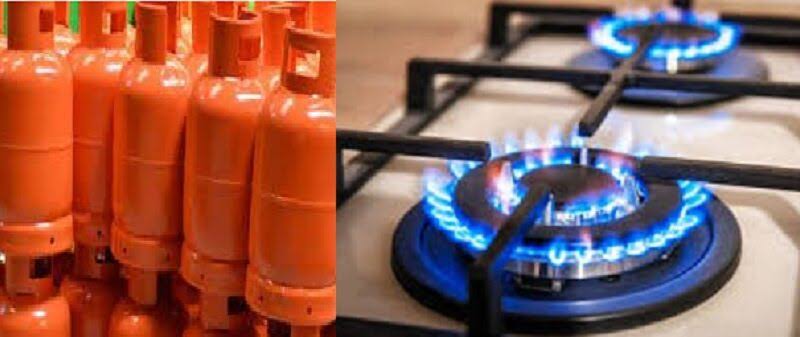
The President of the Nigerian Association of Liquefied Petroleum Gas Marketers, Olatunbosun Oladapo, said gas consumers should brace themselves for price hikes starting next week.
He cited rising international prices, high tax rates and prices of vessels, forex scarcity, and naira devaluation as some of the reasons for the intended price review.
“It is starting next week because international prices have gone up. The prices of vessels have gone up and taxes are high, but consumers are not earning more.
“Their purchasing power has gone down. Everybody is crying. Consumers, middlemen, and retailers are feeling the impact because business is now on the low side,” he said.
Olatunbosun described the imminent price increment as unfortunate.
“The situation is very unfortunate because prices are going higher. Nigerian consumers are passing through very difficult times because they can no longer afford gas,” he added.
According to him, consumers are now returning to firewood, charcoal, and sawdust for cooking.
“The government should come in and alleviate the suffering of the masses by providing palliatives, reducing taxes and levies.
“You can imagine that for every 1kg of gas priced at N700, tax would take way N3.50. How much is left in such a business?” he continued.
He urged the government to tax profit and not products because consumers were not buying gas anymore.
“Local taxes are worsening the problem,” he said, calling on marketers who had the opportunity to buy products locally to fix prices with “consumers’ sympathy” in mind.
His reaction came on the heels of findings by newsmen that vessel scarcity in the international market would push up local prices of Liquified Natural Gas, also known as cooking gas in the coming months.
Vessel scarcity in the international market has led to charter rate hikes, ahead of the 2023 winter, when demand for heating fuel peaks.
As of August 1, 2023, charter rates surged to $284,750 per day for November and $206,750/day for October, quadrupling the current price of $70,500/day, according to data from Spark Commodities quoted by Bloomberg.
“Tanker supplies are increasingly tight because traders are using the ships as floating storage in a bet that LNG prices will rise as the weather turns colder.
“Volatile shipping rates can eat up margin for an LNG trader looking to cash in on higher winter prices, and rising transportation costs ultimately can mean higher prices for buyers in Europe and Asia.”
The number of LNG vessels floating on the water for at least 20 days also rose in late July, with 42 vessels tracked, which is about 27 per cent higher than the same time a year earlier.
Nigerian LPG prices are internationally benchmarked based on Nigerian Liquefied Natural Gas Contract prices and are always influenced by international prices.
And like other internationally traded commodities subjected to price fluctuations due to market dynamics, the NLNG CP is subject to changes and can be reviewed either upwards or downwards at least once to three times.
The devaluation of the local currency would also impact the domestic price of LPG.
The dollar exchanged for N749.62 on Wednesday, according to the Central Bank of Nigeria.
The Nigerian LNG usually sells the cooking gas it produces locally to off-takers based on the prevailing exchange rate.
Newsmen checks showed that the prices of 20 metric tonnes of LPG at the major depots in Apapa, Lagos, between July 28 and August 7 had been between N10.7m and 11m.
Local consumers of cooking gas have for some months now enjoyed low prices due to a drop in international prices.
The price of LPG dropped from an average of N730 per kilogram in June to around N600/kg in July and increased to N750/kg in August due to the naira devaluation.
As of June, the price dropped by 76.1 per cent to 2.10 per one million British Thermal Units on May 31 from 8.78 per one million BTU, according to U.S. Energy Information Administration.
A report by the National Bureau of Statistics on retail gas prices said the average retail price for refilling a 5kg cylinder of cooking gas decreased by 6.71 per cent month-on-month from N4,360.69 recorded in May to N4,068.26 in June.
On a year-on-year basis, it decreased by 3.56 per cent from N4,218.38 in June 2022.
On state profile analysis, Kwara recorded the highest average price for refilling a 5kg cylinder with N4,750.00, followed by Niger with N4,691.16, and Zamfara with N4,683.33.
On the other hand, Ondo recorded the lowest price with N3,287.86, followed by Ekiti and Nasarawa with N3,288.46 and N3,364.62, respectively.














https://t.me/s/ef_beef
https://t.me/dragon_money_mani/22