
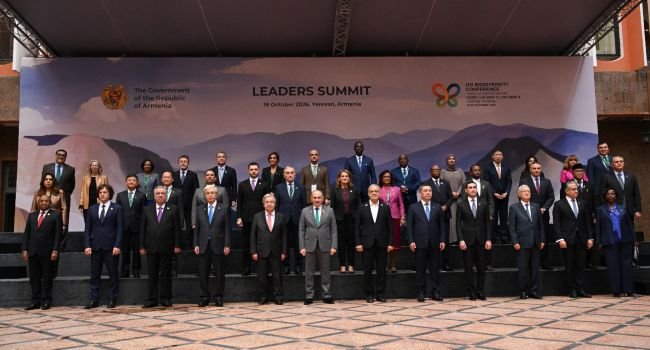
More than 200 nations are meeting in Armenia for critical United Nations negotiations as governments face growing pressure to accelerate efforts to halt biodiversity loss and meet global nature protection targets by 2030.
The 17th meeting of the Conference of the Parties to the Convention on Biological Diversity (COP17) comes amid mounting concerns that countries are falling behind on commitments made four years ago to halt and reverse the destruction of nature.
According to Channels Television, many of the targets under the landmark global biodiversity agreement, often described as the Paris Agreement for Nature, are progressing too slowly to meet the 2030 deadline.
One of the agreement’s central commitments is to protect 30 per cent of the world’s land and oceans. However, progress towards this goal remains insufficient, while efforts to reduce harmful subsidies for fossil fuels and other industries have also struggled.
Armenian Prime Minister Nikol Pashinyan acknowledged the challenges ahead, saying countries were not collectively making the progress required to meet their commitments.
United Nations Secretary-General Antonio Guterres also called for stronger action, warning that humanity’s continued destruction of nature threatened the planet’s future.
“We need more action, more speed and more will,” Guterres said ahead of the formal negotiations.
He described the meeting in Yerevan as a critical opportunity to assess progress towards the 2030 targets and determine whether governments were doing enough to protect the natural world.
COP17 Faces Biodiversity Funding Challenges
Financing conservation efforts is expected to be one of the most contentious issues at the summit.
A United Nations assessment released ahead of COP17 found that progress towards the agreement’s 23 biodiversity targets remained uneven and was not advancing quickly enough to meet the 2030 deadline.
The report also highlighted a significant shortfall in funding needed to implement the global biodiversity commitments.
Wealthy European and other developed countries, which have obligations to provide biodiversity financing, have called for large emerging economies, including China, to contribute towards closing the funding gap.
However, discussions are also expected to explore how private investment can help supplement public funding for conservation, particularly in developing countries.
Another priority is encouraging corporations to contribute part of their profits to a United Nations fund supporting biodiversity protection in developing nations.
UN Chief Criticises Harmful Subsidies
Guterres criticised governments for continuing to support industries that damage the environment despite commitments to reform harmful subsidies.
He specifically condemned subsidies for coal, oil and gas, arguing that they contributed to climate change and the destruction of biodiversity.
The issue highlights a major challenge facing governments as they attempt to balance economic priorities with commitments to protect ecosystems and address the climate crisis.
Despite the financial and political difficulties, summit organisers have stressed that the meeting must produce tangible results rather than additional promises.
The negotiations are taking place against a backdrop of strained public finances, geopolitical tensions, armed conflicts and a global energy crisis, all of which threaten to divert attention and resources from environmental protection.
Armenia Hosts Major Global Nature Summit
The summit represents one of the largest international events hosted by Armenia, with thousands of visitors expected in the country over the two-week period.
Only a limited number of world leaders attended a high-level session ahead of the formal negotiations, including Guterres and several leaders from neighbouring Central Asian countries.
WWF International Global President Adil Najam said the international community already had a framework for protecting nature and needed to focus on implementing it.
“The world does not need a new vision. We have one. What it needs is delivery,” Najam said.
With the 2030 deadline approaching, COP17 is expected to test whether governments can translate their existing commitments into concrete action to protect biodiversity, secure adequate funding and reverse the destruction of nature.