The Nigeria Centre for Disease Control and Prevention (NCDC) has placed 53 people linked to Nigeria’s confirmed Ebola case under surveillance, including healthcare workers, domestic staff and the patient’s spouse.
The agency disclosed this in its Ebola Disease Situation Report dated October 24, 2026, as public health authorities intensify efforts to prevent further transmission of the disease.
According to the NCDC, a suspected Ebola case reported by Rivers State on October 23 tested negative following laboratory investigations.
NCDC Tracks 53 Contacts
The NCDC said the 53 contacts linked to the confirmed case had been identified, categorised and placed under follow-up.
The contacts include healthcare workers, household members and other individuals who may have been exposed to the patient.
The index case involves a 42-year-old woman who arrived in Nigeria from Uganda through Addis Ababa on October 3, 2026, aboard an international flight to Abuja.
The patient reportedly developed symptoms four days after arriving in Nigeria and visited a private health facility on October 10. She subsequently presented at another private facility on October 11, where she was admitted.
The NCDC said it was notified of the case on October 19, prompting an investigation and sample collection.
The agency’s National Reference Laboratory confirmed the Ebola infection on October 20.
Symptoms reported at presentation included fever, diarrhoea, generalised body aches and a sore throat. The report stated that the patient had no reported bleeding.
Contacts to Be Monitored for 21 Days
NCDC Director-General, Dr Jide Idris, said the Federal Government was coordinating the response through the Federal Ministry of Health and Social Welfare, the NCDC, Federal Capital Territory health authorities and other partners.
Speaking at a press briefing on Sunday, Idris acknowledged public concerns following the confirmation of the case but said established public health systems and response plans were being deployed to prevent further transmission.
He explained that contact tracing was being coordinated through an Incident Management System and an Emergency Operations Centre, under the leadership of Coordinating Minister of Health and Social Welfare, Professor Muhammad Ali Pate, and the Presidential Task Force on Ebola Virus Disease.
According to Idris, public health teams are working to identify individuals who may have been exposed, assess their risk levels and monitor their health for 21 days after their last possible exposure.
The monitoring process covers healthcare workers, patients, caregivers, household members, travel-related contacts and other people with relevant exposure histories.
Idris urged Nigerians contacted by public health officials to cooperate fully and provide accurate information about their movements, contacts and any symptoms they may have experienced.
He stressed that being identified as a contact does not mean a person has Ebola, explaining that surveillance helps health authorities detect potential infections early and prevent further spread.
NCDC Calls for Stronger Hospital Safety Measures
The NCDC chief commended healthcare workers whose vigilance and clinical judgement helped identify the confirmed case and trigger the public health response.
He also recognised the contributions of professionals involved in surveillance, contact tracing, laboratory diagnosis, case management, infection prevention, community engagement and public communication.
Idris assured healthcare workers that the Federal Government would prioritise their safety, health and welfare throughout the response.
He called on public and private healthcare facilities across Nigeria to review and strengthen their infection prevention and control measures.
According to him, hospitals must consistently implement screening and triage procedures, maintain high levels of suspicion when patients present with compatible symptoms and relevant exposure histories, and observe standard precautions.
He also highlighted the importance of hand hygiene, environmental cleaning, injection safety, safe handling of sharps and proper waste management.
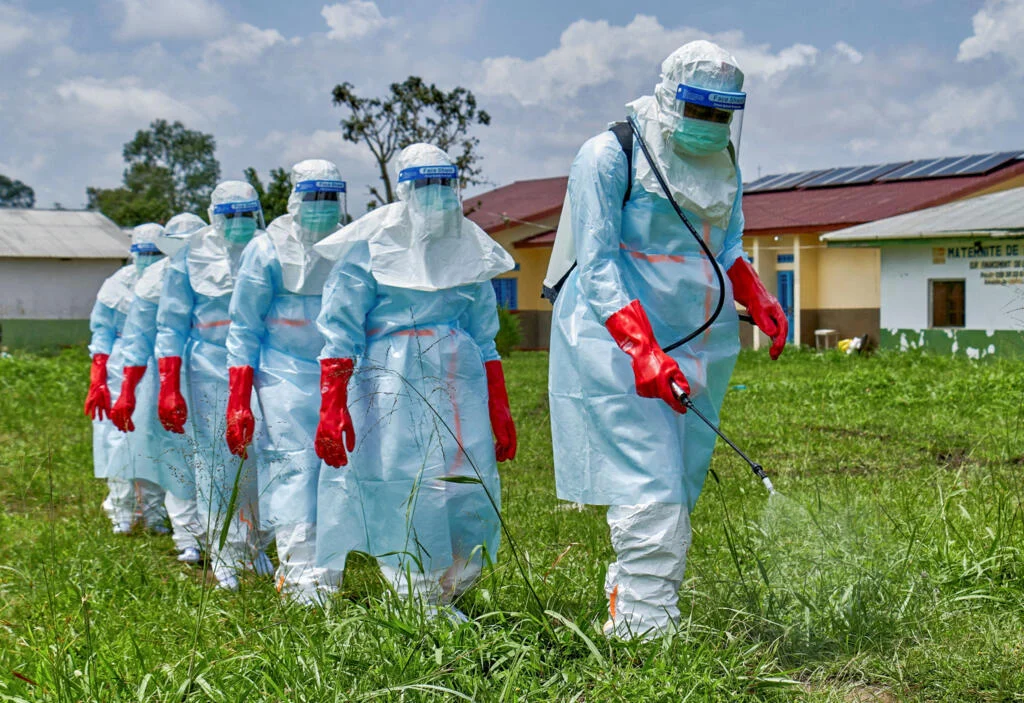
Healthcare facilities were urged to ensure that appropriate personal protective equipment was available in sufficient quantities and that staff were trained to use it correctly.
Idris further advised that suspected cases should be promptly separated from other patients and reported to the relevant public health authorities without waiting for laboratory confirmation before taking necessary precautions.
He emphasised that protecting healthcare workers was essential to safeguarding the communities they serve.
The NCDC’s latest update comes amid ongoing efforts by Nigerian health authorities and their partners to monitor potential exposures and contain the confirmed Ebola case in the Federal Capital Territory.