
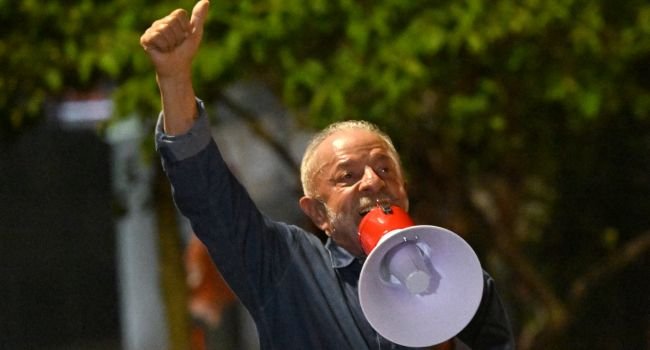
Brazilian President Luiz Inácio Lula da Silva has secured re-election after defeating right-wing challenger Flávio Bolsonaro in a closely contested presidential run-off, while his rival has vowed to challenge the results and seek the annulment of the vote.
Official results showed Lula winning 51.8 per cent of the votes against 48.2 per cent for Bolsonaro, giving the incumbent an advantage of approximately 4.4 million votes.
Bolsonaro, a senator and son of former Brazilian President Jair Bolsonaro, rejected the outcome, describing the decision to extend voting hours as unacceptable and alleging that the process was unfair.
“It is impossible to recognise the results. I am going to request the annulment of these elections,” he said in a brief speech in Brasília.
Voting Extension Sparks Controversy
The election was marked by confusion after Brazil’s Supreme Court extended voting by two hours, with some polling stations having already closed.
The extension followed a request from Lula, who complained that buses had been withdrawn from circulation in several cities, preventing some citizens from reaching polling stations.
Bolsonaro also requested an extension in some regions because of heavy rainfall but criticised the final decision.
Lula’s victory marks a significant political comeback, securing him an unprecedented fourth presidential term. The 80-year-old leader turns 81 on Tuesday.
His win also comes amid a broader shift towards conservative politics in several Latin American countries, including Argentina, Chile, Colombia and Peru.
Lula Campaigns on Democracy
Following his defeat in the first round, Lula’s campaign intensified its efforts with large rallies and a renewed social media strategy under the slogan “Never Again Bolsonaro”.
The abstention rate fell from 21 per cent in the first round to 19 per cent in the run-off.
Speaking after the victory, Lula said voters had been persuaded of the importance of participating in the election to protect democracy.
“People went to vote because we managed to convince them that voting was very important for ensuring democracy in the country,” he said.
Supporters celebrated across Brazil, with crowds gathering in São Paulo and fireworks lighting up Rio de Janeiro.
The campaign was also marked by disputes over social media platforms. Lula’s team accused Meta, the parent company of Facebook, Instagram and WhatsApp, of favouring Bolsonaro through alleged algorithmic manipulation.
Meta denied the allegation but acknowledged that technical errors had resulted in some of Lula’s campaign advertisements being deactivated.
Lula said the outcome reinforced his position that social media companies would need greater regulation.
Brazil Remains Deeply Divided
Despite his victory, Lula faces the challenge of governing a country in which nearly half of voters supported his opponent.
The election exposed continuing divisions over the economy, the cost of living, crime and the country’s political direction.
Lula first became president in 2003 and won re-election in 2006. He returned to office in 2023 after defeating Jair Bolsonaro in the 2022 election.
Before his return, Lula spent more than 18 months in prison following corruption convictions that were later annulled on procedural grounds.
During his third term, his administration oversaw lower inflation and unemployment, while millions of people were lifted out of hunger. However, concerns about living costs and crime remained important issues for voters.
Flávio Bolsonaro, 45, presented himself as a more moderate alternative to his father, attracting conservative supporters and voters seeking political change.
Lula’s next term will also be complicated by a Congress dominated by right-wing lawmakers, potentially limiting his ability to advance his legislative agenda.
Lula Faces Challenges in Fourth Term
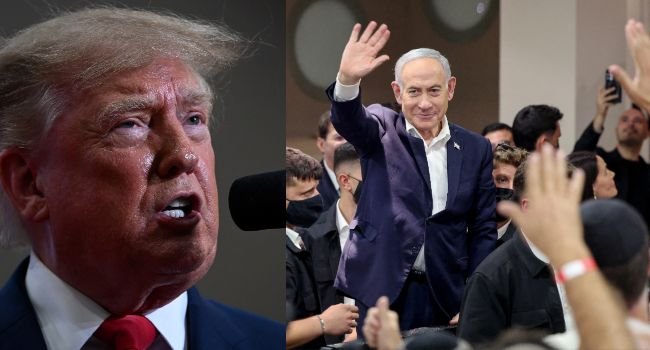
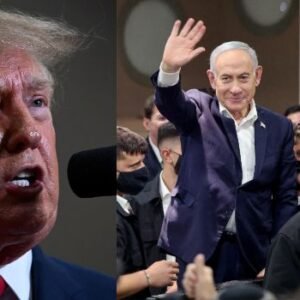
Lula’s campaign placed considerable emphasis on Brazil’s national sovereignty amid commercial and diplomatic pressure from the United States under President Donald Trump.
“This country will not accept being anyone’s backyard,” Lula said on Sunday.
Following the result, Chilean President José Antonio Kast and Ecuadorian President Daniel Noboa congratulated Lula. Both leaders have close ties to Trump.
Mexican President Claudia Sheinbaum also welcomed the outcome in a post on X, declaring that Brazil’s people had won a victory for democracy.
Lula will be 85 by the end of his new term in 2030, making his return to office a historic development in Brazilian politics.
However, Bolsonaro’s pledge to challenge the election results introduces fresh uncertainty as Brazil prepares for another four years under Lula’s leadership.