/ Oct 23, 2026
/ Oct 23, 2026

FG orders review of road concessions over Benin-Asaba gridlock

Published on

By

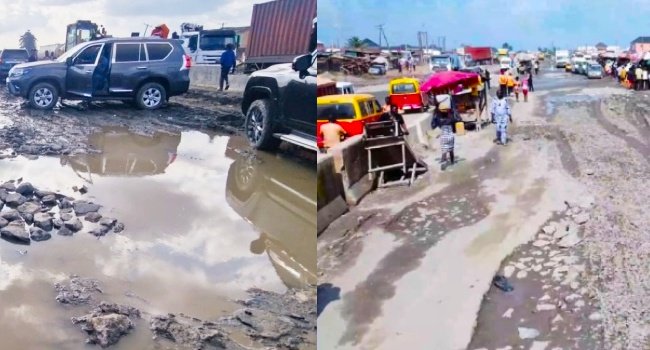
The Federal Government has ordered a review of road concession agreements across Nigeria following the worsening condition of the Benin-Asaba Expressway, which has left motorists and commuters stranded in prolonged gridlock.


Minister of Works David Umahi gave the directive on Tuesday after inspecting the troubled highway. He expressed dissatisfaction with the performance of the Benin-Asaba Expressway Concession Company (BAECC), questioning its technical competence to execute the project.

Umahi faulted the concessionaire for removing existing asphalt on parts of the highway despite warnings from the Ministry of Works. He said the action contributed significantly to the deterioration of the road.

The minister said the road was not in its current condition when it was handed over to the concessionaire, adding that the company could have faced arrest for destroying public property.

He warned that the Federal Government would take action against concessionaires whose activities put public infrastructure and road users at risk.

Emergency Repairs Ordered

Umahi said the government would engage competent contractors to carry out emergency repairs and restore the affected sections to a motorable condition.

He also announced plans for a stakeholders’ meeting to determine the way forward and apologised to commuters who had been stranded by the gridlock.

According to him, President Bola Tinubu had directed the Ministry of Works to do everything possible to resolve the crisis.

The minister further said the government was reviewing how road concessions were awarded, stressing that the competence of concessionaires must be properly established before contracts are granted.

The Benin-Asaba Expressway was concessioned to BAECC in 2025 for reconstruction and expansion into a 10-lane highway. The project is scheduled for completion in September 2027, with the concessionaire expected to recover its investment through tolling and maintain the road for 25 years.

Concessionaire, Consultant Give Different Accounts

BAECC Chief Executive Officer Samuel Daramola attributed the difficulties to persistent rainfall and heavy traffic on the highway.

Daramola said the company had expanded some sections to eight lanes and undertaken palliative works, but struggled to construct side drains because vehicles continued to use the road.

He added that some completed sections had to be reopened before they had fully cured to ease traffic, resulting in repeated construction work.

However, the project’s consultant representative, Engineer Toyin Akinlapa, alleged that BAECC failed to follow professional advice, particularly regarding drainage.

Akinlapa said the concessionaire had been advised to construct the drains before proceeding with other aspects of the project but did not follow the recommendation.

Chairman of the House Committee on Works, Akin Alabi, backed a review of the concession agreement, saying Nigerians should not be subjected to hardship because of poorly managed concession arrangements.

He also called for immediate palliative measures to restore movement on the highway.

Edo State Governor Monday Okpebholo commended President Tinubu for intervening, saying the Federal Government’s response demonstrated concern for motorists and residents affected by the prolonged gridlock.
You May Like

Leave a Reply

Your email address will not be published. Required fields are marked *

Most Popular

Must Read

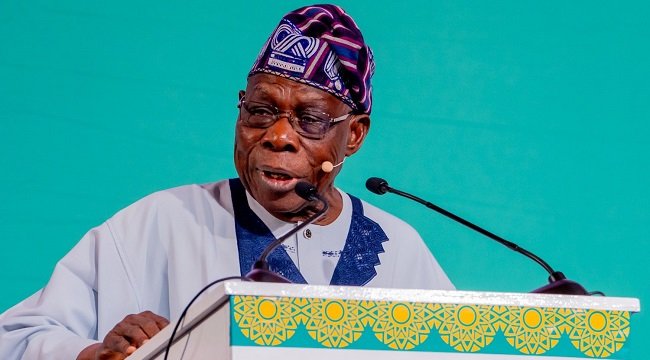
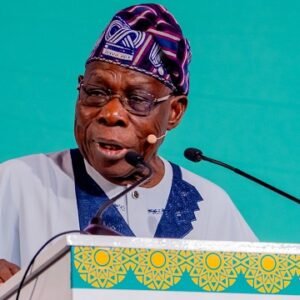
Olusegun Obasanjo speaking at the 2026 Goodluck Jonathan Foundation Democracy Dialogue in Bauchi.

Obasanjo blast Tinubu for making Nigerians 300% poorer

Former President Olusegun Obasanjo has criticised President Bola Tinubu’s economic reforms, accusing his administration of worsening poverty in Nigeria through the devaluation of the naira.   Obasanjo made the remarks on Wednesday at the Financial Times Africa Summit 2026 in London, United Kingdom, where he argued that the sharp decline in the naira’s value had significantly weakened Nigerians’ purchasing power. According to a report by The PUNCH, the former president said the naira’s depreciation had effectively made Nigerians 300 per cent poorer. “We do not live in isolation as a country. We interact with the rest of the world. And overnight, you devalue the currency by 300 per cent. The naira went from N500 to a dollar to N1,500 to a dollar. What that meant was that every Nigerian is made poor by 300 per cent,” Obasanjo said. He described Nigeria as the “poverty capital of the world”, arguing that the country had the largest number of people living in poverty. “You cannot say to me that that is good for Nigeria. You cannot say to me that that is good for us in any sense,” he added. Obasanjo Questions Economic Recovery The former president also rejected arguments that Tinubu should be given more time to deliver the benefits of his economic reforms. Obasanjo said he had yet to see sufficient improvement in the economy to justify the hardship experienced by Nigerians. “For the economy, I don’t see anything getting better. What policies are you seeing through? You impoverish your people, and you want to see impoverishment through?” he asked. He further argued that the policies introduced by the Tinubu administration were not in the best interests of Nigerians. “Nobody can deny that,” he said. Former President Questions Fuel Subsidy Removal Obasanjo also criticised the handling of petrol subsidy reform, noting that fuel costs affected virtually every aspect of economic activity. While acknowledging the importance of addressing the subsidy issue, he argued that corruption associated with the system should have been tackled first. He maintained that a country facing severe economic difficulties should focus on reducing corruption, waste and unnecessary luxury while increasing production. Naira Depreciation and Inflation The Central Bank of Nigeria unified the country’s foreign exchange market windows on June 14, 2023, during the early days of Tinubu’s administration. Before the policy, the official exchange rate stood at approximately ₦460.80 to the dollar. By October 19, the official rate had weakened to about ₦1,333.54 per dollar, according to figures cited by The PUNCH. The naira also fell to approximately ₦1,607.05 per dollar in early May 2025. Despite the currency’s depreciation, official figures indicated that some economic indicators had improved. The National Bureau of Statistics reported that headline inflation fell to 14.63 per cent in September 2026, compared with 20.98 per cent a year earlier. However, food inflation remained high at 19.59 per cent, while Nigeria’s real gross domestic product grew by 4.43 per cent in the second quarter of 2026. The figures highlight the continuing economic pressures facing households, particularly the cost of food and other essential goods. FG Defends Savings From Subsidy Removal Meanwhile, the Minister of Finance and Coordinating Minister of the Economy, Taiwo Oyedele, said on August 19 that the removal of petrol subsidies had saved the Federal Government ₦15.8 trillion between June 2023 and December 2025. The savings form part of the government’s justification for ending the subsidy regime, a policy that has significantly altered petrol pricing and public finances. Efforts by The PUNCH to obtain a response from the Presidency to Obasanjo’s remarks were unsuccessful. The newspaper reported that the President’s Special Adviser on Information and Strategy, Bayo Onanuga, could not be reached.
Read more

Editor's Pick

Trending News

Newsletter

Enter your email address and receive notifications of news by email.

You have been successfully Subscribed! Ops! Something went wrong, please try again.

© 2026 GongNews. All Rights Reserved.