

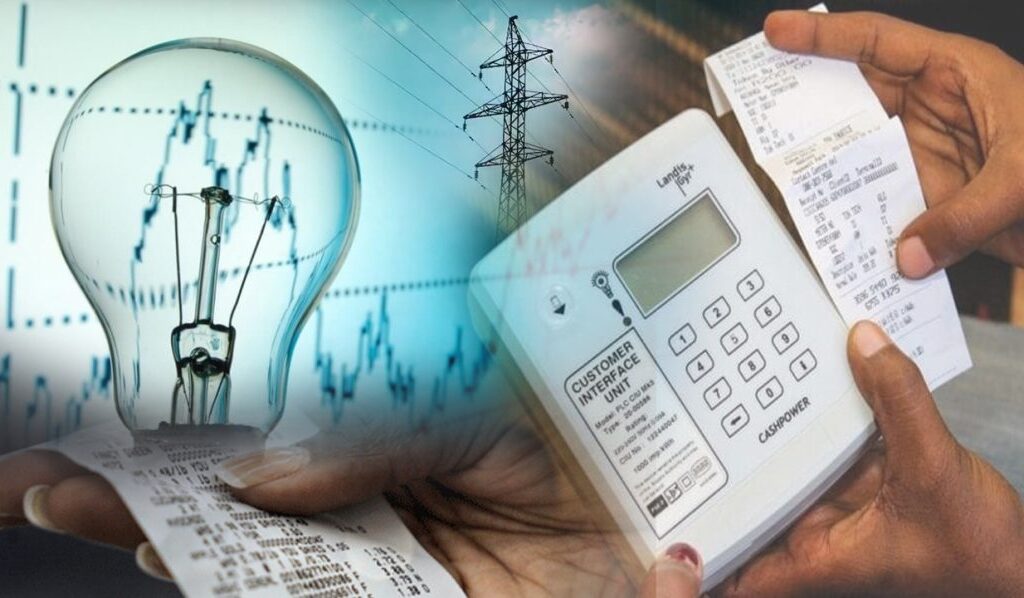
“This fridge has become empty,” muttered Ajayi Tawakalt, a mother of four who runs a frozen foods shop in Odogbonle community of Lagos state. Tawakalt is one of many residents grappling with over three months of power outage, as her once-thriving business teeters on the brink of collapse.
She took out a loan to start the business, but has now begun packing up her equipment due to mounting losses. Since power supply abruptly ceased on March 21, 2025, following a technical fault with the community’s transformer, her solar-powered inverter has proven insufficient for her major appliances.
“I have stopped this business. Some days, I had to throw away spoiled fish. This power supply issue has really destroyed my business,” she told newsmen.
“Even the availability of water is a problem. We usually use a generator to pump water, and the water will not even last for long before it finishes because our neighbours usually fetch from it.”
Many others share Tawakalt’s plight in Odogbonle, a community in Eredo Local Council Development Area (LCDA) of Epe LGA, where residents and businesses have endured over 120 days without electricity since the transformer failure in March.
After the fault occurred, community leaders contacted the Ikeja Electricity Distribution Company (IKEDC) office in Epe for solutions. In April, IKEDC dispatched officials with a truck-mounted crane to remove the transformer for repair, but residents, fearing a repeat of a previous experience, resisted the move.
FORMER TRANSFORMER TAKEN BUT NEVER RETURNED
The community leaders told newsmen that in December 2023, IKEDC had removed a transformer from the community after it developed a fault but never returned it, despite repeated follow-ups.
The current transformer was donated by Monsuru Akinloye, chairman of Eredo LCDA, and installed on April 4, 2024. Before then, the community had endured a four-month blackout.
Onabajo Oriyomi, chairman of Odogbonle, said when residents informed him that IKEDC officials had returned to the community with a truck, attempting to retrieve the faulty transformer, he took steps to intervene.
“I immediately called Victor Uche Amaraegbu, manager of the IKEDC Epe undertaking office, to ask why his officials wanted to remove the faulty transformer and to find out what happened to the one taken in 2023,” Oriyomi said.
“But Victor responded that he is not ready to talk about the 2023 transformer.”
The faulty transformer at Odogbonle community
Determined not to suffer another indefinite wait, residents blocked IKEDC from removing the current transformer. This marked the beginning of a tense standoff between community members and the IKEDC Epe undertaking office.
“After some weeks, I decided to reach out to Victor, the manager of the Epe office, to request a meeting with the IKEDC officials. He kept saying on the phone that he was busy and refused to give us time for a meeting,” Oriyimi added
“Myself, the CDC secretary, and treasurer went to the Epe undertaking office to see Victor, the manager. We were told that he is not around.
“The manager has been evasive because we asked for the 2023 transformer, and we did not allow the officials to take the current faulty transformer.”
BUSINESSES, STUDENTS BEAR THE BRUNT
Odogbonle is home to several businesses, civil servants, and students from the nearby Lagos State University of Education (LASUED) Epe campus. The power crisis has forced students to travel long distances to charge devices, fetch water, and study.
Olatunbosun Aminat, a 200-level accounting education student at LASUED, told newsmen that she and her colleagues now trek to a nearby community to read and charge their phones.
“Most of us are planning to move to another area when school resumes next semester. The power supply is our major challenge here. We cannot cope without electricity as students. It is very stressful,” Aminat said.
For Toyosi Akinlade, who runs a laundry business in the area, the prolonged outage has resulted in spiralling costs.
Akinlade said he now spends an average of ₦90,000 weekly on diesel to power his generator and run key equipment, including industrial dryers.
He added that meeting the 48-hour delivery policy for customers’ clothes has become increasingly difficult.
“This period has been very difficult. I don’t just want to close down the business. I just have to close my eyes to continue running the business. Operating cost is very high. With a high volume of clothes, relying on sunlight for drying clothes is very difficult during this rainy season,” he said.
Adetunji Motunrayo, a fashion designer, has been forced to revert to using outdated manual machines, abandoning her electric alternatives.
The community’s only health facility, a privately owned hospital, is now being powered by a solar inverter and a generator. Wahab Suleimon, a medical officer at the facility, said both power sources are inadequate for the equipment needed.
“We have been feeling the impact of no power supply for the last three months. Solar was an option B before now; it has become the main option. Even pumping water has become a huge challenge now,” he said.
Suleimon said the health facility is sometimes forced to refer patients to another hospital when the solar inverter runs out of power.
CDA CHAIRMAN ACCUSES IKEDC OFFICIALS OF NEGLECT
Community leaders say they have sent multiple letters and complaints to the IKEDC business unit in Ikorodu, the Epe undertaking office, and the Lagos state house of assembly, demanding repair of the faulty transformer and return of the one taken in 2023.
Frustrated by what they describe as a lack of engagement from the Ikorodu and Epe offices, the community sent an email to IKEDC headquarters.
Oriyomi also noted that despite the power outage since March 21, many residents without prepaid meters were still issued electricity bills for March and April.
The community subsequently wrote to the IKEDC Epe office, requesting a suspension of billing until electricity is restored.
IKEDC EPE OFFICE MANAGER SPEAKS ON ALLEGATIONS
Speaking with newsmen, Amaraegbu denied claims that he refused to meet with the community leaders regarding the transformer issue.
The IKEDC Epe manager said he has always been willing to engage with community members in Epe to address electricity-related challenges.
“It is out of place for the community leaders to say I’m avoiding them. I operate three offices – Epe, Imota, and Amamo — sometimes I might be in one office and someone might want to see me in another office,” Amaraegbu said.
“What they need to do is to fix a time with me for a meeting. That is fine. That is the work I do.”
When asked if he told the community leaders to forget about the old transformer that IKEDC officials had taken away in 2023, Amaraegbu denied making such a comment.
Asked about the whereabouts of the 2023 transformer, he said he would “check the IKEDC store” for the infrastructure.
“When I meet with them (community leaders), we will decide what to do. While coming for the meeting, I should also have the information on the previous transformer so that I can relay the information to them. We will then know the way forward,” he added.











swlfee
https://t.me/officials_pokerdom/4086
https://t.me/s/Martin_casino_officials