/ Oct 17, 2026
/ Oct 17, 2026

Nigeria joins IEA, signs deal to boost energy sector

Published on

By

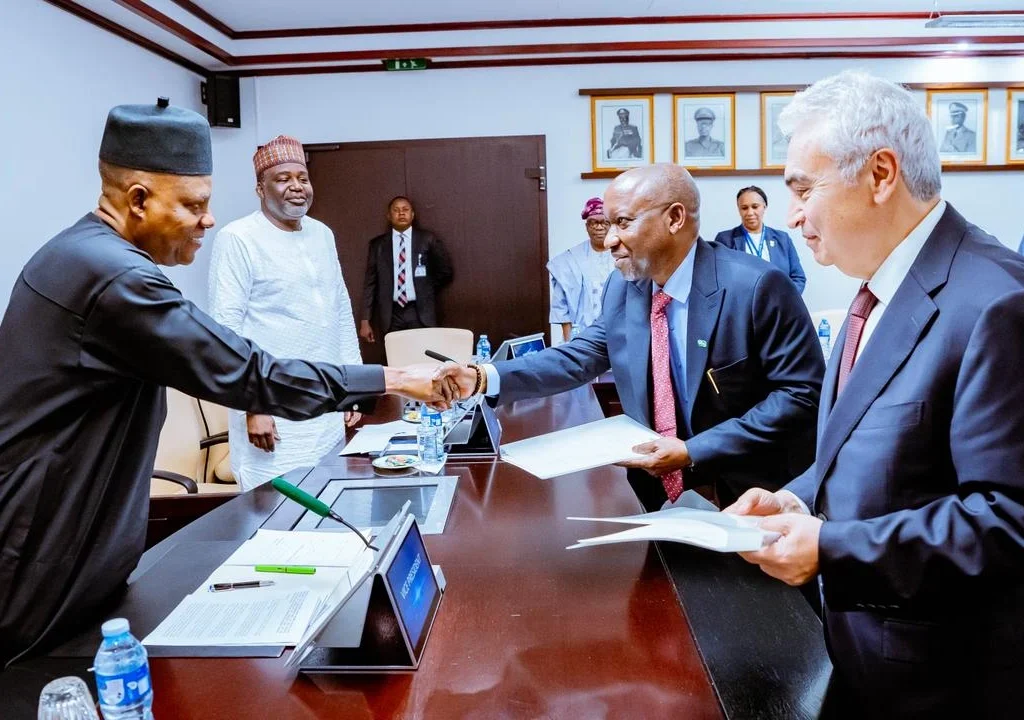
Nigeria and the International Energy Agency (IEA) have signed a Joint Work Programme aimed at strengthening cooperation on energy policy, data development, investment and energy security.


The agreement was signed in Abuja on Thursday, September 3, 2026, marking the formal commencement of the partnership following Nigeria’s admission as an IEA association country.

Speaking on behalf of President Bola Tinubu, Vice President Kashim Shettima described Nigeria’s formal entry into the IEA as a significant milestone and a reflection of the country’s strategic importance in the global energy landscape.

Shettima said Nigeria would benefit from the agency’s institutional knowledge, expertise, data and intellectual resources as the country seeks to maximise its energy potential.

He also highlighted Nigeria’s renewable energy resources and the administration’s commitment to working with international partners on energy security, affordability, sustainability and a fair energy transition.

IEA promises support for Nigeria

IEA Executive Director Fatih Birol said the organisation covers a broad range of energy technologies, including oil and gas, solar power, nuclear energy, artificial intelligence and electric vehicles.

Birol said Nigeria’s admission followed detailed discussions and assessments, after which the IEA governing board, comprising governments including the United States, Japan, Germany, Italy and the United Kingdom, unanimously accepted the country.

He said the IEA would work with Nigeria over the coming years to support the development of a stronger energy sector.

According to Birol, the support will cover areas ranging from clean cooking and gas markets to training Nigerian experts and providing policy advice.

Focus on energy data and investment

The Minister of State for Petroleum Resources (Gas), Ekperikpe Ekpo, said the Joint Work Programme would involve IEA technical experts working with Nigeria to develop data needed for energy policy and investment decisions across the value chain.

The initiative is expected to support Nigeria’s efforts to improve economic growth and strengthen energy security.

Minister of State for Foreign Affairs Sola Enikanoaiye described the partnership as strategically important, while noting the role played by Nigeria’s mission in Paris in securing the agreement.

The Director-General of the Energy Commission of Nigeria, Mustapha Abdullahi, said the commission had previously worked with the IEA, including on the joint sponsorship of Nigeria’s National Energy Master Plan.

He expressed optimism that Nigeria’s formal relationship with the agency would further strengthen technical cooperation in the energy sector.
You May Like

Leave a Reply

Your email address will not be published. Required fields are marked *

Most Popular

Must Read

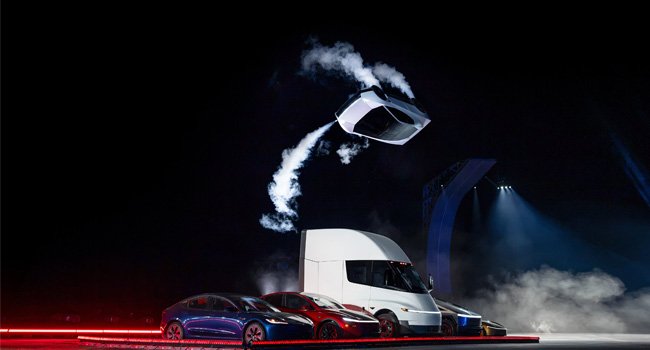
Elon Musk's Tesla Roadster concept equipped with thrusters, unveiled during a livestreamed demonstration at a SpaceX facility in Texas.

Elon Musk unveils Tesla flying car, targets 2028 production

Tesla chief executive Elon Musk has unveiled a new Roadster sports car equipped with thrusters, describing the demonstration as a step towards making flying cars a reality.   The vehicle was showcased during a livestreamed event at a SpaceX test facility in Texas on Thursday, with the demonstration broadcast on Tesla’s X account. During the presentation, the car launched from a steep ramp before landing on its wheels, prompting Musk to declare, “Flying cars are real.” However, the billionaire acknowledged uncertainty surrounding the technology, saying the vehicle’s “success is not guaranteed” but that “it will probably work”. Musk said the car was fitted with ultra-high-pressure air tanks designed to propel it into the air, although the demonstration described in the presentation did not establish that it could sustain flight. He attributed the development to collaboration between Tesla, the electric vehicle manufacturer, and SpaceX, his rocket company. “What happens when you have a collaboration with the world’s best car company and the world’s best rocket company,” Musk said, describing the project. According to Musk, the vehicle is expected to enter production in 2028. However, technical and regulatory hurdles remain significant challenges for the wider flying-car industry. Flying Cars Face Technical Challenges The concept of flying cars has existed for more than a century. American aviation pioneer Glenn Curtiss unveiled an early flying-car prototype in 1917. Despite decades of experimentation, practical flying cars have yet to achieve widespread commercial adoption. Recent advances in electric motors and high-performance batteries have renewed interest in the sector, with developers exploring vehicles that combine road transport with aviation capabilities. However, such vehicles face challenges involving safety, engineering, airspace regulation and commercial viability. Musk’s announcement places Tesla’s latest Roadster concept within this evolving industry, although its planned 2028 production timeline will depend on the project’s technical progress and the requirements for bringing the vehicle to market.
Read more

Editor's Pick

Trending News

Newsletter

Enter your email address and receive notifications of news by email.

You have been successfully Subscribed! Ops! Something went wrong, please try again.

© 2026 GongNews. All Rights Reserved.