
/ Sep 21, 2026
/ Sep 21, 2026

Nigeria pushes global reforms as Shettima leads UNGA delegation

Published on

By

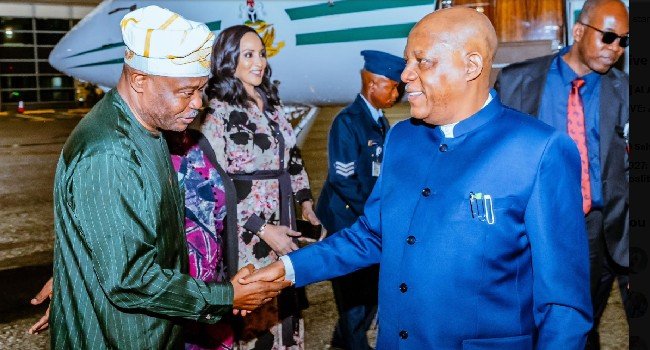
Vice President Kashim Shettima has arrived in New York to represent President Bola Tinubu and lead Nigeria’s delegation to the 81st United Nations General Assembly, UNGA.


According to Channels Television, Shettima said Nigeria would use its participation to advance the country’s national interests while pushing for reforms that would give developing countries a stronger voice in global affairs.

“Our message in New York is clear. Nigeria believes in multilateralism, but the institutions that govern our world must become more representative, equitable, and responsive to the realities of today,” Shettima said in a statement issued by his media aide, Stanley Nkwocha.

He added that Nigeria would engage its international partners from the standpoint of national interest while advancing President Tinubu’s call for a global system that provides developing countries with greater representation and opportunities for economic growth.

Shettima arrived alongside Rivers State Governor Siminalayi Fubara, Minister of State for Budget and Economic Planning Doris Uzoka-Anite and other senior officials.

He was received in New York by Lagos State Governor Babajide Sanwo-Olu, Minister of Foreign Affairs Bianca Odumegwu-Ojukwu, Minister of Women Affairs Imaan Sulaiman-Ibrahim, Minister of Solid Mineral Development Dele Alake, Nigeria’s Permanent Representative to the UN Jimoh Ibrahim and other government and diplomatic officials.

During the General Debate, Shettima is expected to deliver Nigeria’s national statement covering issues including peace and security, development, economic growth and international cooperation.

The UN says the General Debate of the 81st session will run from September 22 to 26 and resume on September 28. The session’s theme is “Restoring Trust, Managing Transformation: A United Nations That Delivers for All.”

Shettima is also expected to participate in high-level meetings and bilateral engagements with world leaders, international organisations and development partners.

Nigeria’s priorities at the meetings include reform of the international financial architecture, sustainable development, climate finance, technology access and stronger African representation in global decision-making.

The call for global institutional reform follows a similar position advanced by Shettima at the 2026 BRICS Summit in India, where Nigeria backed reforms to global governance structures and international financial institutions.

You May Like

Leave a Reply

Your email address will not be published. Required fields are marked *

Most Popular

Must Read

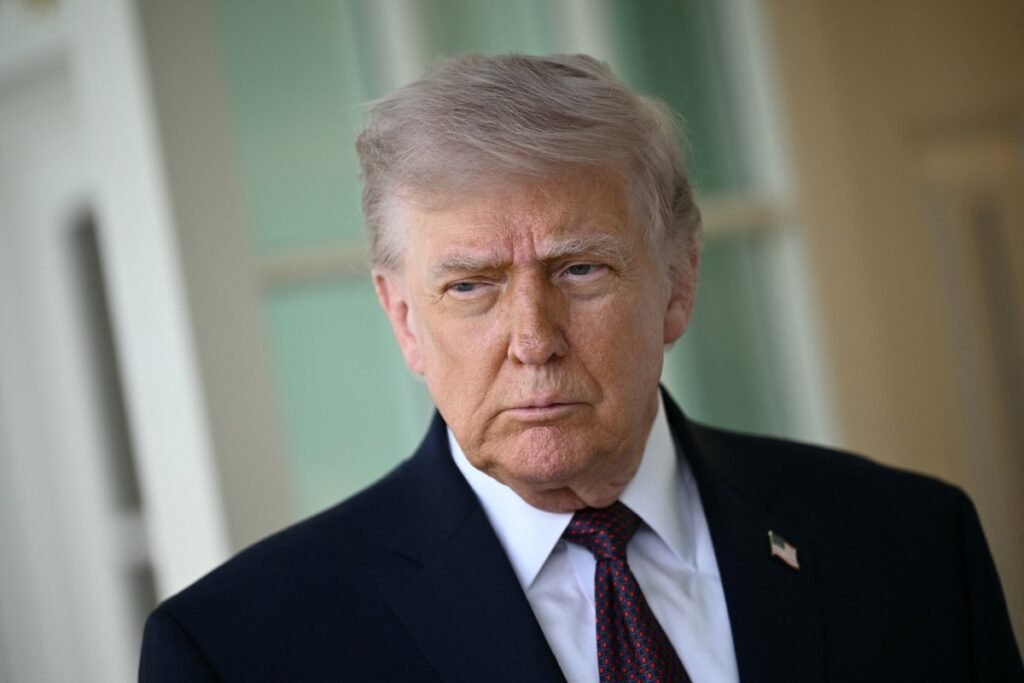
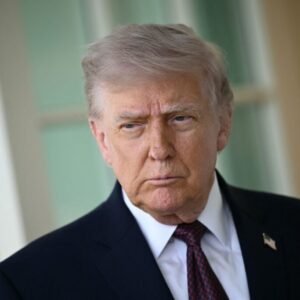
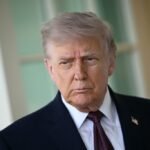
US President Donald Trump pictured as US-Canada tariff talks collapse over proposed new tariffs.

US deports 25,000 migrants to third countries under secret deals

The United States has deported more than 25,000 migrants to countries with which they have no previous ties under agreements negotiated by the Trump administration, according to an investigation by Forbidden Stories and an international consortium of journalists.   The investigation, published Monday and reported by Channels Television, found that 25,447 people had been deported to third countries as of August 31, 2026. Since President Donald Trump returned to office in January 2025, the US has reportedly reached agreements with developing countries to receive migrants who cannot legally be deported directly to their countries of origin. Around 20,000 deportees were sent to Mexico, while thousands more were transferred to 27 other countries across Latin America, Africa and the Pacific. Agreements have also reportedly been finalised with seven additional countries. The US government has earmarked about $410 million for the arrangements, with funds going either directly to receiving governments or through UN agencies involved in facilitating the transfers. African countries approached According to the investigation, 49 of Africa’s 54 countries have been approached about accepting migrants deported from the US. The report said the agreements differ in their terms, including the nationalities that can be accepted and whether countries will take people with criminal records. An AFP investigation earlier in 2026 reported that Washington had used visa restrictions and bans involving African countries as leverage in negotiations over accepting deportees. Lawyers cited by AFP said some migrants were effectively being placed in a legal limbo, detained in countries where they had no connections and potentially limited legal protections. Cameroon receives deportees The investigation identified Cameroon as one of the countries that reached an agreement with Washington. Cameroon signed a memorandum of understanding with the US in December 2025 to accept third-country deportees. The first aircraft carrying deportees reportedly arrived in the country on January 14, 2026. The report also linked the agreement to increased US assistance to Cameroon. A five-year health assistance programme worth almost $400 million was signed shortly after the memorandum. The US State Department subsequently announced an additional $30 million for the UN Refugee Agency in Cameroon to support the voluntary return of refugees and efforts against illegal immigration. How much countries are being paid Some agreements include direct financial payments to receiving governments. Palau, a Pacific island nation with a population of fewer than 18,000 people, agreed in December 2025 to accept up to 75 third-country nationals in exchange for $7.5 million. So far, only three people have reportedly been transferred there. In Eswatini, 32 people have arrived since July 2025 under an agreement allowing up to 160 deportees. The deal is reportedly worth more than $5 million, and the country has accepted people with criminal records. State Department records reviewed by the investigation reportedly showed that $81 million of the $410 million earmarked for the arrangements was intended for signatory governments. More than $178 million was allocated to the International Organisation for Migration, while $123 million was earmarked for UNHCR. UNHCR said it was not a party to the bilateral agreements and that US funding was being used within its mandate to strengthen asylum systems. The International Organisation for Migration said its decision to accept funding was based on whether its involvement would improve conditions for affected migrants.
Read more

Editor's Pick

Trending News

Newsletter

Enter your email address and receive notifications of news by email.

You have been successfully Subscribed! Ops! Something went wrong, please try again.

© 2026 GongNews. All Rights Reserved.