/ Nov 12, 2026
/ Nov 12, 2026

Nigeria, UK deepen cooperation against money laundering

Published on

By

The United Kingdom and Nigeria have strengthened their strategic partnership to combat illicit financial activities, including money laundering, fraud and terrorism financing, following high-level engagements in the UK.


The discussions focused on improving financial intelligence, strengthening public-private partnerships and enhancing cross-border cooperation to tackle financial crimes.

The Nigerian delegation was led by Hafsat Bakari, Chief Executive Officer of the Nigerian Financial Intelligence Unit (NFIU). It comprised representatives of the Central Bank of Nigeria (CBN), Nigeria Data Protection Commission (NDPC), Nigerian Communications Commission (NCC), as well as stakeholders from the banking and telecommunications sectors.

A major highlight of the visit was an engagement with the UK’s Joint Money Laundering Intelligence Taskforce (JMLIT), a public-private partnership that brings together law enforcement agencies, regulators and private-sector institutions to identify and respond to illicit financial threats.

Working sessions with JMLIT and UK Finance provided opportunities for both countries to exchange expertise on financial intelligence, information sharing and collaborative approaches to tackling illicit financial activities.

The engagements also supported Nigeria’s efforts to establish the Joint Financial Intelligence Cooperation (JFIC), a Nigerian-led initiative designed to improve collaboration between government institutions and private-sector stakeholders.

Anchored on trust, governance and technology-enabled cooperation, JFIC aims to strengthen the collective capacity to detect and respond to money laundering, fraud, terrorism financing and other illicit financial activities.

During the visit, the Nigerian delegation also met senior representatives of the UK’s National Crime Agency (NCA), UK Financial Intelligence Unit (UKFIU), HM Revenue & Customs (HMRC), Foreign, Commonwealth & Development Office (FCDO) and HM Treasury.

Discussions covered operational cooperation, the UK’s Financial Action Task Force (FATF) Presidency, trade-based money laundering, emerging financial crime risks and opportunities for stronger international collaboration.

Speaking on the partnership, Chris Chalmers, Deputy Director of the Illicit Finance and Anti-Corruption Department at the FCDO, said Nigeria and the UK had a long-standing relationship in addressing illicit financial flows.

He noted that illicit finance threatens both economies and supports the activities of transnational criminal networks.

Chalmers said the engagements had helped consolidate cooperation on shared threats and international standards, particularly in public-private partnerships.

He added that the FCDO would continue working with Nigeria to operationalise the Joint Financial Intelligence Collaboration.

Similarly, Bakari said the increasing interconnectedness of illicit financial networks made international cooperation essential.

She explained that Nigeria was strengthening its financial intelligence framework through initiatives such as JFIC, which would enable public institutions and private-sector organisations to work more effectively together.

According to her, the partnership with the UK would provide opportunities to exchange expertise, develop practical solutions and strengthen Nigeria’s financial system.

Marc Brown, Fraud Threat Lead at the National Economic Crime Centre (NECC) of the NCA, also reaffirmed the UK’s commitment to supporting Nigeria’s efforts.

He said the partnership between the NECC and NFIU reflected a shared commitment to protecting economic prosperity through stronger responses to financial crime.

Brown added that the UK would continue supporting Nigeria’s JFIC initiative through improved intelligence sharing, operational effectiveness and efforts to prevent and disrupt financial crime.

You May Like

Leave a Reply

Your email address will not be published. Required fields are marked *

Most Popular

Must Read

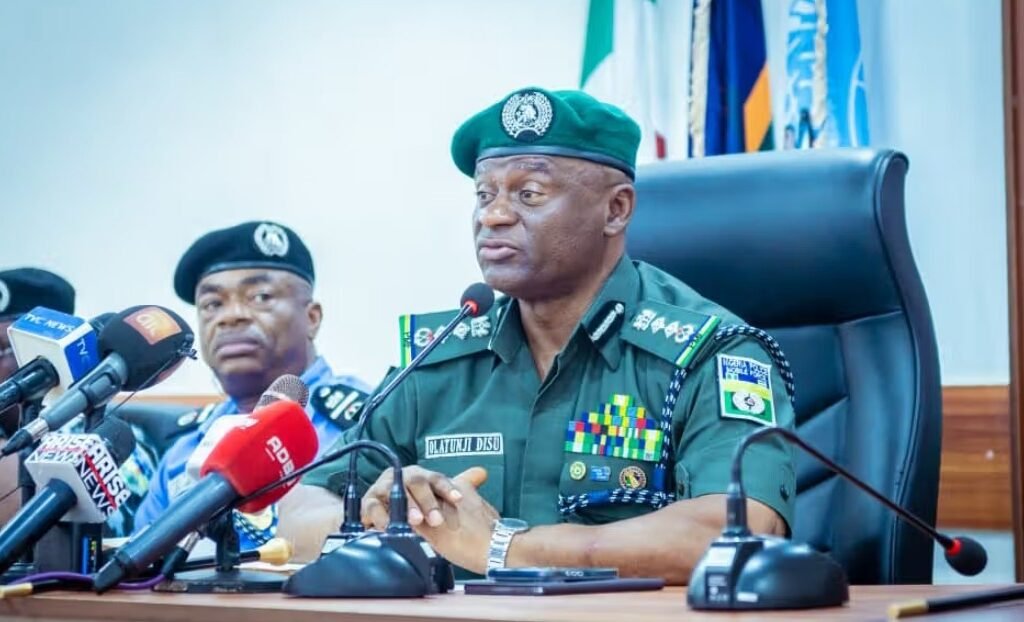
Inspector-General of Police (IGP) Tunji Disu speaking at a youth leadership and security dialogue in Abuja.

2027 elections: IG cancels police leave, orders security crackdown

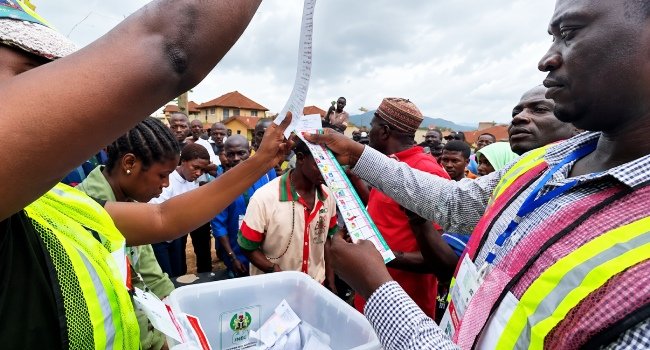
The Inspector-General of Police, Olatunji Disu, has cancelled the leave of police officers assigned to election security duties ahead of Nigeria’s 2027 general elections and ordered an intensified nationwide crackdown on banditry.   Disu also directed the immediate deployment of additional police personnel, operational vehicles and air support to communities affected by bandit attacks. He gave Commissioners of Police in affected states 72 hours to submit updated security threat assessments and operational requirements to Force Headquarters. The directives were announced on Wednesday during the monthly conference of strategic senior officers of the Nigeria Police Force in Abuja. The police chief acknowledged that bandit attacks remained ongoing in some states, stressing the need for intelligence-led operations and stronger collaboration with local communities. He directed the Deputy Inspector-General of Police in charge of Operations to coordinate the deployment of additional personnel and equipment to affected areas in consultation with the relevant police commands. Disu also instructed police commands to strengthen intelligence gathering by engaging traditional rulers, village heads, hunters’ associations and local vigilante groups. He said communities must have the confidence to provide information that could help security agencies identify and apprehend bandits. IG restricts police officers’ movement ahead of 2027 elections On preparations for the 2027 general elections, Disu announced the immediate cancellation of leave for all officers and men assigned to election security duties. He also directed Commissioners of Police and other senior officers to remain within their respective commands until the conclusion of the electoral process. According to him, any senior officer seeking to travel outside their area of responsibility must obtain express approval from Force Headquarters. The IGP further ordered police commands to verify the readiness of election security equipment, communication facilities, operational vehicles and protective gear, with reports due before the end of the week. He directed Commissioners of Police to establish direct coordination with the Independent National Electoral Commission, the military, the Department of State Services and the Nigeria Security and Civil Defence Corps. Disu warned officers against allowing politicians to use them to compromise the electoral process, facilitate thuggery or interfere with voters’ rights. He stressed that the police would remain non-partisan and provide equal protection to candidates, political parties, supporters and eligible voters, regardless of their political affiliations. He warned that officers found colluding with political actors or undermining the integrity of elections would face disciplinary action in accordance with the law. Police arrest 218 suspected bandits, rescue 95 kidnap victims Meanwhile, Disu disclosed that the police had arrested 218 suspects for banditry and terrorism since the last strategic officers’ conference. The Force also arrested 85 suspected armed robbers, 129 suspects for murder and culpable homicide, 59 suspected kidnappers and 120 suspected cultists. He added that police operations within the period led to the rescue of 95 kidnap victims and the recovery of 306 assorted firearms, 630 rounds of ammunition of various calibres and 116 stolen vehicles. The IGP commended officers involved in the operations, acknowledging their contributions to the achievements recorded by the Force. IG orders payment of fallen officers’ benefits Disu also directed Commissioners of Police to ensure the immediate payment of outstanding death benefits and entitlements owed to families of officers killed in the line of duty. He instructed commissioners to personally verify pending cases in their commands, stressing that families of fallen personnel should not be left without support. Additionally, he ordered a welfare audit across police commands to identify outstanding entitlements, accommodation challenges and other pressing welfare needs. The reports are expected to reach his office within 30 days. The police chief also urged senior officers to strengthen supervision, discipline and operational effectiveness while warning against corruption, extortion, abuse of authority and unlawful use of force.
Read more

Editor's Pick

Trending News

Newsletter

Enter your email address and receive notifications of news by email.

You have been successfully Subscribed! Ops! Something went wrong, please try again.

© 2026 GongNews. All Rights Reserved.