

/ Sep 30, 2026
/ Sep 30, 2026

Police rescue nine kidnap victims, lose two officers in gun battle

Published on

By

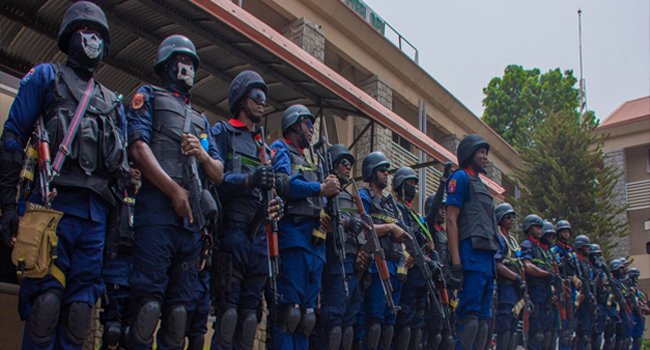
The Kaduna State Police Command has rescued nine kidnapped victims following a fierce gun battle with suspected bandits in the state, although two police officers lost their lives during the operation.

According to The Guardian Nigeria, the rescue mission was carried out after security operatives received intelligence on the movement of kidnappers in a remote area of Kaduna State. Police teams reportedly engaged the armed criminals in a gunfight that led to the successful rescue of the victims.

The operation, however, came at a heavy cost as two officers were killed in the line of duty while confronting the kidnappers. Several of the criminals were said to have sustained injuries during the exchange of gunfire and fled into nearby forests.

Police authorities said efforts are ongoing to track down the fleeing suspects and dismantle the criminal network responsible for the abductions. The rescued victims were reunited with their families after receiving medical attention.

Kidnapping remains a major security challenge across parts of northern Nigeria, particularly in states such as Kaduna State, where security agencies continue to conduct operations against armed gangs involved in abductions and other violent crimes.

The police commended the bravery of the fallen officers and reaffirmed their commitment to combating kidnapping and restoring security across the state.

You May Like

Leave a Reply

Your email address will not be published. Required fields are marked *

Most Popular

Must Read

Japanese surgeons perform the world’s first heart muscle stem cell surgery using iPS-derived cells

Japan performs world’s first heart muscle stem cell surgery

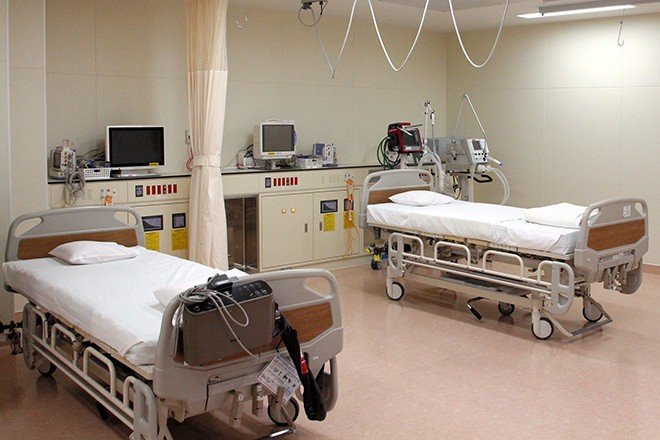
A hospital in Japan has performed the world’s first surgery using commercially available sheets of heart muscle cells derived from induced pluripotent stem cells, marking a significant step in regenerative heart treatment.   The procedure was carried out on Tuesday at Osaka Keisatsu Hospital on a woman in her 50s. The hour-long operation involved transplanting sheets of heart muscle cells into her heart. The treatment received conditional government approval in Japan in March, allowing its first clinical use. “Our hope is that this will improve the patient’s quality of life,” surgeon Yoshiki Sawa, head of Osaka Keisatsu Hospital, told reporters after the operation. The regenerative therapy was previously tested on eight patients with ischaemic heart disease, a condition in which narrowed heart arteries reduce blood flow to the heart. According to Japanese media reports, all eight patients experienced an easing of symptoms, while four recorded improvements in heart function. Sawa developed the technology in collaboration with Japanese scientist Shinya Yamanaka, who won the 2012 Nobel Prize in Physiology or Medicine for his research into induced pluripotent stem cells, commonly known as iPS cells. iPS cells are created by reprogramming mature specialised cells into a more flexible, juvenile-like state, allowing them to develop into different types of cells. The therapy is primarily intended for heart patients who have exhausted other treatment options. It is expected to help improve heart muscle function, heart failure symptoms, cardiac performance and exercise tolerance. Sawa’s team plans to carry out similar procedures on 75 patients by 2033 as part of efforts to establish the treatment’s effectiveness and safety. The treatment could receive full authorisation if its benefits and safety are demonstrated during the seven-year evaluation period, according to Japanese media reports. Japan also granted conditional approval in March for an iPS cell-based treatment for Parkinson’s disease following a successful clinical trial.
Read more

Editor's Pick

Trending News

Newsletter

Enter your email address and receive notifications of news by email.

You have been successfully Subscribed! Ops! Something went wrong, please try again.

© 2026 GongNews. All Rights Reserved.