

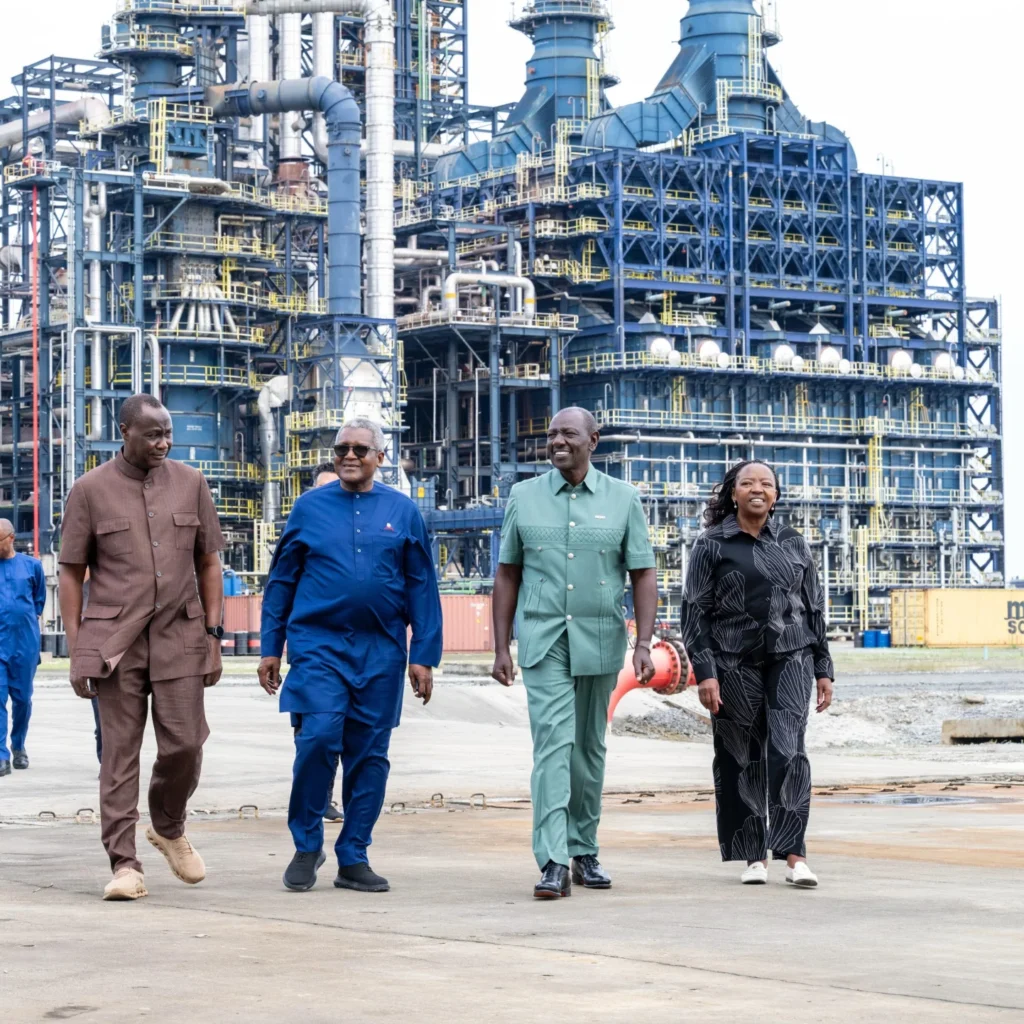
Recent moves in the downstream oil sector highlight Nigeria’s paradox of misery amid enormous endowment. While the Nigerian National Petroleum Company Limited pledged six million barrels of crude to the Dangote Refinery by December, five other smaller domestic refiners lamented their inability to commence production.
Pump prices of refined products climbed higher amid continued supply hitches. Without further delay, President Bola Tinubu should drive a programme facilitating domestic self-sufficiency in refining.
Officials, including the Minister of State for Petroleum, Heineken Lokpobiri, admitted that the failure of the NNPC to supply Dangote Refinery and five modular refineries with crude feedstock had stalled their full take-off. They blamed lower-than-expected crude production for the lapse.
The Crude Oil Refinery Owners Association of Nigeria lamented that several more refineries were also nearing completion but were stuck because of supply uncertainties.
Meanwhile, pump prices spiked, creating further apprehension for business operators and deepening Nigerians’ agony. Manufacturers said the rise in per litre price of diesel to N1,275 in Lagos, and N1,300 ex-Lagos, was further impacting on production costs and prices.
Dangote cited the failure of the NNPC to provide it with crude for missing its latest production commencement target of October. It had missed several previous targets despite its official opening in May. It gave a new date of November 30.
Nigeria’s governance practices often defy logic. With over 37 billion barrels in crude oil reserves, it is Africa’s largest. It is nevertheless the continent’s highest importer of refined petroleum products.
It has four state-owned refineries, moribund for over three decades, running losses and gulping billions of dollars through dubious turnaround maintenance contracts, yet resists the rational option of selling them.
Instead of driving a vigorous programme to become sub-Saharan Africa’s refining hub, officials continue to frustrate private local refining initiatives.
The delay in supplying local refiners is curious; the NNPC should clarify whether it is still supplying itself 445,000 barrels of crude per day to sell and use its proceeds to import refined petrol, and whether it has stopped the controversial crude-for-refined products arrangement as ordered by Tinubu recently.
Read Also:
LP, AAC slam Tinubu’s plan to renovate forfeited property with N3bn
Analysts suggest that the NNPC should simply set aside the 445,000bpd for local refiners to guarantee them adequate feedstock. It is also curious that while NNPC unfailingly provided itself with the allocation for decades irrespective of crude production shortfalls, it now struggles to supply private refiners claiming reduced production!
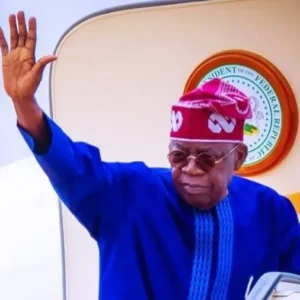
Tinubu, who like his predecessors, has retained the petroleum portfolio, must resolve this logjam promptly. It is not rocket-science: while pricing and subsidy may remain issues, the solution to the downstream quagmire lies squarely in achieving self-sufficiency in refining.
The national folly must stop. In 2021, Nigeria spent $11.3 billion importing refined products, according to the Observatory of Economic Complexity, the 18th largest importer worldwide and Africa’s No 1. This rose to $23.3 billion in 2022, Aljazeera reported.
Among OPEC member states, Algeria refines 677,000bpd; Iraq’s over 15 refineries have a combined capacity of 1.0 millionbpd; Iran’s 2.64 mbpd capacity represents 22 per cent of the Middle-East’s total output, reports GlobalData. Libya’s refineries process 634,000bpd. Non-OPEC member, Egypt, with crude production of just 660,000bpd, nevertheless refines 833,000bpd, some of which it exports.
Nigeria should therefore adopt a national emergency programme on domestic refining. It must be private sector-led: the state-owned refineries should be sold immediately; the NNPC should withdraw completely from the downstream.














https://t.me/s/Martin_casino_officials