

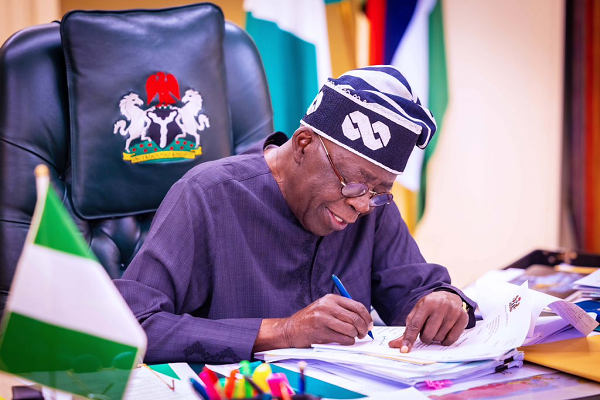
President Bola Tinubu has signed the necessary instruments to formally exercise his constitutional prerogative of mercy, granting pardon and clemency to selected individuals convicted of various offences.
After consultations with the Council of State and in response to broader public feedback, the President directed a further review of the original list, pursuant to his discretionary powers under Section 175(1) & (2) of the 1999 Constitution (as amended).
Following the review, individuals convicted of serious crimes, including kidnapping, drug-related offences, human trafficking, fraud, and unlawful possession or dealing in firearms, were removed from the list.
Some others earlier slated for pardon had their sentences commuted.
According to the Presidency, the decision was guided by the gravity of the offences, their security implications, sensitivity to victims, the need to reinforce law-enforcement morale, and Nigeria’s bilateral obligations.
The review also reflected the principle that justice must serve the accused, the victim, and the state.
The approved list of beneficiaries has been transmitted to the Nigerian Correctional Service for implementation in line with the executed instruments of release.
As part of wider reforms to improve due process, President Tinubu ordered the immediate relocation of the Secretariat of the Presidential Advisory Committee on Prerogative of Mercy from the Federal Ministry of Special Duties to the Federal Ministry of Justice.
He further directed the Attorney-General of the Federation to issue new guidelines governing the exercise of the prerogative of mercy, including mandatory consultation with relevant prosecuting agencies, to ensure that only persons who fully meet legal and procedural requirements benefit from future clemency processes.
The President appreciated the constructive engagement of stakeholders and the public on the matter and reaffirmed his administration’s commitment to ongoing judicial reforms and strengthening the administration of justice in Nigeria.
The Guardian reports that when the initial list was released earlier in October, political figures, human rights organisations and other well-meaning Nigerians decried the inclusion of persons convicted for serious offenses.
Among those who criticised the gesture was the former Vice President Atiku Abubakar, as well as the Human Rights Writers Association of Nigeria (HURIWA), who said the rash approach makes a mockery of the justice system and is tantamount to an abuse of presidential privilege.
Out of the 175 beneficiaries of the Presidential pardon, according to the Special Adviser to the President on Media and Public Information and Strategy, Bayo Onanuga, 41 are illegal miners, 28 drug traffickers and 22 murderers topped the list.
Also included in crime forgiveness are foreigners, coup plotters and corrupt politicians, including Major General Mamman Vatsa, Major Akubo, Professor Magaji Garba, capital offenders such as Maryam Sanda as well as late Ken Saro Wiwa, and the other Ogoni Eight.








https://t.me/s/iGaming_live/4864
https://t.me/s/flagman_official_registration
Jilibet020 – not a bad option if you ask me! Found some good games and they pay out pretty reliably. Just keep an eye on the fine print on the bonuses like with any site. jilibet020
I’ve been playing at 369jlcasino for a little while now and the customer service is actually pretty good, quick to respond. Plus, they have a decent variety of games. Give it a try 369jlcasino