
/ Sep 14, 2026
/ Sep 14, 2026

World Bank to end lending to China by 2031 under new strategy

Published on

By

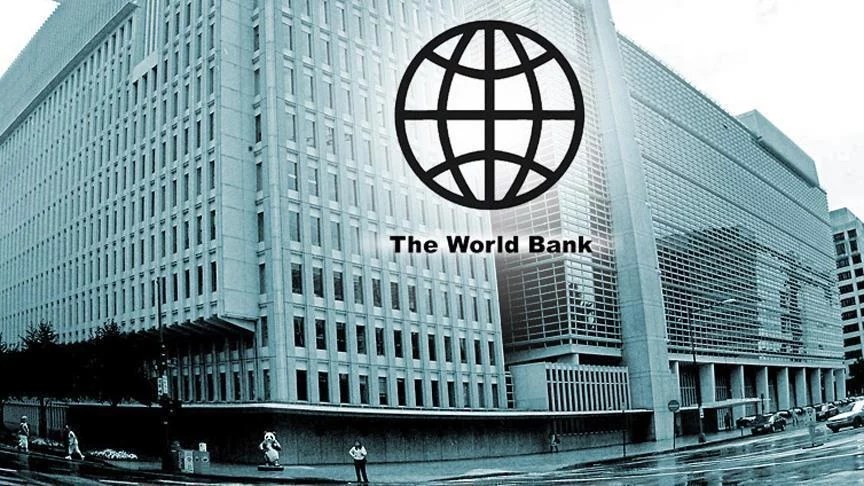
The World Bank will stop lending to China by 2031 under a new country partnership framework, marking a significant shift in its relationship with the world’s second-largest economy.


According to AFP, as reported by Channels Television, the new framework reflects China’s economic transformation after decades of rapid growth and declining poverty.

A World Bank official, speaking anonymously, said China has achieved substantial development gains with support from the institution and other international partners.

“Now we are reaching a new phase of our relationship, reflecting that reality,” the official said.

The World Bank said its role in China is evolving from that of a lender to a knowledge partner, providing technical expertise rather than financial support.

Lending to China has steadily declined in recent years. After peaking at $2.42 billion in 2017, World Bank financing fell to $750 million in 2025.

The decision comes after years of criticism from the United States over continued lending to China. During his first term, US President Donald Trump called on the World Bank to end all loans to Beijing, arguing that the country no longer required development financing. While he has maintained a tough stance on China during his second term, he has not renewed that specific demand.

Despite the planned end to lending, China remains a major contributor to global development through the World Bank. Under the latest replenishment of the International Development Association, which supports the world’s poorest countries, Beijing pledged $1.5 billion, making it the fund’s fifth-largest donor.

The World Bank recently announced a similar approach for Poland, saying it intends to reduce lending to zero by 2031 while continuing to provide technical assistance.


You May Like

Leave a Reply

Your email address will not be published. Required fields are marked *

Most Popular

Must Read

Budget Office of the Federation Director-General Tanimu Yakubu overseeing Nigeria's 2027 budget preparations.

FG sets September 18 deadline for 2027 MDAs budget submissions

The Federal Government has set September 18, 2026, as the deadline for ministries, departments and agencies to submit their 2027 personnel budget proposals as it moves to present the 2027 budget to the National Assembly this month.   The directive is contained in the 2027 Personnel Costs Budget Call Circular, dated September 4, 2026, and signed by the Director-General of the Budget Office of the Federation, Tanimu Yakubu. According to the circular, the Federal Government had concluded the draft 2027–2029 Medium-Term Expenditure Framework and Fiscal Strategy Paper in July to facilitate the early submission of the 2027 Appropriation Bill to the National Assembly. The Budget Office fixed 4pm on Friday, September 18, for MDAs to submit hard and electronic copies of their personnel budget proposals and accompanying documents. The government has also introduced stricter checks to prevent unestablished agencies from being included in the federal budget. Under the new requirement, MDAs must submit the laws establishing them alongside their budget proposals. The Budget Office warned that failure to provide the documents could lead to rejection of the proposals. The measure follows the controversy surrounding the Presidential Foreign Intervention Promotion Council, which was allocated about N1.3bn in the 2026 budget despite questions over its legal status. The House of Representatives investigated the matter, while President Bola Tinubu ordered a forensic review of the processes and internal controls surrounding the inclusion of questionable agencies in the budget. The Independent Corrupt Practices and Other Related Offences Commission subsequently reported that the PFIPC had no legal backing and that its purported appointment letter was forged. The ICPC also uncovered another organisation, the National Brands Development and Made-in-Nigeria Special Project Office, which it said was operating within the Office of the Secretary to the Government of the Federation without presidential authorisation. Beyond agency verification, the 2027 budget circular introduced tighter controls on personnel expenditure, recruitment and payroll management. MDAs were directed to validate their payrolls against the Integrated Personnel and Payroll Information System and the Government Integrated Financial Management Information System. The Budget Office said no personnel cost provision would be made for serving federal employees who are not captured on IPPIS or enrolled on GIFMIS, unless they have been specifically exempted by the appropriate authority. MDAs must also use only salary structures and allowances approved by the National Salaries, Incomes and Wages Commission and verify employees’ grade levels, steps and annual increments. The government further barred agencies from budgeting for anticipated promotions. Only promotions already approved and in effect are to be reflected in the 2027 personnel budget. For new recruitment, MDAs must provide supporting documents, including financial clearance, letters of first appointment and relevant recruitment waivers or clearances. The Budget Office also warned against including consultants, contract workers, youth corps members, industrial attaches, outsourced service providers and legionnaires on nominal rolls because they are not permanent or pensionable federal employees. Additional safeguards were introduced for federal health and educational institutions to prevent the duplication of personnel on different payrolls. The circular also announced plans for a centralised Personnel Cost Monitoring Dashboard linked to IPPIS and GIFMIS, allowing MDAs to compare actual personnel expenditure with budget provisions. Meanwhile, MDAs are required to submit their third-quarter personnel budget performance reports by September 30, 2026, while ministers, chief executives and accounting officers must certify the accuracy of their submitted personnel proposals. The move comes as the Federal Government seeks to advance Nigeria’s budget cycle and address recurring implementation problems caused by overlapping fiscal years and differences between budget assumptions and actual economic outcomes.
Read more

Editor's Pick

Trending News

Newsletter

Enter your email address and receive notifications of news by email.

You have been successfully Subscribed! Ops! Something went wrong, please try again.

© 2026 GongNews. All Rights Reserved.