
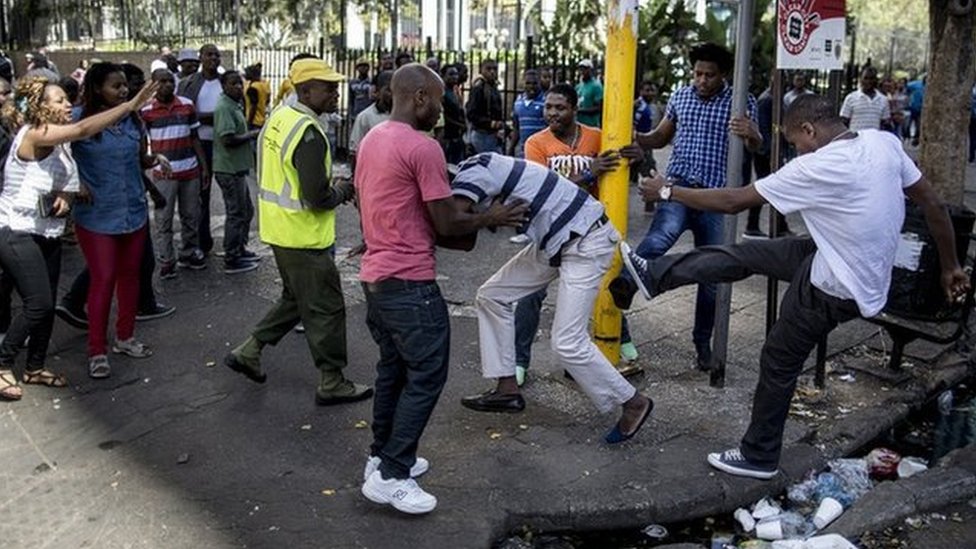
The Nigerian community in South Africa has alleged that at least 105 Nigerians have been killed in the country since 2019 amid recurring xenophobic attacks and violent incidents targeting migrants.
According to a report by Punch Newspapers, leaders of the Nigerian Union South Africa and the Nigerian Citizens Association South Africa raised the alarm in a joint statement signed by Smart Nwobi and Frank Onyekwelu.
The groups were reacting to a report by the South African Broadcasting Corporation, which quoted South Africa’s Department of International Relations and Cooperation as saying migrants were not being killed in the country.
The Nigerian community rejected the claim, warning that downplaying attacks on migrants could discourage victims and witnesses from speaking out.
The statement said Nigerians in South Africa had suffered years of xenophobic violence, including mob attacks, shootings, alleged extra-judicial killings, vigilante assaults and unlawful use of force.
According to the community leaders, records gathered from media reports, civil society organisations and migrant groups showed multiple unresolved deaths involving Nigerians between 2019 and 2026.
They alleged that during the 2019 xenophobic unrest in Johannesburg, several Nigerian-owned businesses, vehicles and shops were destroyed, while about 12 Nigerians reportedly lost their lives.
The statement added that more than 17 Nigerians were allegedly killed in 2022 through violent attacks, vigilante-style executions and alleged brutality by security personnel.
In 2023, the groups claimed over 40 Nigerians died in incidents linked to mob violence, alleged police misconduct and unresolved violent encounters.
They further alleged that eight Nigerians died in 2024, while another eight reportedly lost their lives in 2025 during shootings, violent clashes and deaths in police custody.
The organisations also claimed that from January 2026 till date, more than 20 Nigerians had died during encounters involving security personnel, criminal attacks or suspected extra-judicial actions.
While acknowledging that some investigations were ongoing, the community leaders expressed concern over what they described as a lack of prosecutions, accountability and transparent outcomes in many of the reported cases.
They, however, stressed that their position was not intended to undermine South Africa’s democratic institutions or judicial system, noting that many South Africans continued to reject xenophobia and support peaceful coexistence.
The groups called on South African authorities to strengthen protections for all residents regardless of nationality, ensure transparent investigations into violent incidents and intensify measures against xenophobic violence and mob justice.
They also urged the government to promote public education, dialogue and social integration to reduce hatred and violence against foreign nationals.