

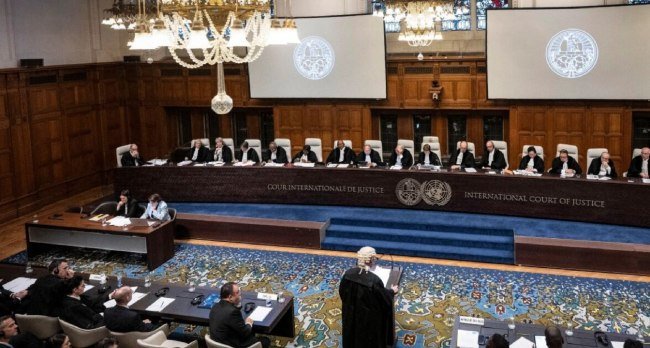
A major international arbitration court has rejected Rwanda’s bid to recover more than £100 million from Britain over the abandoned migrant deportation agreement, marking a significant development in the long-running dispute between the two countries.
The ruling, delivered on Monday by the Permanent Court of Arbitration, found that the UK was not required to make two disputed annual payments of £50 million each following the cancellation of the controversial scheme.
According to Channels Television, citing AFP, the judges ruled that Britain was not liable for the outstanding costs Rwanda claimed were due after the programme was scrapped in 2024.
The migrant deal was originally signed in 2022 by former British Prime Minister Boris Johnson and the government of Rwanda. The agreement aimed to transfer asylum seekers and migrants who arrived in United Kingdom through irregular routes, including small boat crossings of the English Channel.
However, the policy faced legal challenges and political opposition from the outset. The UK Supreme Court later ruled the arrangement unlawful, creating further obstacles to its implementation.
Following his election victory in July 2024, British Prime Minister Keir Starmer declared the scheme “dead and buried” and criticised it as a failed policy initiative.
The current UK government has stated that only four migrants were relocated to Rwanda during the programme’s existence, all of whom travelled voluntarily.
Rwanda argued before the arbitration panel that Britain still owed two annual payments worth £50 million each. However, the court rejected one claim by majority decision and unanimously dismissed the second.
Official UK figures indicate that approximately £290 million had already been paid to Rwanda under the agreement before its cancellation.
The ruling comes amid wider tensions between the two countries. Britain recently reduced aid to Rwanda, accusing Kigali of backing the M23 rebel group operating in neighbouring Democratic Republic of the Congo, an allegation Rwanda has denied.
The decision effectively closes a key financial dispute arising from one of Britain’s most controversial migration policies in recent years.