The US-Iran peace deal has been signed in a major diplomatic breakthrough aimed at ending the Middle East conflict and opening a 60-day negotiation period for a final agreement.
The memorandum of understanding was signed by leaders of the United States and Iran, with a formal ceremony expected in Switzerland on Friday. It is intended to halt months of hostilities that escalated after earlier US-Israeli strikes on Iran in February.
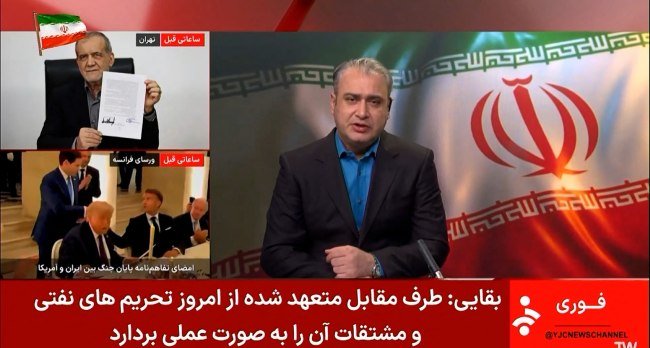
A video shared by a US official showed President Donald Trump signing the agreement during a dinner in France, attended by world leaders including French President Emmanuel Macron.
Iranian officials, including President Masoud Pezeshkian, confirmed the signing through state media, with both sides describing the document as a framework for a broader settlement.
Key provisions of the agreement
The deal outlines several major commitments, including a $300bn reconstruction and development plan for Iran, to be coordinated with regional partners.
Iran also reaffirmed its position that it will not pursue nuclear weapons, while agreeing that the management of its enriched uranium will be handled through a jointly supervised mechanism under the International Atomic Energy Agency.
Both sides have pledged an immediate and permanent end to military operations, including indirect conflicts across regional fronts.
The agreement also commits both countries to avoid further military action against each other and to respect sovereignty guarantees linked to Lebanon.
Sanctions, trade and military withdrawal
The United States has agreed to lift sanctions in phases, including waivers for Iranian oil exports, banking transactions and transport services. It will also begin the removal of its blockade on Iranian ports.
In return, Iran will facilitate safe passage of commercial vessels through the Strait of Hormuz for an initial 60-day period while maritime security arrangements are restored.
A further clause outlines the withdrawal of US forces from areas near Iran following a final agreement.
Next steps
Negotiations for a final settlement are expected to conclude within 60 days, with the possibility of extension if both sides agree. The process will be formally endorsed through a United Nations Security Council resolution once completed.
Switzerland is set to host the next stage of talks as both parties move from framework agreement to implementation.