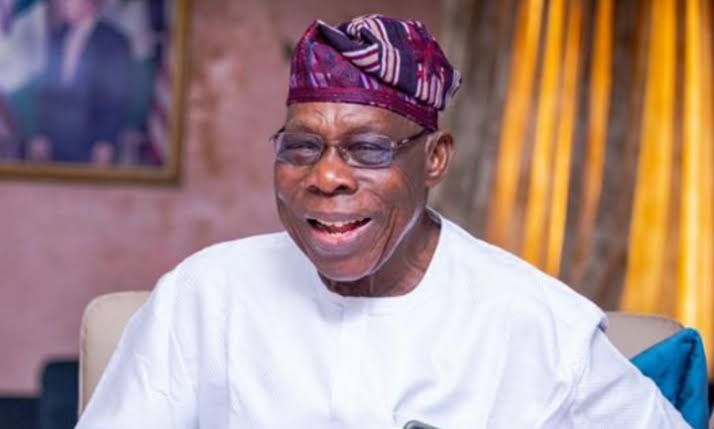
Former President Olusegun Obasanjo has warned that Nigeria must do everything possible to prevent another civil war, stressing that the country cannot survive a repeat of the devastating conflict that lasted from 1967 to 1970.
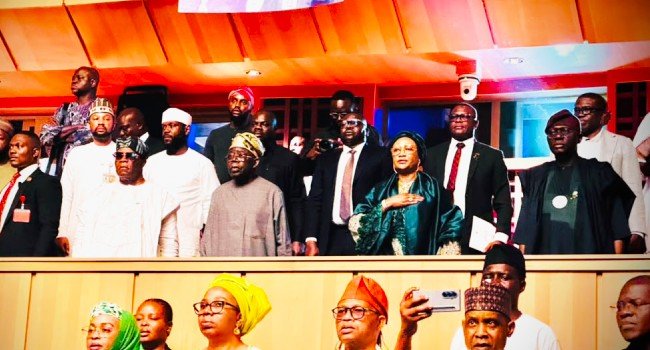
Speaking in Abeokuta during the public presentation of a book on the Asaba massacre and related events by Chuck Nduka-Eze, chairman of the Asaba Memorial Trust, Obasanjo said the lessons of history must not be forgotten.
According to TheCable, the former president said some of the conditions that triggered the Nigerian civil war remain unresolved, making it vital for the country to confront its past and prevent a recurrence.
“What went wrong in the past is essential to preventing a repeat. We must do everything humanly possible to prevent its recurrence,” Obasanjo said.
He recalled a conversation with former Head of State, General Yakubu Gowon, who reportedly said Nigeria would not survive a second civil war.
“I believe we have fought one civil war too many already. To say that we will have a second civil war, God forbid,” Obasanjo added.
The former military ruler praised Nduka-Eze for documenting the events surrounding the Asaba massacre, describing the work as an important contribution to preserving history, promoting reconciliation and educating future generations.
Obasanjo said preserving historical records is also a key objective of the Olusegun Obasanjo Presidential Library.
Reflecting on his role during the civil war, he said he could not provide detailed accounts of the Asaba massacre because military operations in the area were under the command of the late Murtala Mohammed. However, he noted that he was later assigned responsibilities aimed at preventing further killings as the conflict drew to a close.
He maintained that the military leadership neither authorised nor condoned attacks on civilians, recalling an occasion when he personally intervened to stop a soldier from assaulting a civilian woman in Asaba.
Obasanjo also said military commanders must take responsibility for the conduct of troops under their command and noted that Gowon had publicly acknowledged and apologised for excesses committed during the war.
He pledged to study the transcripts and audiovisual materials presented by the author, insisting that documenting the civil war and the Asaba massacre remains essential to national unity and ensuring such a tragedy never happens again.
Nigeria’s civil war began on July 6, 1967, and ended on January 15, 1970, after 30 months of fighting.