
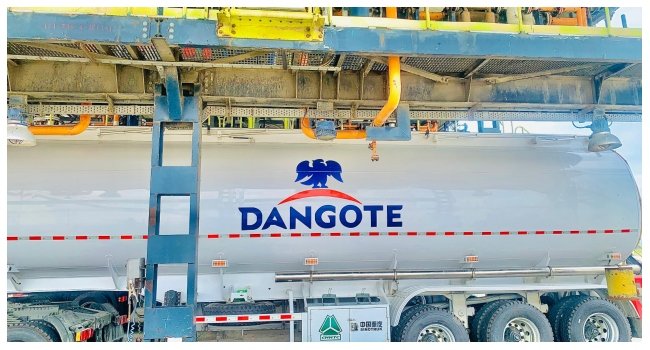
Fuel marketers have suspended large-scale loading of petrol from the Dangote Petroleum Refinery amid uncertainty over the refinery’s reported shift to a dollar-based pricing model, prompting the Federal Government to intensify efforts to prevent disruptions in the downstream petroleum sector.
According to The PUNCH, marketers said they were reluctant to buy fresh supplies because they were unsure whether petrol prices would rise or fall in the coming days, exposing them to potential losses.
The National Publicity Secretary of the Independent Petroleum Marketers Association of Nigeria, Chinedu Ukadike, said marketers were relying on existing stock while awaiting clarity on the refinery’s new pricing template and the cost of imported fuel.
He explained that uncertainty over crude oil pricing and fresh imports had forced marketers to adopt a cautious approach, warning that many were unwilling to load large volumes without knowing the next market price.
The Western Zone Chairman of IPMAN, Oyewole Akanni, also said the reported suspension of petrol loading at the refinery had pushed marketers to source products from private depots at higher prices, with some filling stations temporarily shutting after exhausting their stock.
Akanni, however, stressed that there was no nationwide fuel scarcity, urging motorists not to engage in panic buying despite the possibility of higher pump prices if the situation persists.
Dangote Refinery rejected claims that it had stopped loading fuel, with a company spokesman describing the reports as “fake news” and insisting that loading operations were continuing at the Lekki facility.
The dispute comes as negotiations between the Federal Government and Dangote Refinery continue over crude oil supply arrangements and the refinery’s decision to adopt a dollar-based pricing system.
A senior government official told The PUNCH that the refinery was dissatisfied with the continued issuance of fuel import licences to marketers despite its production capacity, as well as the quantity of crude supplied by the Nigerian National Petroleum Company Limited and the proportion sold in naira.
According to the official, the refinery argues that limited access to naira-denominated crude purchases has forced it to rely heavily on dollar transactions, prompting its new pricing approach.
The Federal Government said it would continue discussions with the refinery but insisted it could not allow any single operator to dominate the market. The official warned that if negotiations failed, the government could permit more fuel imports to guarantee supply.
The official also noted that the refinery’s location within a free trade zone gives it flexibility in determining the currency used for commercial transactions.
Meanwhile, the Federal Competition and Consumer Protection Commission maintained that the naira remains Nigeria’s only lawful currency for domestic commercial transactions.
FCCPC Director of Corporate Affairs, Ondaje Ijagwu, also expressed concern that recent declines in global crude oil prices had not translated into lower pump prices, saying the commission would continue monitoring the market and take enforcement action where evidence of anti-competitive conduct or consumer exploitation exists.
The report also noted that three major oil marketers, Matrix Energy Group, AA Rano Nigeria and AYM Shafa Holdings, have challenged the continued regulation of fuel import licences in court, adding another layer of complexity to efforts to balance domestic refining with market competition.