
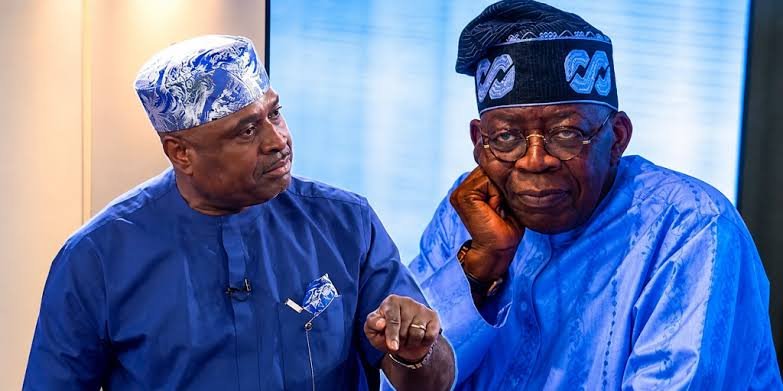
Kenneth Okonkwo, spokesperson for the African Democratic Congress (ADC) presidential candidate Atiku Abubakar, has criticised the Federal Government’s petrol subsidy removal, describing the policy as a major contributor to Nigeria’s economic hardship.
Speaking on Channels Television’s Sunday Politics, Okonkwo said the decision had increased the cost of living and weakened the purchasing power of Nigerians.
He argued that petrol prices, which he said are now around ₦1,300 per litre, have made transportation and daily expenses unaffordable for many citizens.
“₦130,000 is almost two times the minimum wage of a Nigerian,” Okonkwo said, adding that many workers struggle to afford basic needs after paying for fuel.
The ADC chieftain defended Atiku Abubakar’s proposed fuel affordability plan, saying it would not involve a return to the previous subsidy system but would focus on reducing production costs by making crude oil available to local refineries at affordable rates.
“Why should we produce oil in our land and still sell it to Nigerians at an unaffordable price?” he asked.
Okonkwo also criticised the performance of the naira under President Bola Tinubu’s administration, comparing the value of previous and current minimum wages against the dollar.
He claimed that the increase from the former ₦30,000 minimum wage to ₦70,000 had not improved living standards because of inflation and currency depreciation.
The Federal Government has maintained that subsidy removal was necessary to reduce financial pressure and redirect funds towards development. Finance Minister Taiwo Oyedele previously stated that the policy saved Nigeria ₦15.8 trillion between June 2023 and December 2025.
The debate over fuel subsidy remains a major issue ahead of the 2027 presidential election, with opposition figures calling for alternative approaches to ease economic pressure on Nigerians.