
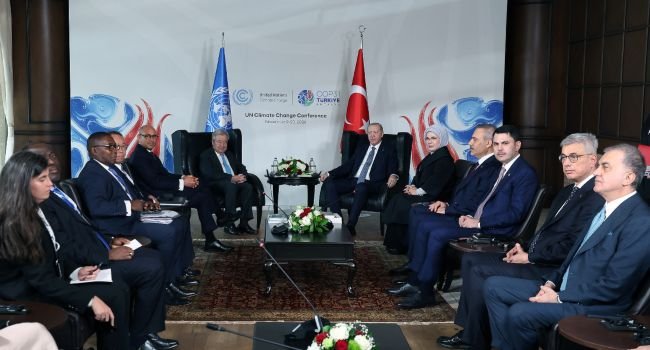
World leaders are gathering in Turkey for the COP31 climate summit, but the absence of several influential political figures has raised questions about international commitment to tackling climate change.
The two-week United Nations climate conference, which began earlier this week in the Mediterranean city of Antalya, Turkey, is taking place amid growing concerns over global warming, following devastating floods in Nepal, heatwaves across Europe and major wildfires in Indonesia.
The high-level segment of the summit begins on Wednesday and Thursday, with dozens of leaders scheduled to address delegates, including Turkish President Recep Tayyip Erdogan, Brazilian President Luiz Inacio Lula da Silva and Iranian President Masoud Pezeshkian.
However, several prominent world leaders will be missing from the gathering.
British Prime Minister Andy Burnham is reportedly the only leader from a G7 country scheduled to address the summit. European Commission President Ursula von der Leyen is attending, but French President Emmanuel Macron, German Chancellor Friedrich Merz and Italian Prime Minister Giorgia Meloni are absent.
Canadian Prime Minister Mark Carney and Japanese Prime Minister Sanae Takaichi are also missing from the latest list of attendees.
Cosima Cassel, a climate diplomacy expert at the think-tank E3G, expressed disappointment over the absence of major European leaders.
She told AFP that Europe needed to demonstrate stronger leadership and commitment at the climate conference.
However, the European Union’s climate commissioner, Wopke Hoekstra, said the absences were not unusual, noting that leaders could have practical reasons for missing international summits.
He also cautioned that expectations for the conference were not particularly high.
Macron Explains Absence
The French government said Macron would not attend because November 11 marks World War I Armistice Day, during which he is scheduled to participate in commemorative activities. He is also expected to attend a European Union summit in Ireland on Thursday.
Chiara Martinelli, director of Climate Action Network Europe, argued that world leaders seeking influence over the global energy transition should demonstrate their commitment by attending the summit.
She expressed concern that von der Leyen could be left representing Europe largely alone, with leaders of its biggest economies absent.
Meanwhile, Iranian President Masoud Pezeshkian said he intended to use the conference to address environmental destruction linked to warfare.
According to Iranian state television, Pezeshkian said Iran would raise concerns about the environmental impact of actions by the United States and Israel.
US, China Represented by Senior Officials
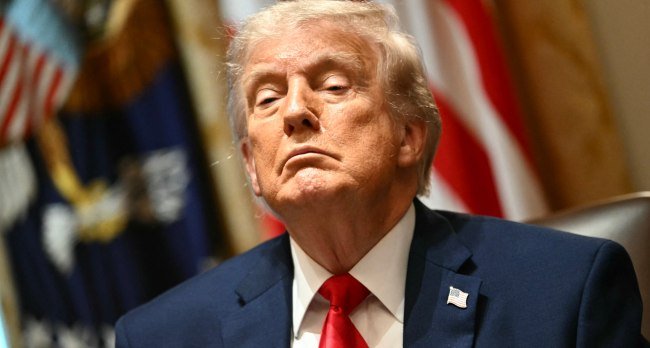
The absence of US President Donald Trump is also drawing attention.
Trump, who withdrew the United States from the Paris Climate Agreement, has not sent officials to climate negotiations since his re-election in 2024, according to the report.
Chinese President Xi Jinping is also absent. He will be represented by Vice President Han Zheng.
The United States and China are the world’s two largest economies and leading emitters of greenhouse gases, making their participation particularly important to international climate negotiations.
Despite the absences, climate campaigners have welcomed the presence of Brazilian President Lula, who has made tackling deforestation a key priority.
Lula’s victory over right-wing rival Flavio Bolsonaro in Brazil’s presidential election last month was also welcomed by climate advocates.
COP31 Targets Global Electrification
As host, Turkey is promoting a voluntary initiative aimed at accelerating the electrification of transport, buildings and industry.
The proposal targets increasing electricity’s share of global energy consumption to 35 per cent by 2035.
The European Union has emphasised that the transition towards electrification must be clean, potentially creating disagreements over the continued role of fossil fuels, including oil, gas and coal.
Since countries agreed in 2023 to move away from fossil fuels, which are the primary drivers of climate change, progress towards implementing the commitment has remained difficult at successive annual climate conferences.
Meanwhile, researchers reported that global fossil fuel emissions are projected to decline slightly in 2026, partly due to the expansion of renewable energy and the oil price shock triggered by the Iran war.
The COP31 summit is expected to provide another opportunity for governments to discuss climate commitments, energy transition strategies and international cooperation.