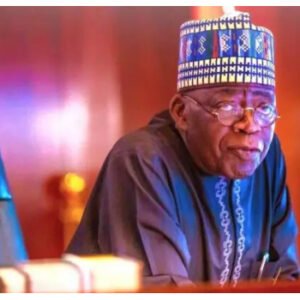

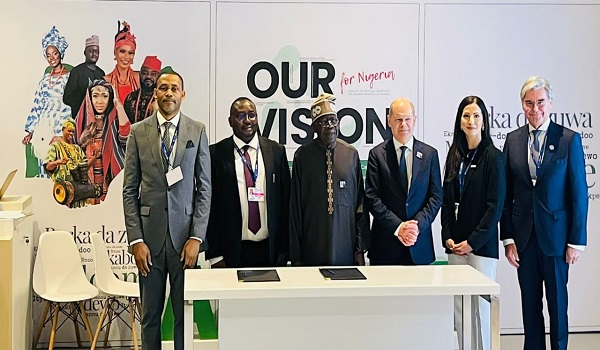
Nigeria and Germany yesterday signed an accelerated performance agreement aimed at expediting the implementation of the Presidential Power Initiative (PPI) to improve electricity supply in Nigeria.
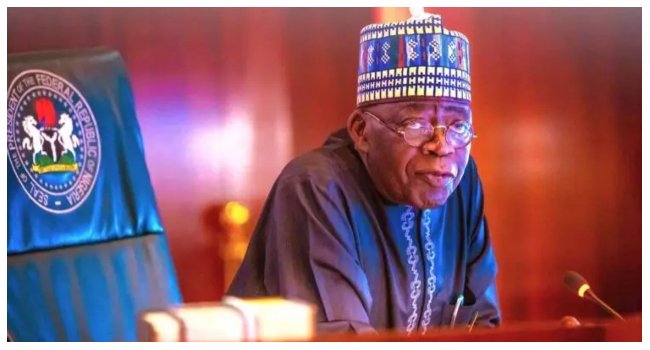
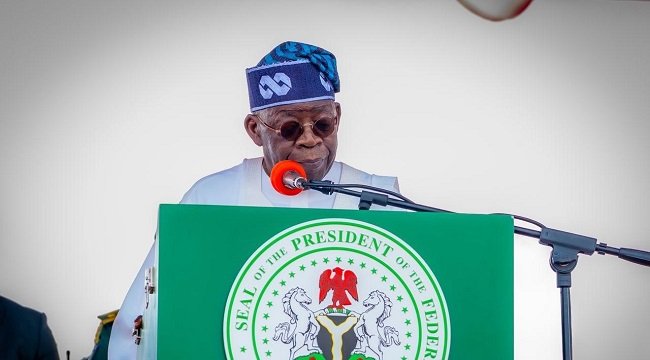
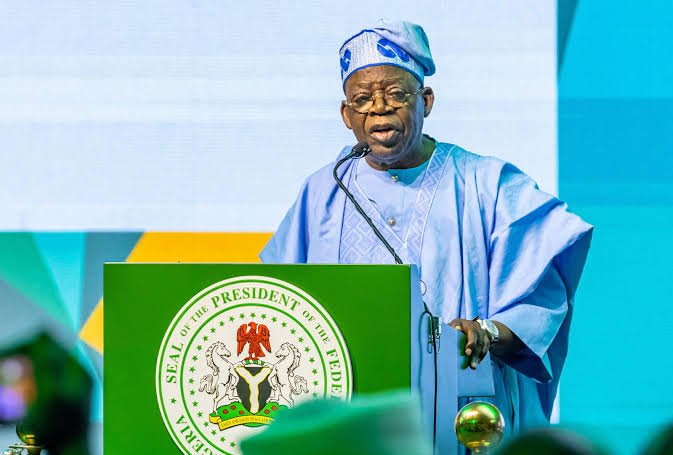
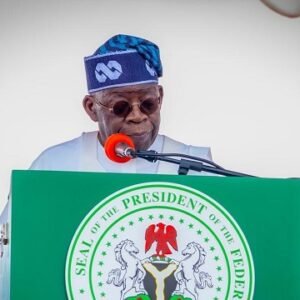
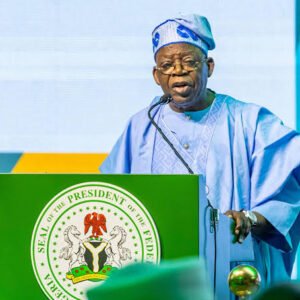
The signing ceremony, which was presided over by President Bola Tinubu and the German Chancellor, Mr Olaf Scholz, took place on the sidelines of the ongoing United Nations Climate Conference (COP28) in Dubai, the United Arab Emirates.
The agreement was signed by Mr. Kenny Anuwe, the Managing Director and CEO of FGN Power Company, and Ms. Nadja Haakansson, Siemens Energy’s Senior Vice President and Managing Director for Africa.
The PPI, formerly known as the Nigeria Electrification Roadmap Initiative, was the outcome of the visit of former German Chancellor Angela Merkel to Abuja in August, 2018.
An agreement was signed between the governments of Nigeria and Germany in 2019 to improve the power sector.
President Bola Tinubu, since assuming office, has consistently advocated the accelerated realization and expansion of the PPI.
To achieve this, the project has been a major focal point in three rounds of bilateral discussions at several meetings between the President and the German Chancellor, in New Delhi, Abuja and Berlin.
The agreement signed on Friday, according to a statement issued by Ajuri Ngelale, Special Adviser to the President on Media and Publicity, will see to the end-to-end modernization and expansion of Nigeria’s electric power transmission grid with the full supply, delivery and installation of Siemens-manufactured equipment under the time line of 18 to 24 months.
Furthermore, the agreement will ensure project sustainability and maintenance with full technology transfer and training for Nigerian engineers at the Transmission Company of Nigeria (TCN).
Speaking after the signing ceremony in Dubai, Managing Director of the FGN Power Company, Mr. Kenny Anuwe, highlighted Siemens Energy’s effective delivery of crucial equipment worth over 63 million Euros to the country since the project commenced.
Read Also:
Nigeria: Residents to experience five-day blackout in Anambra
This includes 10 units of 132/33KV mobile substations; 3 units of 75/100MVA transformers and 7 units of 60/66MVA transformers, currently being installed by FGN Power Company at various sites across Nigeria.
Anuwe harped on the commitment of President Tinubu to the development of power infrastructure, noting that he had reiterated time and again that infrastructure development is critical to the ongoing reforms.
He affirmed that electricity and financing are at the heart of the economic reform agenda of the administration, adding that the PPI by design encapsulates both elements with the support of partners, Siemens Energy and the financiers that are backed by the German government.
Addressing the President, Anuwe noted: “Mr. President, with your strong and dynamic leadership through the Honorable Minister of power, now we seek to exploit or expedite what was already a worthwhile a programme in the presidential power initiative through this accelerated agreement today.
“Some of the things that have been achieved erstwhile by the federal government have been the establishment of the FGN Power Company as the special purpose vehicle for the implementation of the project.”
He said the German government has nominated the mandated lead arrangers and financiers, adding that Siemens energy has also successfully delivered 10 units of power transformers and 10 units of mobile substations.
In his remarks, Chairman of Siemens Energy Supervisory Board, Joe Kaeser, traced the history of the initial agreement to the Muhammadu Buhari administration in 2018, expressing delight that both parties have now been able to drive the process forward.
He said: “I’m particularly happy to be here tonight to witness the signing of the Presidential Initiative for Power because in 2018 the former President Buhari wanted me to come to Abuja and explain to him what we did in Egypt.
“And I said Mr. President, Egypt has 80 million (people) and we could use 14 gigawatts and Nigeria has 200 million people. So, we could actually need more gigawatts.
“Now, after five years, I’m really happy that this agreement that has the spirit of supplying energy to the greater good of Nigerian people has been taken to new level. Thank you very much for doing that.
“And as we say in Germany, good things take time as we have seen tonight.”
Speaking on the project, the Minister of Power, Adebayo Adelabu, said the target of the PPI is to add 12,000mw of electricity to the national grid.
He said with the signing on Friday, the process will now proceed apace to ensure constant supply of electricity to Nigerians.
“Of course, we knew that there were a lot of delays between 2018 and now that we have not really made significant achievement in terms of proceeding with the contract signed in 2018 because of a lot of factors. Some were natural, some human, some were processes.
“We also had COVID in 2020 which made the execution of the project slow. But now, it shows that we are now ready to move forward with the Siemens projects.
“It shows a commitment between the government of both countries to proceed with this project, which we believe will go a long way in improving the performance of the power sector in Nigeria.
“This is an agreement that has to do with end-to-end fixing in terms of grid stabilisation of the entire transmission grid in the Nigerian power sector, which will eventually improve the power supply in terms of regularity, in terms of functionality and in terms of affordability in the years to come.
“We’re very happy that we’re able to sign this agreement tonight. And in the next couple of months we will witness a lot of activities on the presidential power initiatives project.”
On the financial implications, he revealed that the project is to be financed under the Government Export Credit Facility that is being provided by a couple of German banks to Nigeria.
“The original agreement we had was for $2.3 billion, but what we have is up to date, just in region of $60 million, which has to do with the importation of the 10 transformers and the 10 power mobile substations, which Siemens have delivered to the country.
“They have been commissioned and we are in the process of installation of these transformers. So far, it has cost us $60 million,” he said.
The project will also focus on identified load demand centres with particular emphasis on economic and industrial hubs nationwide; execution of new 330kV and 132/33KV substations in target load centres with economic priority, in addition to thousands of kilometres of overhead transmission lines to connect new substations with existing ones.
Among Nigerian officials present at the ceremony were Attorney-General of the Federation, Lateef Fagbemi; Minister of Aviation, Festus Keyamo; Power, Adelabu; Environment, Balarabe Lawal; Transportation, Said Alkali; Industry, Trade and Investment, Dr Dorris Anite and Agriculture, Abubakar Kyari.