/ May 15, 2026
/ May 15, 2026

Gong

  • All
  • Africa
  • Agriculture
  • Aviation
  • Banking
  • Business
  • Crime
  • Economy
  • Education
  • Entertainment
  • fashion
  • Health
  • Home
  • International
  • lifestyle
  • Metro
  • News
  • Nigeria
  • Politics
  • Religion
  • Security
  • Sport
  • sports
  • Tech
  • Technology
  • World News
Protesters set Nepal parliament on fire

September 10, 2025

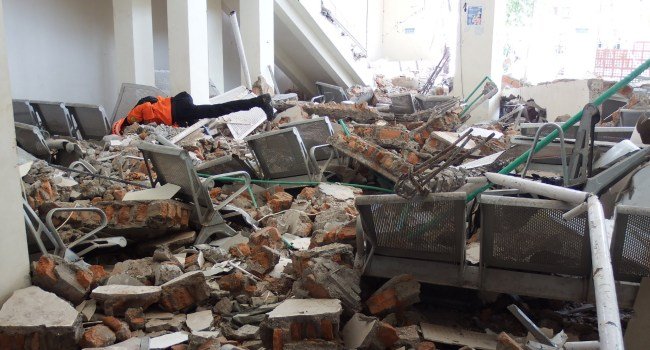
Nepal’s political crisis boiled over on Tuesday as furious protesters stormed and set fire to the country’s parliament building in Kathmandu, sending plumes of black smoke into the Himalayan capital’s...

Trending

Officials from Nigeria and Germany sign €365 million development cooperation agreement at the German Embassy in Abuja.

Nigeria-Germany €365m deal targets energy, agriculture and jobs

Nigeria has signed a €365 million development partnership with Germany aimed at boosting investment, infrastructure and economic growth, in a move expected to deepen economic ties between both countries.   The agreement, reported by The Nation, includes €65 million in fresh financial support and a separate €300 million export credit guarantee framework to back trade and investment between businesses in Nigeria and Germany.   The deal was signed at the German Embassy in Abuja after bilateral talks between officials from both nations. Nigeria’s Federal Ministry of Budget and Economic Planning said the package will support long-term projects, strengthen investment flows and improve economic cooperation.   Speaking at the ceremony, Dr Uzoka-Anite said the agreement comes at a key stage in the country’s economic reform programme under Bola Tinubu.   She said the partnership would support sectors including agriculture, renewable energy, industrial development, healthcare, skills acquisition and employment. She added that all projects would align with Nigeria’s National Development Plan 2026–2030 and its Agenda 2050 strategy.   German Ambassador Annett Günther said the talks involved several Nigerian ministries, German development agencies, representatives of the European Union and other stakeholders. She said the broad participation underlined the strategic importance Germany places on its relationship with Nigeria.   Also speaking, Philip Knill described Nigeria as a key political and economic partner in Africa. He said German firms including Siemens, SAP, Bayer and STIHL are exploring expanded operations in Nigeria.   Knill said Germany had already approved the €300 million export credit facility and noted that existing joint programmes have delivered measurable results. He said more than 16,000 small businesses have increased their income, around 600,000 farming households have benefited from agricultural training, and over 70,000 Nigerians are gaining access to mini-grid electricity projects.   He added that Germany would continue backing the Presidential Power Initiative, being implemented with Siemens, to improve electricity generation and supply nationwide.
Defence Minister Christopher Musa meeting officials in Monaco discussing Nigeria’s AI-driven military upgrade and anti-drone defence systems under the Hybrid Intelligence Shield project.

Nigeria moves to deploy AI, anti-drone systems for military operations

Nigeria has announced plans to deploy artificial intelligence (AI) and advanced anti-drone systems as part of a major overhaul of its military operations, according to TheCable.   The Minister of Defence, Christopher Musa, disclosed the development while leading a high-level delegation to Monaco to finalise discussions on the Hybrid Intelligence Shield (HIS) project.   The initiative is designed to strengthen border security, protect urban centres and improve Nigeria’s response to evolving security threats, including insurgency, banditry, piracy and oil theft.   Under the proposed system, AI-powered surveillance technology will be deployed to rapidly detect and analyse threats using smart algorithms, while anti-drone technology will be used to intercept and neutralise unmanned aerial systems that may pose security risks.   The plan also includes the establishment of national and regional command-and-control centres to enhance real-time coordination and operational response across security agencies.   Musa said the project will prioritise technology transfer and local capacity development through the creation of a military “Centre of Excellence” in Nigeria.   The Defence Ministry is also expected to work with international partners, including Marss UK Ltd, while building indigenous capacity to address internal security challenges.   Nigeria continues to face multiple security threats across different regions, prompting growing calls from security experts for the adoption of advanced technologies such as AI surveillance systems, drones and integrated intelligence platforms to support military operations, TheCable reports.
Oyo State Governor Seyi Makinde speaking at a political rally in Ibadan during his 2027 presidential declaration event.

Just In: Makinde declares 2027 presidential bid at Ibadan rally

Oyo State Governor Seyi Makinde has officially declared his intention to contest the 2027 presidential election in Nigeria.   According to reports from The Nation Newspaper, Makinde made the announcement on Thursday during a large political rally held in Ibadan, where supporters and party stakeholders gathered to witness the declaration.   The event also featured the unveiling of a broader political alliance between the Peoples Democratic Party (PDP) and the Allied Peoples Movement (APM), alongside mobilisation efforts for a campaign structure ahead of the next general election cycle.   The declaration positions Makinde among early contenders shaping Nigeria’s political landscape ahead of the 2027 polls.
Atiku Abubakar speaks after submitting ADC presidential nomination forms at the African Democratic Congress secretariat in Abuja.

Atiku submits ADC presidential forms for 2027 Nigeria election

Atiku Abubakar has formally submitted his presidential nomination forms at the secretariat of African Democratic Congress in Abuja, signalling his intention to contest in Nigeria’s 2027 presidential election.   According to Punch Newspapers, the former vice president announced the submission on Thursday via his verified X account, describing the move as a significant step in what he called a broader mission to rebuild the country.   Atiku said the bid represents more than another campaign, framing it as a national movement focused on restoring prosperity and reversing what he described as the nation’s decline. He said the project was built on “hope, renewal, and the collective resolve to save Nigeria from despair”.   The former presidential candidate of Peoples Democratic Party also urged Nigerians across regional, ethnic and religious lines to support his ambition, saying unity would be key to restoring the country’s promise.   His declaration comes as political activity around the 2027 general election gathers pace, with parties beginning early positioning and aspirants publicly testing support ahead of formal campaign timelines. Punch reported that Atiku’s submission took place at the ADC national secretariat in Abuja and was accompanied by his public call for a broad coalition of Nigerians to back his candidacy.

Must Read

Officials from Nigeria and Germany sign €365 million development cooperation agreement at the German Embassy in Abuja.

Nigeria-Germany €365m deal targets energy, agriculture and jobs

Nigeria has signed a €365 million development partnership with Germany aimed at boosting investment, infrastructure and economic growth, in a move expected to deepen economic ties between both countries.   The agreement, reported by The Nation, includes €65 million in fresh financial support and a separate €300 million export credit guarantee framework to back trade and investment between businesses in Nigeria and Germany.   The deal was signed at the German Embassy in Abuja after bilateral talks between officials from both nations. Nigeria’s Federal Ministry of Budget and Economic Planning said the package will support long-term projects, strengthen investment flows and improve economic cooperation.   Speaking at the ceremony, Dr Uzoka-Anite said the agreement comes at a key stage in the country’s economic reform programme under Bola Tinubu.   She said the partnership would support sectors including agriculture, renewable energy, industrial development, healthcare, skills acquisition and employment. She added that all projects would align with Nigeria’s National Development Plan 2026–2030 and its Agenda 2050 strategy.   German Ambassador Annett Günther said the talks involved several Nigerian ministries, German development agencies, representatives of the European Union and other stakeholders. She said the broad participation underlined the strategic importance Germany places on its relationship with Nigeria.   Also speaking, Philip Knill described Nigeria as a key political and economic partner in Africa. He said German firms including Siemens, SAP, Bayer and STIHL are exploring expanded operations in Nigeria.   Knill said Germany had already approved the €300 million export credit facility and noted that existing joint programmes have delivered measurable results. He said more than 16,000 small businesses have increased their income, around 600,000 farming households have benefited from agricultural training, and over 70,000 Nigerians are gaining access to mini-grid electricity projects.   He added that Germany would continue backing the Presidential Power Initiative, being implemented with Siemens, to improve electricity generation and supply nationwide.
Read more
Officials from Nigeria and Germany sign €365 million development cooperation agreement at the German Embassy in Abuja.

Nigeria-Germany €365m deal targets energy, agriculture and jobs

Nigeria has signed a €365 million development partnership with Germany aimed at boosting investment, infrastructure and economic growth, in a move expected to deepen economic ties between both countries.   The agreement, reported by The Nation, includes €65 million in fresh financial support and a separate €300 million export credit guarantee framework to back trade and investment between businesses in Nigeria and Germany.   The deal was signed at the German Embassy in Abuja after bilateral talks between officials from both nations. Nigeria’s Federal Ministry of Budget and Economic Planning said the package will support long-term projects, strengthen investment flows and improve economic cooperation.   Speaking at the ceremony, Dr Uzoka-Anite said the agreement comes at a key stage in the country’s economic reform programme under Bola Tinubu.   She said the partnership would support sectors including agriculture, renewable energy, industrial development, healthcare, skills acquisition and employment. She added that all projects would align with Nigeria’s National Development Plan 2026–2030 and its Agenda 2050 strategy.   German Ambassador Annett Günther said the talks involved several Nigerian ministries, German development agencies, representatives of the European Union and other stakeholders. She said the broad participation underlined the strategic importance Germany places on its relationship with Nigeria.   Also speaking, Philip Knill described Nigeria as a key political and economic partner in Africa. He said German firms including Siemens, SAP, Bayer and STIHL are exploring expanded operations in Nigeria.   Knill said Germany had already approved the €300 million export credit facility and noted that existing joint programmes have delivered measurable results. He said more than 16,000 small businesses have increased their income, around 600,000 farming households have benefited from agricultural training, and over 70,000 Nigerians are gaining access to mini-grid electricity projects.   He added that Germany would continue backing the Presidential Power Initiative, being implemented with Siemens, to improve electricity generation and supply nationwide.
Defence Minister Christopher Musa meeting officials in Monaco discussing Nigeria’s AI-driven military upgrade and anti-drone defence systems under the Hybrid Intelligence Shield project.

Nigeria moves to deploy AI, anti-drone systems for military operations

Nigeria has announced plans to deploy artificial intelligence (AI) and advanced anti-drone systems as part of a major overhaul of its military operations, according to TheCable.   The Minister of Defence, Christopher Musa, disclosed the development while leading a high-level delegation to Monaco to finalise discussions on the Hybrid Intelligence Shield (HIS) project.   The initiative is designed to strengthen border security, protect urban centres and improve Nigeria’s response to evolving security threats, including insurgency, banditry, piracy and oil theft.   Under the proposed system, AI-powered surveillance technology will be deployed to rapidly detect and analyse threats using smart algorithms, while anti-drone technology will be used to intercept and neutralise unmanned aerial systems that may pose security risks.   The plan also includes the establishment of national and regional command-and-control centres to enhance real-time coordination and operational response across security agencies.   Musa said the project will prioritise technology transfer and local capacity development through the creation of a military “Centre of Excellence” in Nigeria.   The Defence Ministry is also expected to work with international partners, including Marss UK Ltd, while building indigenous capacity to address internal security challenges.   Nigeria continues to face multiple security threats across different regions, prompting growing calls from security experts for the adoption of advanced technologies such as AI surveillance systems, drones and integrated intelligence platforms to support military operations, TheCable reports.

Editor's Pick

Trending News

Newsletter

Enter your email address and receive notifications of news by email.

You have been successfully Subscribed! Ops! Something went wrong, please try again.

© 2026 GongNews. All Rights Reserved.