
/ Oct 17, 2026
/ Oct 17, 2026

Bolt, inDrive target drivers and riders as Uber leaves Nigeria

Published on

By

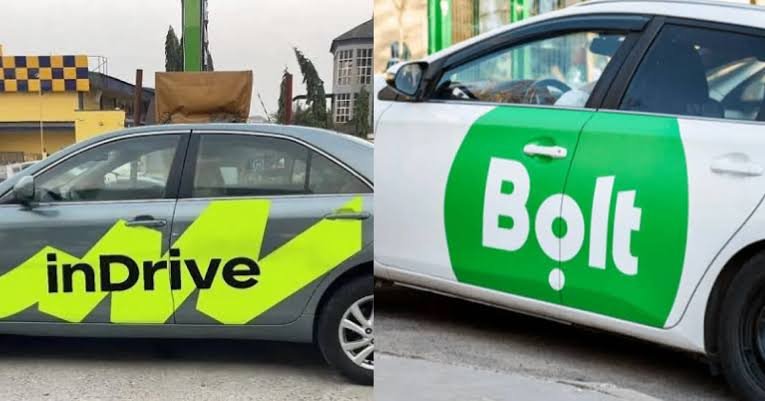
Bolt and inDrive are moving to strengthen their positions in Nigeria’s ride-hailing market following Uber’s sudden departure from the country.


Uber ended its operations in Nigeria on September 2 after about 12 years, citing “evolving business priorities and investment focus across the continent”. The exit has created an opening for rival platforms to attract riders, drivers and mobility investors.

inDrive told TheCable that Nigeria remains a key African market, with its active user base growing consistently year-on-year. The company said it would continue investing in service quality, safety, technology and local communities.

The platform also said its Nigerian operations extend beyond ride-hailing to services including Economy and Courier.

Bolt similarly reaffirmed its commitment to Nigeria, describing the country as an important market. The company said it would continue providing mobility solutions for riders, creating earning opportunities for drivers and supporting the development of Nigeria’s mobility ecosystem.

Teddy Appa-Dankyi, senior general manager of Bolt West Africa, said the company had built a strong community of riders and driver-partners and would focus on strengthening its operations and creating more opportunities.

inDrive offers opening to Uber drivers

inDrive described Uber as a “strong and significant competitor”, saying its departure came as a surprise.

The company said it was willing to welcome drivers and mobility investors affected by Uber’s exit. It is also developing solutions for mobility investors and fleet owners to put vehicles to productive use through its platform.

Unlike Uber’s algorithm-based pricing model, inDrive said it allows drivers and passengers to agree on fares. The company said it charges a service fee of about 10 percent, which it described as one of the lowest in the market.

“This model gives both parties greater control,” the company said.

Drivers seek stronger protection

The Amalgamated Union of App-Based Transporters of Nigeria (AUATON-NG) has called for social dialogue involving drivers and riders affected by Uber’s departure.

The union also called for national standards covering fares, commissions and deactivation procedures, citing International Labour Organisation Convention No. 193.

Ayoade Ibrahim, the union’s general secretary, said Uber’s exit highlighted the need for stronger rules governing app-based transport workers.

He urged the federal ministries responsible for labour and transportation, as well as airport authorities, to incorporate the convention into relevant licensing frameworks.

According to Ibrahim, the convention would not prevent companies from leaving Nigeria, but could provide greater protection for workers while platforms operate in the country and during market exits.
You May Like

Leave a Reply

Your email address will not be published. Required fields are marked *

Most Popular

Must Read

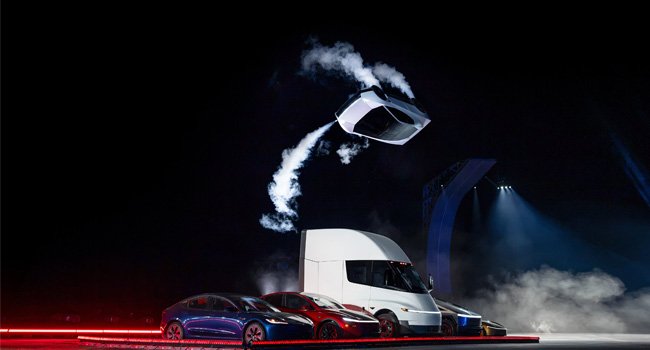
Elon Musk's Tesla Roadster concept equipped with thrusters, unveiled during a livestreamed demonstration at a SpaceX facility in Texas.

Elon Musk unveils Tesla flying car, targets 2028 production

Tesla chief executive Elon Musk has unveiled a new Roadster sports car equipped with thrusters, describing the demonstration as a step towards making flying cars a reality.   The vehicle was showcased during a livestreamed event at a SpaceX test facility in Texas on Thursday, with the demonstration broadcast on Tesla’s X account. During the presentation, the car launched from a steep ramp before landing on its wheels, prompting Musk to declare, “Flying cars are real.” However, the billionaire acknowledged uncertainty surrounding the technology, saying the vehicle’s “success is not guaranteed” but that “it will probably work”. Musk said the car was fitted with ultra-high-pressure air tanks designed to propel it into the air, although the demonstration described in the presentation did not establish that it could sustain flight. He attributed the development to collaboration between Tesla, the electric vehicle manufacturer, and SpaceX, his rocket company. “What happens when you have a collaboration with the world’s best car company and the world’s best rocket company,” Musk said, describing the project. According to Musk, the vehicle is expected to enter production in 2028. However, technical and regulatory hurdles remain significant challenges for the wider flying-car industry. Flying Cars Face Technical Challenges The concept of flying cars has existed for more than a century. American aviation pioneer Glenn Curtiss unveiled an early flying-car prototype in 1917. Despite decades of experimentation, practical flying cars have yet to achieve widespread commercial adoption. Recent advances in electric motors and high-performance batteries have renewed interest in the sector, with developers exploring vehicles that combine road transport with aviation capabilities. However, such vehicles face challenges involving safety, engineering, airspace regulation and commercial viability. Musk’s announcement places Tesla’s latest Roadster concept within this evolving industry, although its planned 2028 production timeline will depend on the project’s technical progress and the requirements for bringing the vehicle to market.
Read more

Editor's Pick

Trending News

Newsletter

Enter your email address and receive notifications of news by email.

You have been successfully Subscribed! Ops! Something went wrong, please try again.

© 2026 GongNews. All Rights Reserved.