
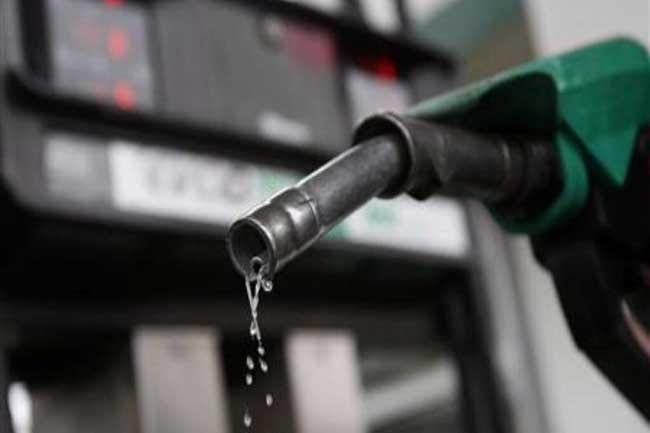
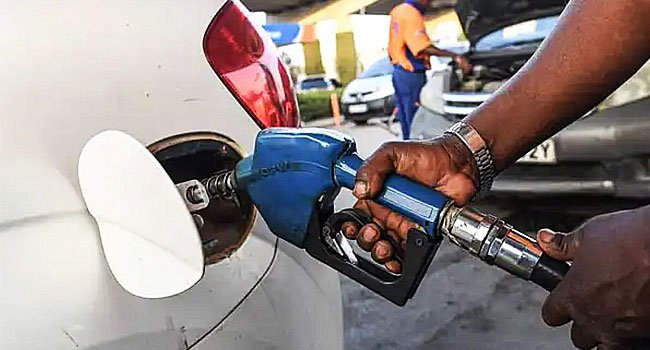
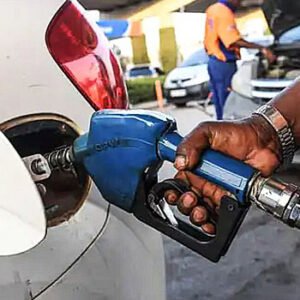
The subsidy removal in Nigeria has also affected social and economic life in the neighbouring countries, with sources saying black market activities have significantly reduced.
Cheap petrol from Nigeria was regularly smuggled to as far as Sudan, a North African country, making it difficult for Nigerian authorities to save enough to provide services to the people.
The removal of fuel subsidy was announced on Monday, May 29, by President Bola Tinubu during his inaugural speech.
Tinubu on Friday, June 9, justified the action, stating Nigeria cannot continue acting as ‘Father Christmas’ to neighbouring countries.
He said this at an interactive session with the Royal Fathers under the aegis of the National Council of Traditional Rulers of Nigeria (NCTRN) at the Aso Villa.
No longer at ease at neighbours’ doorsteps
Reporters learnt that petroleum products are being sold at CFA700 or CFA 800 in Benin Republic, nearly double the previous price, CFA 450.
The development lends credence to reports that a significant volume of Nigeria’s subsidised petroleum products were being smuggled into other African countries.
The chief executive officer of the Nigerian National Petroleum Company (NNPC) Limited, Mele Kyari, in a media interview said, “We know how much we supply. There is data on this. Is all of this consumed in the country? The answer is no. The reason is very simple. We have an arbitrage environment. For instance, before this decision we made, fuel sold at N185 in Abuja, but just across your border, there is nowhere you would have prices that are lower than N500 per litre.
“None of the countries around us imports petroleum products, and you can’t do something about it because there is an arbitrage environment we have created. We have 4,500km of land borders and you don’t have all the resources to man them,” he said.
Questionable businesses grounded
Transporters, passengers and traders in neighbouring countries said they were grounded by the increase in the price of petroleum in Nigeria.
Speaking to reporters, a top player in the Nigerien petroleum sector, Bio Abdourahamane, admitted that subsidy removal in Nigeria would have more negative effect on his country.
He said that before the subsidy removal, smuggled Nigerian fuel used to flood his country’s oil market and most consumers preferred buying it due to its cheapness, thereby preventing them from selling their domestic fuel favourably.
“Nigeria was selling at N195 and our domestic fuel sold at CFA508 (N381), so the smuggler took that advantage to exploit Niger’s market, selling below our litre price.
“At that time, we faced a lot of challenges selling our product because smuggled oil is cheaper, but now that the subsidy is removed, we can compete or even sell at a lesser price.
“But our fear is that if our fuel sells cheaper now, we would face the risk of shortage; and our product being smuggled into Nigeria, to Borno, Yobe, Kano, Katsina and Sokoto, among others and our fuel capacity is so little to accommodate that,” he said.
Malam Ali, the chairman of Niger/Nigerian transporters, lamented that the subsidy removal had plunged vehicle owners and passengers into economic crisis.
“Petrol is now too expensive that our drivers and passengers cannot cope. A passenger will now pay N10, 000 as transport for what he used to pay N6, 500,” he lamented.
He called on the Nigerien government to look inward and see how the situation could be regulated and bring succour to the citizens.
Malam Musa Abdullahi, the leader of Nigerian taxi owners in Diffa, also lamented that the subsidy removal in Nigeria jerked up fuel price in Niger, forcing many people to park their vehicles.
“For one week, my car has been parked at home due to the increase in the fuel price because you would go out and burn the little you have without seeing passengers to pick.
“Fuel is available but it is more expensive in border towns where there are no filling stations. For instance, I only know of filling stations in Maine Soroa, Diffa town and Gigime, but I don’t know any in Boso, Kablewa, Jakori, Garin Wanzam, Kinchambi and Tumar. All these are big towns that are supposed to have filling stations. Unfortunately, they don’t have any.
“The consequence of that is that you can only buy fuel at the black market. We are now buying a five-litre gallon at N5, 000, against the old price of 3,000 and a 28-litre jerry can at N25, 000, against the N15, 000 it sold previously,” he said.






https://t.me/s/iGaming_live/4864
https://t.me/s/BEeFCASiNO_OffiCiAlS