
Iran has submitted a fresh proposal to revive negotiations with the United States, signalling a possible breakthrough in efforts to end the ongoing conflict, according to Reuters.
The proposal, delivered through Pakistani mediation, was received late Thursday and passed on to Washington, a Pakistani official confirmed. However, neither Iranian state media nor officials disclosed details of the offer, while the White House declined to comment, only stating that discussions were ongoing.
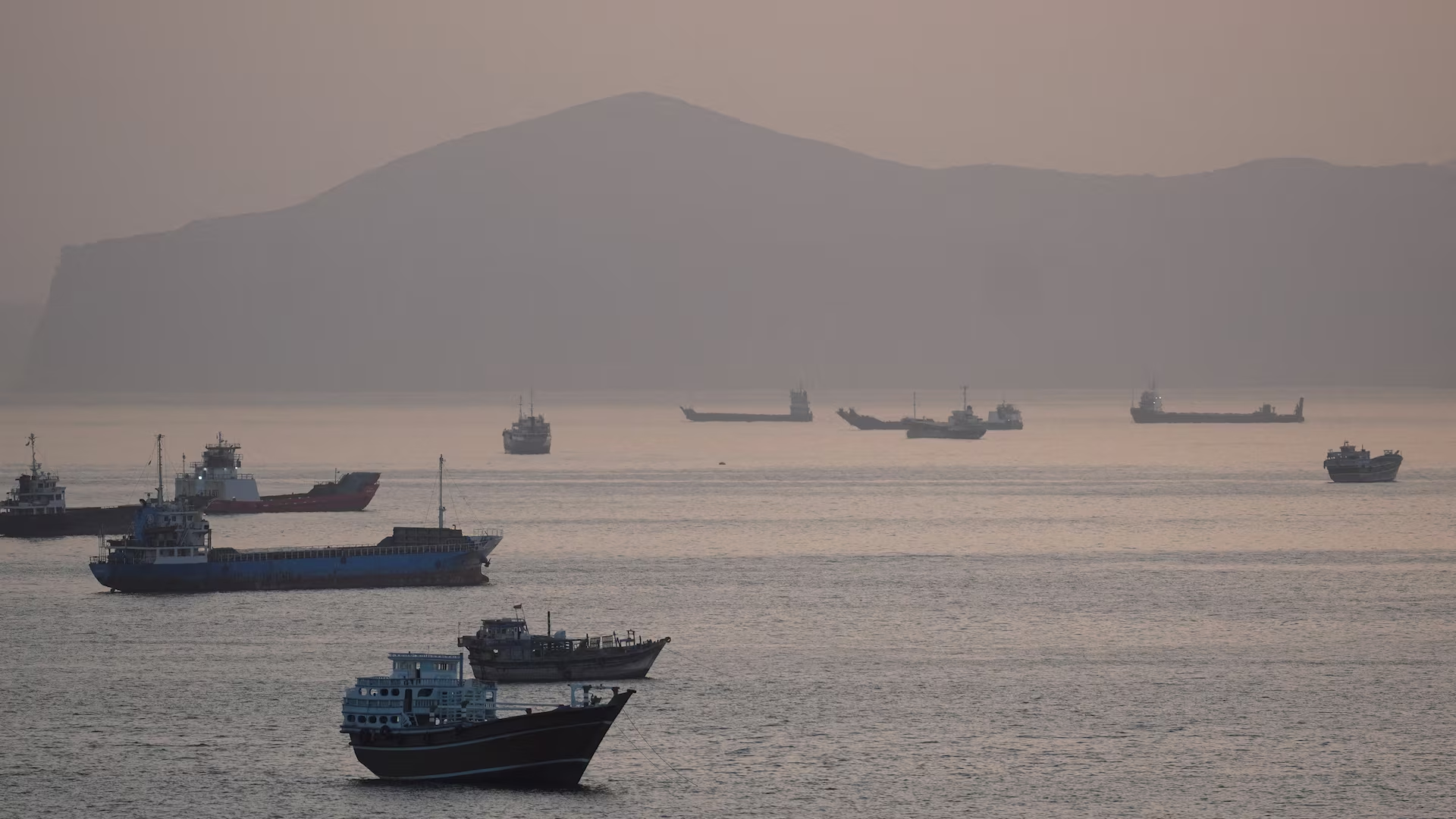
The development had an immediate impact on global markets. Oil prices, which have surged above $100 per barrel amid the crisis, eased slightly following news of the proposal. Still, uncertainty remains high due to the continued closure of the Strait of Hormuz, a critical maritime route responsible for roughly 20% of global oil and gas flows.
The blockade has severely disrupted energy markets and heightened fears of a broader economic slowdown. The United States Navy continues to block Iranian crude exports, while the U.S. Treasury has warned shipping firms they could face sanctions if they pay Iran for passage through the strait.
Although a ceasefire has technically been in place since April 8, tensions remain elevated. Reports that Donald Trump was to be briefed on potential new military strikes pushed oil prices to a four-year high earlier this week.
Iran has responded by activating its air defences and warning of a strong retaliation if attacked. Senior Iranian officials indicated they expect any U.S. strike to be brief but intense, possibly followed by Israeli involvement.
The conflict, which escalated after U.S. and Israeli airstrikes on February 28, has already claimed thousands of lives, mainly in Iran and Lebanon. In retaliation, Iran targeted U.S. assets in the Gulf, while the Iran-backed group Hezbollah launched missiles at Israel, prompting further strikes on Lebanese territory.
Regional tensions remain high. UAE presidential adviser Anwar Gargash warned against trusting unilateral Iranian measures in the strait, stressing that international cooperation and adherence to global law are key to ensuring safe navigation.
Meanwhile, Trump faces a legal deadline under the War Powers Resolution to either end the conflict or seek congressional approval for its continuation. A senior U.S. official suggested the administration may argue that hostilities effectively ended with the April ceasefire.
Despite diplomatic movement, prospects for a quick resolution appear slim. Iran’s Foreign Ministry has cautioned against expecting rapid progress in talks, while its military leadership warned that any renewed U.S. action would trigger prolonged retaliation across the region.
Behind the scenes, Washington is reportedly weighing several options, including extending its blockade, declaring a unilateral victory, or even deploying ground forces to secure parts of the Strait of Hormuz. At the same time, efforts are underway to form a multinational maritime coalition to safeguard commercial shipping routes once hostilities subside.
For now, global markets and political observers remain on edge, watching whether Iran’s latest proposal can break the deadlock and prevent a deeper escalation in one of the world’s most strategically vital regions.