
Nepal is burying victims of the devastating Himalayan floods as rescuers continue searching for thousands of people still missing after a massive wave of water, ice, rocks and debris swept through communities.
According to Channels Television, at least 797 people have died in Nepal and Tibet, with some bodies reportedly feared to have been carried downstream towards India. Nepal alone has recorded 781 confirmed deaths, while China has reported 16 deaths in Tibet.
At least 3,048 people remain missing, including tourists and pilgrims travelling to Tibet’s sacred Mount Kailash. In Nepal, hundreds of workers at hydropower projects are also unaccounted for.
The disaster struck on Wednesday after a glacial collapse triggered a huge surge of water and debris through valleys and settlements. The US Geological Survey said the torrent also caused large lakes to form, creating further risks for rescue teams.
Rescuers Race Against Time
Nepali army troops and engineers have been working to reach workers believed to be trapped inside a tunnel at the Trishuli 3A hydroelectric site.
Rescuers successfully inserted a pipe into the tunnel and began drilling through the debris. However, overnight rain and rising river levels complicated the operation by flooding the excavation area.
Survivors described scenes of destruction as torrents of water and mud overwhelmed hydropower facilities and nearby communities.
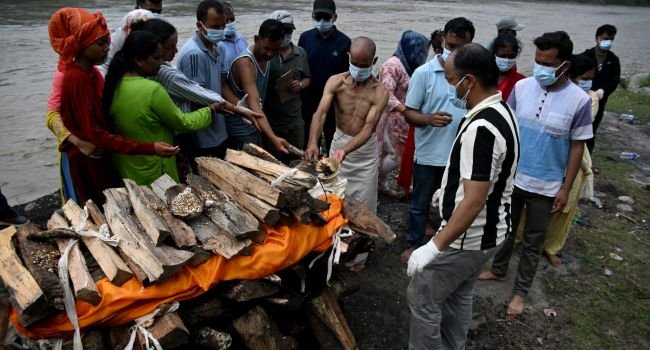
Bodies Buried Before Identification
The scale of the disaster has overwhelmed Nepal’s morgues and available facilities for preserving bodies.
Authorities have started burying some victims before completing formal identification, while DNA samples are being collected to allow relatives to identify and reclaim bodies later.
Families have gathered at identification centres, where photographs of recovered victims are displayed on LED screens as they search for missing relatives.
Communities Left With Nothing
Residents in affected areas are facing the enormous task of rebuilding after entire settlements were swept away.
International assistance has begun arriving. The United States and Canada have each pledged $3.6 million in humanitarian aid, while the UK has offered $6.8 million. The UN has also released $2.5 million in emergency funding.
Nepal’s Foreign Minister Shisir Khanal warned that reconstruction could cost billions of dollars and appealed for specialised equipment, including heavy-lift drones, forensic testing kits and freezer units for preserving bodies.
The disaster has also renewed concerns about the impact of climate change on the Himalayas, where glaciers are melting rapidly as global temperatures rise.
In Tibet, access to the worst-hit areas remains restricted. Chinese state media said 2,141 personnel were involved in search and rescue operations, but rescuers had advanced only 285 metres towards the disaster’s epicentre at Gyirong Port, with another 1.25 kilometres still to cover.