/ Oct 23, 2026
/ Oct 23, 2026

US lowers flags for one week in honor of late Dolly Parton

Published on

By

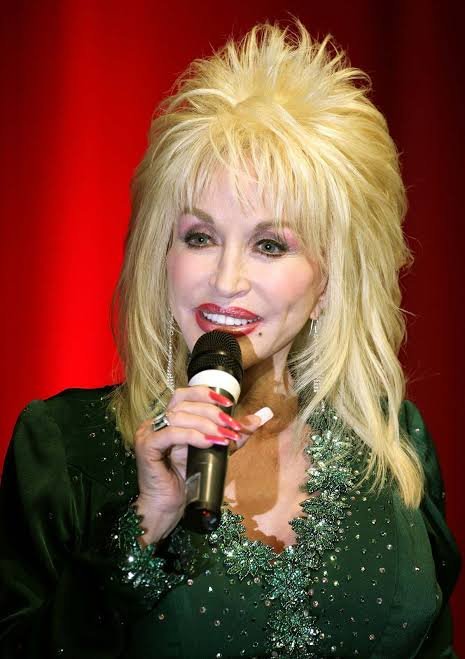
Country music icon Dolly Parton has died aged 80, with US President Donald Trump ordering American flags across the country to be lowered for one week in her honour.


According to reports cited by PUNCH, Parton’s death was announced on Tuesday by her nephew, Bryan Seaver, who described the moment as one of “absolute pride and great sadness”.

Trump said Parton’s death was a “true loss for millions of people” and ordered the flags to be lowered from 6pm on Tuesday.

Parton, who rose from humble beginnings in Tennessee, became one of the most successful singer-songwriters in country music, with a career spanning more than six decades.

She sold more than 100 million records worldwide and became known as the “Queen of Country”, with major hits including Jolene, 9 to 5 and I Will Always Love You.

The singer wrote more than 3,000 songs and won 11 Grammy Awards. She also enjoyed a successful acting career, starring in films including 9 to 5, The Best Little Whorehouse in Texas, Steel Magnolias and Joyful Noise.

Born on January 19, 1946, in a two-room log cabin in Tennessee, Parton was the fourth of 12 children. Her father was a sharecropper who later became a tobacco farmer.

She began performing as a child and, by 13, had appeared on local radio and television, performed at the Grand Ole Opry in Nashville and recorded her first single, Puppy Love.

After graduating from high school in 1964, Parton moved to Nashville the following day to pursue her music career.

She released her debut album, Hello, I’m Dolly, in 1967 and joined The Porter Wagoner Show, where established country star Porter Wagoner became her mentor. The pair later released several successful albums together.

Parton turned her attention to a solo career in the early 1970s and wrote I Will Always Love You about her professional separation from Wagoner. Whitney Houston later recorded a hugely successful version of the song for the 1992 film The Bodyguard.

Parton also wrote Jolene, another of her best-known songs, around the same period. Both songs appeared on her 1974 album Jolene.

Her 1977 album Here You Come Again became her first million-selling album and earned her first Grammy Award.

Parton expanded into acting in 1980, starring alongside Jane Fonda and Lily Tomlin in 9 to 5. She also wrote and performed the film’s title song, which became a number-one hit and received an Oscar nomination.

Her other notable film roles included The Best Little Whorehouse in Texas, Steel Magnolias and Joyful Noise.

Beyond entertainment, Parton built a business empire that included television specials, food products and Dollywood, the Tennessee theme park she acquired an interest in and renamed in 1986.

She was also widely recognised for her philanthropy. Through the Dollywood Foundation’s Imagination Library, she supported childhood literacy and also contributed to medical research, disaster relief and other charitable causes.

In 2020, Parton donated $1 million towards COVID-19 vaccine research. She received the Carnegie Medal of Philanthropy in 2022.

Parton’s health concerns became public in September 2025 when she postponed her Las Vegas residency. She had also withdrawn from public appearances in recent weeks amid ongoing health issues.

Her death comes about 17 months after that of her husband, Carl Dean, who died in March 2025 aged 82. The couple had been married since 1966.

In a statement shared on Truth Social and by the White House on X, Trump said there had “never been anyone like her” and declared that “the World loves you”.

You May Like

Leave a Reply

Your email address will not be published. Required fields are marked *

Most Popular

Must Read

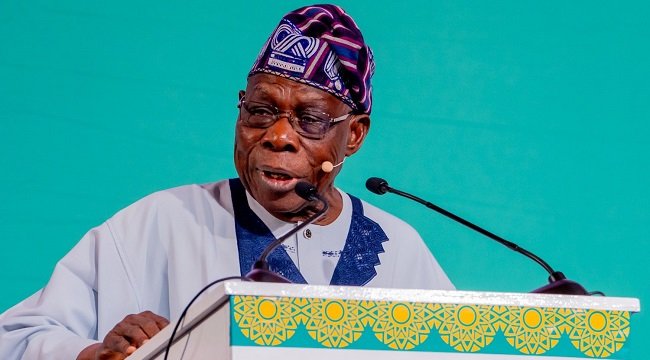
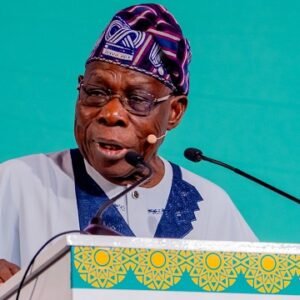
Olusegun Obasanjo speaking at the 2026 Goodluck Jonathan Foundation Democracy Dialogue in Bauchi.

Obasanjo blast Tinubu for making Nigerians 300% poorer

Former President Olusegun Obasanjo has criticised President Bola Tinubu’s economic reforms, accusing his administration of worsening poverty in Nigeria through the devaluation of the naira.   Obasanjo made the remarks on Wednesday at the Financial Times Africa Summit 2026 in London, United Kingdom, where he argued that the sharp decline in the naira’s value had significantly weakened Nigerians’ purchasing power. According to a report by The PUNCH, the former president said the naira’s depreciation had effectively made Nigerians 300 per cent poorer. “We do not live in isolation as a country. We interact with the rest of the world. And overnight, you devalue the currency by 300 per cent. The naira went from N500 to a dollar to N1,500 to a dollar. What that meant was that every Nigerian is made poor by 300 per cent,” Obasanjo said. He described Nigeria as the “poverty capital of the world”, arguing that the country had the largest number of people living in poverty. “You cannot say to me that that is good for Nigeria. You cannot say to me that that is good for us in any sense,” he added. Obasanjo Questions Economic Recovery The former president also rejected arguments that Tinubu should be given more time to deliver the benefits of his economic reforms. Obasanjo said he had yet to see sufficient improvement in the economy to justify the hardship experienced by Nigerians. “For the economy, I don’t see anything getting better. What policies are you seeing through? You impoverish your people, and you want to see impoverishment through?” he asked. He further argued that the policies introduced by the Tinubu administration were not in the best interests of Nigerians. “Nobody can deny that,” he said. Former President Questions Fuel Subsidy Removal Obasanjo also criticised the handling of petrol subsidy reform, noting that fuel costs affected virtually every aspect of economic activity. While acknowledging the importance of addressing the subsidy issue, he argued that corruption associated with the system should have been tackled first. He maintained that a country facing severe economic difficulties should focus on reducing corruption, waste and unnecessary luxury while increasing production. Naira Depreciation and Inflation The Central Bank of Nigeria unified the country’s foreign exchange market windows on June 14, 2023, during the early days of Tinubu’s administration. Before the policy, the official exchange rate stood at approximately ₦460.80 to the dollar. By October 19, the official rate had weakened to about ₦1,333.54 per dollar, according to figures cited by The PUNCH. The naira also fell to approximately ₦1,607.05 per dollar in early May 2025. Despite the currency’s depreciation, official figures indicated that some economic indicators had improved. The National Bureau of Statistics reported that headline inflation fell to 14.63 per cent in September 2026, compared with 20.98 per cent a year earlier. However, food inflation remained high at 19.59 per cent, while Nigeria’s real gross domestic product grew by 4.43 per cent in the second quarter of 2026. The figures highlight the continuing economic pressures facing households, particularly the cost of food and other essential goods. FG Defends Savings From Subsidy Removal Meanwhile, the Minister of Finance and Coordinating Minister of the Economy, Taiwo Oyedele, said on August 19 that the removal of petrol subsidies had saved the Federal Government ₦15.8 trillion between June 2023 and December 2025. The savings form part of the government’s justification for ending the subsidy regime, a policy that has significantly altered petrol pricing and public finances. Efforts by The PUNCH to obtain a response from the Presidency to Obasanjo’s remarks were unsuccessful. The newspaper reported that the President’s Special Adviser on Information and Strategy, Bayo Onanuga, could not be reached.
Read more

Editor's Pick

Trending News

Newsletter

Enter your email address and receive notifications of news by email.

You have been successfully Subscribed! Ops! Something went wrong, please try again.

© 2026 GongNews. All Rights Reserved.