
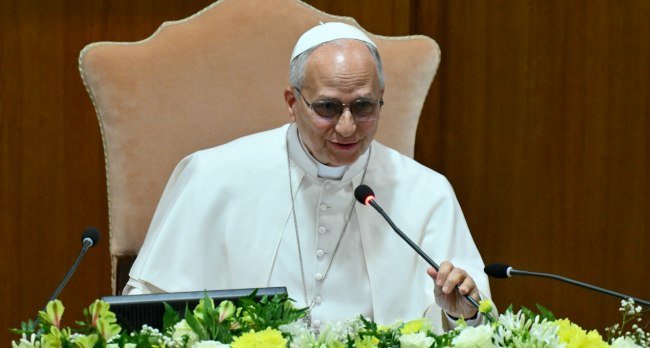
Pope Leo XIV has called for the “disarming” of artificial intelligence, warning that the rapid global race for more powerful AI systems could fuel exploitation, inequality and conflict.
In his first encyclical titled Magnifica Humanitas (Magnificent Humanity), the pontiff urged world leaders and technology companies to ensure AI development remains centred on human dignity and ethical responsibility.
According to Channels Television, the pope unveiled the manifesto at the Vatican on Monday alongside leading AI researchers, including Christopher Olah of Anthropic.
Leo warned against what he described as “a race for ever more powerful algorithms and larger datasets, driven by the desire to secure geopolitical or commercial dominance”.
The pope said AI should never be allowed to dominate humanity or deepen global inequality. He also condemned the use of artificial intelligence in lethal autonomous weapons systems, insisting that machines must never be entrusted with life-and-death decisions.
“The just war theory is outdated,” Leo wrote, adding that “no algorithm can make war morally acceptable”.
The manifesto comes amid increasing international debate over the regulation of artificial intelligence, particularly around military use, surveillance and labour exploitation.
The Vatican highlighted concerns that AI’s rapid growth could create “new forms of slavery”, from exploited content moderators exposed to disturbing material to children mining rare earth minerals used in advanced technologies.
“Nothing in the world of AI is immaterial or magical,” the pope wrote, stressing that seemingly instant digital responses rely on hidden human labour and environmental costs.
Leo also called for AI systems to be accessible, transparent and open to public debate, arguing that technology should remain “human-friendly”.
The document referenced philosophers, religious thinkers and cultural figures including Plato, Ludwig van Beethoven and characters from The Lord of the Rings.
The encyclical was signed on May 15 to mark the 135th anniversary of an 1891 social doctrine text issued by Pope Leo XIII during the Industrial Revolution.
The manifesto also included an apology for the Catholic Church’s historical role in slavery. Leo said the Church must acknowledge past injustices and seek forgiveness for its involvement in systems that dehumanised people.
Experts believe Magnifica Humanitas could have a global impact similar to Laudato Si’, the environmental manifesto released by Pope Francis in 2015.
The United Nations estimates that artificial intelligence could be worth up to $4.8 trillion globally by 2033.