
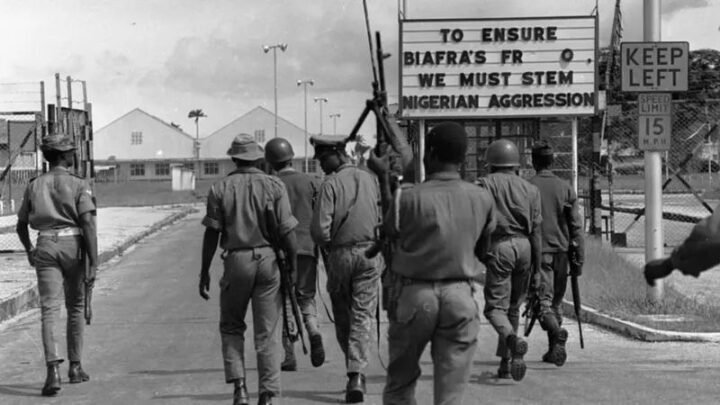
The Nigerian Army has directed churches and residents across the South-East and parts of the South-South to ignore a directive by the Movement for the Actualisation of the Sovereign State of Biafra (MASSOB) calling for memorial services to honour victims of the Nigerian Civil War.
According to a report by TheCable, MASSOB had instructed churches in the region to hold special memorial and thanksgiving services on May 31, 2026, as part of activities commemorating the declaration of Biafra by Chukwuemeka Ojukwu.
In a statement issued on Friday, Olabisi Ayeni, acting deputy director at the Army’s 82 Division, said while the military recognises the pain and sacrifices of families affected by the civil war, remembrance activities must be conducted through officially recognised national events.
He listed occasions such as Armed Forces Remembrance Day, Nigerian Army Day Celebration and Independence Day as lawful platforms for honouring fallen heroes and reflecting on the nation’s history.
Ayeni, speaking on behalf of Operation UDO KA, described the planned memorial services as an “illegal” and “provocative” directive designed to create division and anxiety in the region.
“The directive by MASSOB is therefore illegal, provocative, and must be disregarded by all,” the statement said. “Any gathering or activity outside the framework of lawful national commemorations is unacceptable and will not be tolerated.”
The Army also alleged that supporters of MASSOB and the Indigenous People of Biafra (IPOB) were behind the initiative and warned that the activities could undermine the relative peace currently being enjoyed in the South-East.
Clerics, residents and youths were urged not to participate in the planned services. The military reassured churches and the public that they should continue their normal activities without fear of intimidation.
The statement added that security agencies remain committed to protecting lives and property across the region and warned that anyone found disrupting public order or religious activities would face legal consequences.