
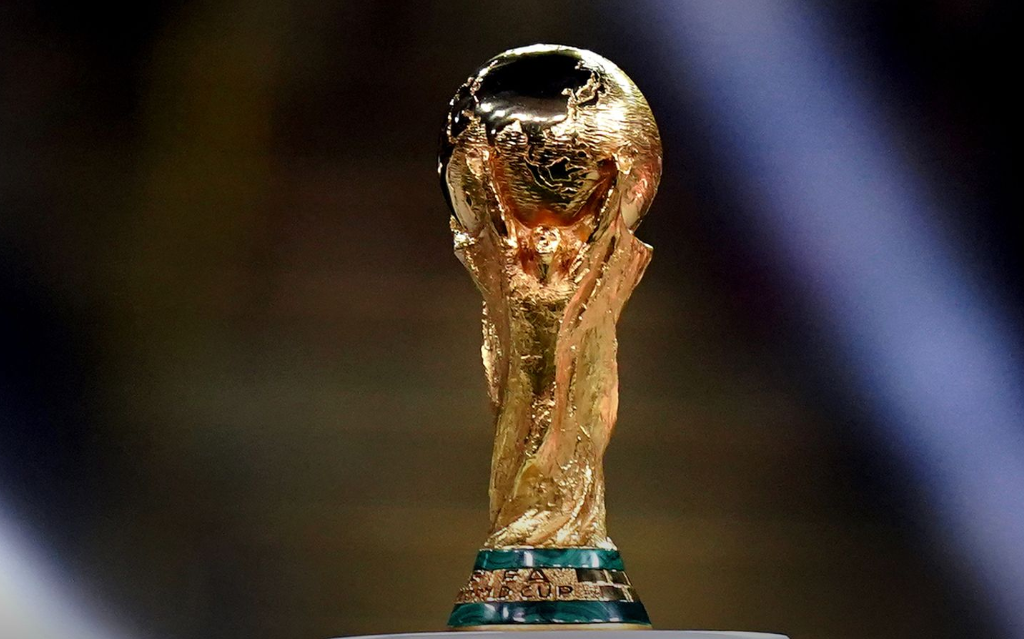
The FIFA World Cup 2026 will feature the most significant changes to football laws in recent years after the International Football Association Board (IFAB) approved a wide-ranging package of new rules.
According to FIFA, the tournament in the United States, Canada and Mexico will be the first major competition to implement the updated regulations, which are aimed at reducing time-wasting, improving officiating and increasing transparency.
One of the biggest changes targets delays during restarts. Referees will use a visible five-second countdown for throw-ins, with possession awarded to the opposing team if the restart is not taken in time. Goalkeepers and teams delaying goal kicks could also be punished, with opponents receiving a corner kick.
Substitutions will also be more tightly controlled. Players leaving the pitch must exit within 10 seconds using the nearest boundary line. Failure to do so could delay the entry of their replacement until after a further stoppage in play.
Under the new regulations, injured outfield players who receive treatment on the pitch must remain off the field for at least one minute after play resumes. Exceptions apply in cases involving goalkeepers, serious injuries, head injuries, goalkeeper-player collisions and certain penalty incidents.
VAR powers have also been expanded. Video officials will now be able to intervene in cases involving clearly incorrect second yellow cards that result in a red card, mistaken identity, wrongly awarded corner kicks and fouls committed before set-piece restarts.
Another notable change concerns player conduct. Footballers who cover their mouths with a hand, arm or shirt while confronting opponents may face a red card. FIFA said the measure is designed to discourage discriminatory abuse and improve transparency on the field.
Players who walk off the pitch in protest against refereeing decisions also risk dismissal, while teams that abandon matches in protest could forfeit games. Officials encouraging such actions may face sanctions.
The new laws also permit competition organisers to authorise referees to wear body cameras, either chest-mounted or head-mounted, with organisers retaining control over how footage is used.
Changes to player equipment rules will allow certain previously prohibited items, provided they are non-dangerous, securely fastened and properly covered.
IFAB has also clarified the dropped-ball procedure, stating that possession should generally be awarded to the team most likely to have had the ball had play not been stopped.
In addition, the laws now formally address accidental double touches during penalty kicks following previous clarifications issued by IFAB.
Another amendment affects situations involving denial of an obvious goalscoring opportunity (DOGSO). If a referee plays advantage and a goal is scored, the offending player will no longer receive a caution.
For senior international friendlies, teams will be permitted to use up to eight substitutes, with the possibility of increasing that number to 11 by mutual agreement.
Given the expected high temperatures during the World Cup, referees may also allow a three-minute hydration break in each half, typically around the 22nd minute, depending on weather conditions.
The tournament will also continue enforcing the goalkeeper time-wasting rule introduced before the World Cup. Goalkeepers may hold the ball for a maximum of eight seconds, with referees visibly counting down the final five seconds. Any violation will result in a corner kick for the opposition.
The changes were outlined by FIFA ahead of the 2026 World Cup and are expected to significantly influence how matches are managed throughout the tournament.