
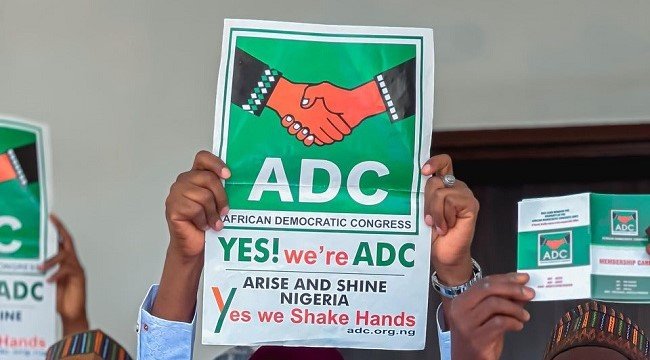
A Federal High Court judgment ordering the deregistration of the African Democratic Congress (ADC) and four other political parties has triggered strong opposition reactions and intensified debate over Nigeria’s democratic future.
According to Punch Newspapers, Justice Peter Lifu of the Federal High Court in Abuja ruled on Monday that the Independent National Electoral Commission (INEC) should deregister the ADC, Accord Party, Action Peoples Party, Action Alliance, and Zenith Labour Party for allegedly failing to meet constitutional electoral performance thresholds under Section 225A of the 1999 Constitution (as amended) and the Electoral Act 2022.
The case was filed by the National Forum of Former Legislators, which argued that political parties must meet minimum requirements such as securing at least 25 per cent of votes in a state during presidential elections or winning at least one elective office.
Opposition rejects ruling
The decision has been widely condemned by opposition figures, including former Vice President Atiku Abubakar, Osun State Governor Ademola Adeleke, and ADC National Chairman David Mark, who warned that the ruling could undermine Nigeria’s multiparty democracy.
Atiku described the judgment as a “dangerous escalation” and questioned its validity, citing an alleged Court of Appeal order issued on 22 May 2026 that had stayed proceedings in the matter. He argued that proceeding to judgment despite the stay raised concerns about judicial hierarchy and rule of law.
Governor Adeleke also faulted the ruling, insisting that it violated the appellate court’s directive and urging supporters to remain calm while legal steps are pursued.
ADC alleges political interference
The ADC rejected the judgment outright, claiming it was part of an attempt to weaken opposition parties ahead of the 2027 elections. In a statement, the party argued that the Independent National Electoral Commission had previously confirmed that it met all legal requirements for continued registration.
The party also accused unnamed political actors of using state institutions to shrink democratic space, warning that such actions could destabilise the political system if not addressed through legal channels.
ADC National Chairman David Mark dismissed the ruling as unconstitutional and expressed confidence that higher courts would overturn it.
Legal and political uncertainty
Other political actors and commentators also weighed in, with some urging restraint and others warning of potential democratic risks if the judgment is enforced without proper appellate review.
The matter is expected to proceed to higher courts as affected parties have indicated plans to appeal.
The controversy has added fresh tension to Nigeria’s already heated pre-election political environment, with questions emerging over party registration rules, judicial authority, and the interpretation of electoral performance thresholds.