

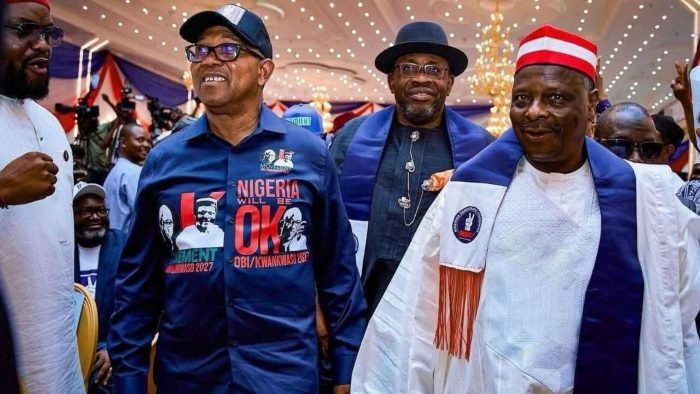
The Nigeria Democratic Congress (NDC) has exempted its presidential candidate, Peter Obi, and his running mate, Rabiu Musa Kwankwaso, from signing its mandatory anti-defection oath, even as the requirement remains in place for other candidates.
The party’s anti-defection policy requires aspirants contesting under its platform to sign indemnity forms and sworn affidavits pledging not to defect to another political party after winning elections. The measure is intended to reinforce internal discipline and reduce the frequency of post-election defections.
Party officials say the framework is designed to strengthen loyalty, promote ideological consistency, and address long-standing concerns about politicians switching parties after securing office.
However, the decision to exclude Obi and Kwankwaso from the requirement has drawn attention within political circles. While the rule still applies to governorship, legislative, and other elective positions, questions have emerged over why the presidential ticket is treated differently.
The exemption has triggered debate among party members and observers, with concerns that a policy meant to guarantee unity and commitment should be applied consistently across all candidates, regardless of rank or prominence.
The NDC introduced the anti-defection initiative amid wider political concerns about elected officials changing party allegiance after elections, a practice widely criticised for weakening party ideology and undermining voter confidence.
The party has not provided further public clarification on the rationale behind the presidential exemption, leaving room for speculation and internal discussion ahead of the election cycle.
The development is expected to remain a talking point within the party as it seeks to present itself as a disciplined alternative in Nigeria’s competitive political landscape.